 R089
R089Kerala Kitchen Salad
Raw vegetables the way a Kerala kitchen cuts them
Recipes › Salads, Pachadis, Chutneys, Podis and Pickles
R091
Vellarikka in curd, the sadya version
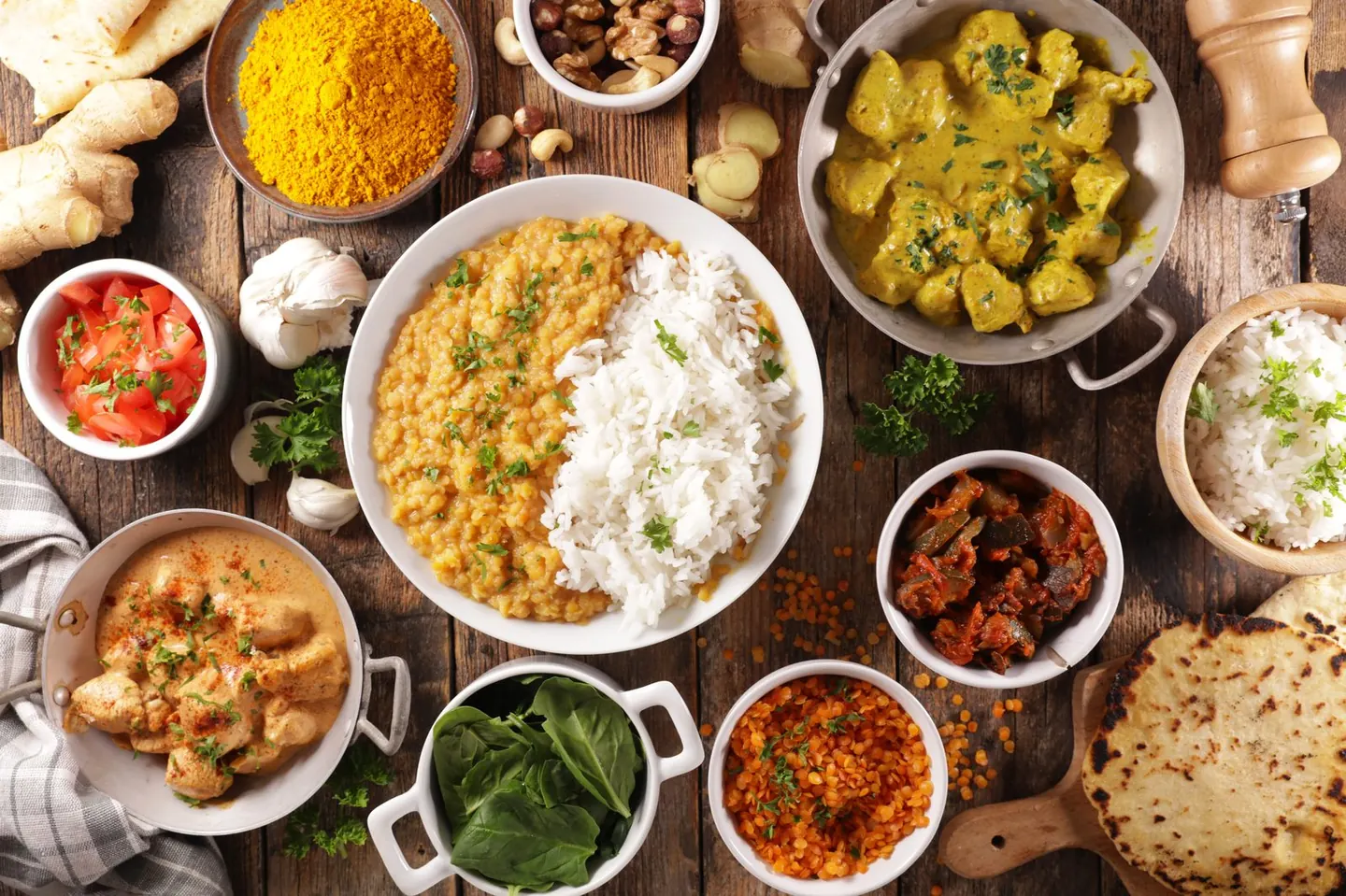
Photograph: Adobe Stock · representative of the dish
On the sadya leaf this sits between the kichadi and the pulissery, and the difference between a good one and a dull one is entirely about water. Salt the cucumber and it weeps; boil it and it collapses; leave it raw, cut small, and fold it into a properly thick coconut-and-mustard paste, and every spoonful has a little snap in it. Kerala grows a pale, fat, thin-skinned cucumber for exactly this. Any cucumber will do the job.
Before you start: Dice the cucumber last, and do not salt it until the curd is already in. Salted cucumber loses noticeable water in 8–10 minutes.
Allergens: Milk, mustard.
Equipment: Mixie or small blender; small tempering pan. Substitute: a mortar, which gives a coarser paste that suits this dish better than a smooth one.
| Energy | 83 kcal |
| Protein | 3 g |
| Fibre | 3 g |
| Net carbohydrate | 5 g |
| Total carbohydrate | 8 g |
| Sugars | 4 g |
| Fat | 6 g |
| Saturated fat | 5 g |
| Sodium | 190 mg |
From ICMR-NIN IFCT 2017 and USDA FoodData Central. Per-serving figures stay the same when you scale.
The Kerala vellarikka is a large pale cucumber with soft seeds and a mild flesh; the closest thing abroad is a peeled and seeded English cucumber, or a peeled Armenian cucumber. Avoid the small pickling cucumbers, which are too dense and too bitter at the stem. Use plain whole-milk yoghurt rather than Greek, or thin Greek yoghurt with 40 ml of water.
Blood pressure: 190 mg per serving, about 120 mg of which is the curd itself. This is one of the better dishes on the leaf for a reader counting sodium, and it can drop to about 130 mg by halving the added salt and adding lime.
Blood sugar: 5 g of net carbohydrate for 110 g of food. Serve it in quantity beside rice; it is the cheapest volume on the plate.
Cholesterol: 5 g of saturated fat per serving. Low-fat curd brings it to about 3.5 g.
Ash gourd (kumbalanga) for cucumber, lightly cooked → Consequence: this is a kichadi rather than a pachadi, softer and milder, and it keeps a day longer.
Low-fat curd → saturated fat 5 g down to 3.5 g. Consequence: looser; add 10 g more ground coconut.
No fresh coconut → 25 g desiccated coconut soaked in 50 ml warm water for 10 minutes. Consequence: noticeably chalkier and less sweet, and you lose about half the fibre.
Make the paste and whisk it into the curd up to 1 day ahead and keep it in the fridge; add the cucumber and temper within 40 minutes of serving. Finished, fridge 1 day only. Do not freeze.
Drain, blend with 150 ml of cold water and a little cumin, and drink it as a cucumber sambharam. Or drain and fold the solids into a cabbage thoran off the heat.
Watery within the hour: the cucumber was salted early, or the seeds were left in.
Bitter: the stem end of the cucumber. Cut 2 cm off it and taste before dicing the rest.
Flat: not enough green chilli or mustard. Both are the seasoning here, and both are free of sodium.
Serve with
R015 Perfect Matta Rice · R086 Rasam · R064 Beans Thoran · R040 Nadan Kozhi Curry
Tap a star to rate this recipe
The Kindle edition is on its way. Until it lands, the complete book — all 25 chapters and 137 recipes — is free to read here, and it stays free after.