 R089
R089Kerala Kitchen Salad
Raw vegetables the way a Kerala kitchen cuts them
Recipes › Salads, Pachadis, Chutneys, Podis and Pickles
R098
The sadya's ginger, tamarind and jaggery relish, with the sugar shown
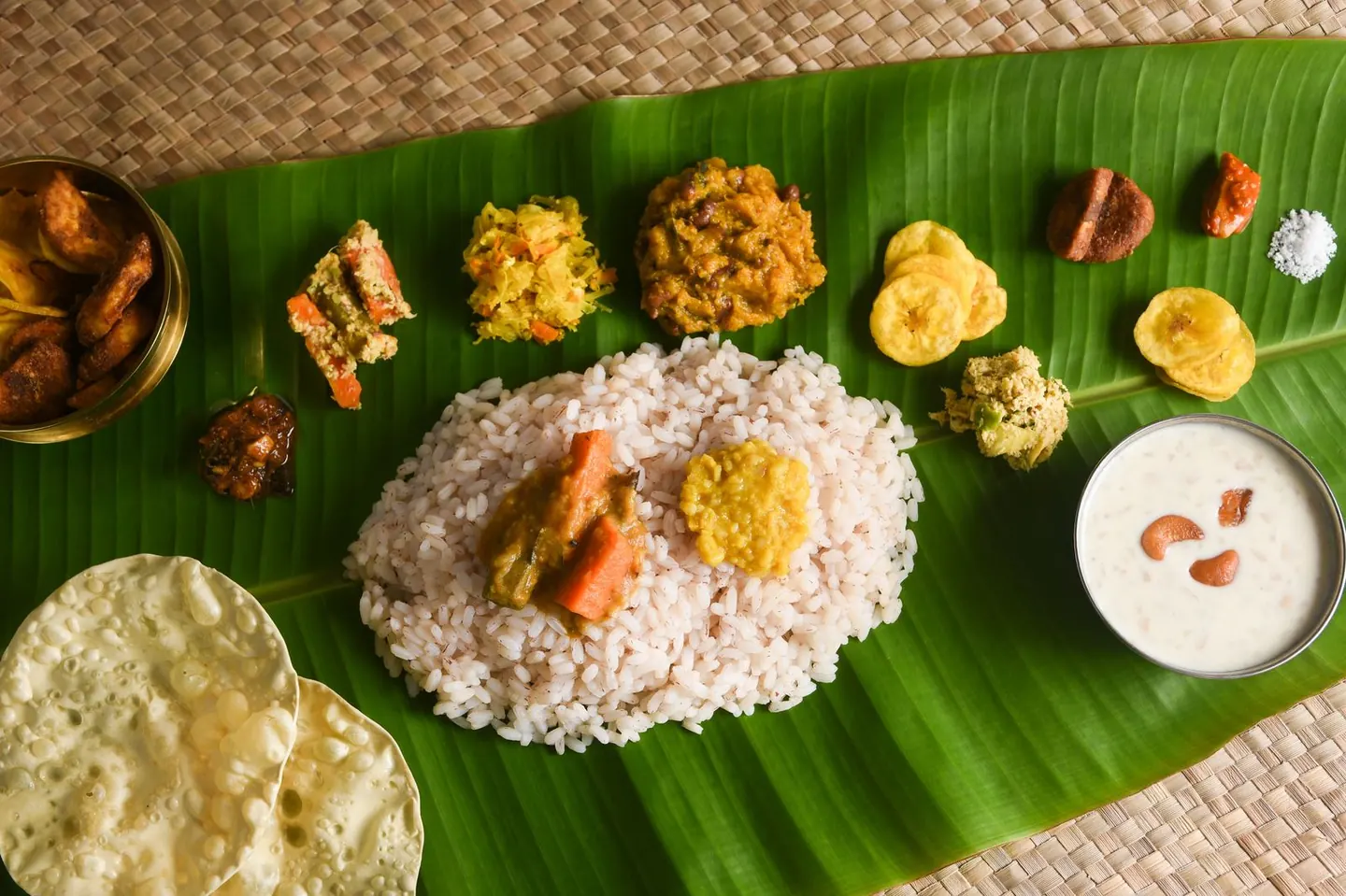
Photograph: Adobe Stock · representative of the dish
Inji puli — also called puli inji, and one of the two or three dishes on a sadya leaf that people remember for the rest of their lives — is eaten in Kerala after the payasam, specifically to cut the sweetness of what came before. There is something quietly absurd about a palate-cleanser containing 180 g of jaggery. Cut it to a third and the dish does its job better, not worse: sharper, hotter, more obviously gingery, and still recognisably itself.
Before you start: Chop the ginger before anything else; 120 g finely chopped takes 10 minutes and everything after step 3 moves fast.
Allergens: Sesame, mustard.
Equipment: Heavy 20 cm pan; fine sieve for the tamarind. Substitute: a non-stick pan is genuinely useful here, because a jaggery reduction catches easily at the end.
Old, fibrous ginger is better here than young ginger — it is more pungent and it holds its texture through the reduction. Peel it with a spoon rather than a peeler to save the flesh just under the skin, where much of the aroma sits. Where jaggery is unavailable, dark muscovado or panela at 1:1 by weight is essentially the same product; palm jaggery (karuppatti) is darker and more mineral and is the traditional choice in some households.
Blood sugar: the point of this recipe. Four g of net carbohydrate a tablespoon rather than eight, in a dish eaten immediately after payasam — that is, at the moment in a sadya when blood glucose is already climbing hardest.
Blood pressure: 60 mg a tablespoon, the lowest of any condiment in this chapter, because tamarind and ginger are doing the work that salt usually does.
Cholesterol: 0.1 g of saturated fat a tablespoon, because this is made with sesame oil rather than coconut oil.
Coconut oil for sesame → Consequence: the traditional smell, and saturated fat rises from 0.1 g to about 0.4 g a tablespoon. A small change; this is a dish where sesame is arguably better anyway.
Dates for the jaggery, 80 g stoned and chopped → Consequence: a fruitier, thicker relish with a little fibre; the sugars land at about 3.5 g a tablespoon, so this is a modest reduction rather than a large one.
No jaggery at all → Consequence: aggressively sour and genuinely difficult to eat. Sixty grams is already close to the floor; do not go below 40 g.
Add 20 g of slivered garlic at step 4 → Consequence: deeper and more savoury, further from the sadya version, and garlic is the one aromatic in this book with a blood-pressure effect at ordinary culinary doses.
At the largest quantity add 6–8 minutes to step 6 and stir continuously through step 7; a deep mass of jaggery reduction catches without warning.
Better after 3 days and best after a week. Fridge 6 weeks in a sterilised jar with a dry spoon — the acid and the sugar together make this the most stable preparation in the chapter, but at 60 g of jaggery rather than 180 g there is less sugar doing preservative work, so refrigerate it rather than leaving it out. Freeze 6 months in 60 g portions. Cupboard: 1 week only, and only in a cool kitchen below 25°C (77°F).
A tablespoon stirred into a fish curry at the end gives it the sweet-sour-hot finish of a Malabar mango curry. It also makes an unexpectedly good glaze for baked fish, thinned with a little water and brushed on in the last five minutes.
Bitter: the fenugreek burned at step 3. It needs 15–20 seconds, not a minute.
Raw and harsh, even after a week: step 4 was cut short. There is no way to fix this afterwards.
Set hard in the jar: over-reduced at step 7. Stir in 20 ml of hot water and it will come back.
Thin and watery: under-reduced. Return it to the pan and cook it down; it costs nothing but time.
Serve with
R120 the sadya leaf · R015 Perfect Matta Rice · R069 Avial · R112 Palada, immediately after
Tap a star to rate this recipe
The Kindle edition is on its way. Until it lands, the complete book — all 25 chapters and 137 recipes — is free to read here, and it stays free after.