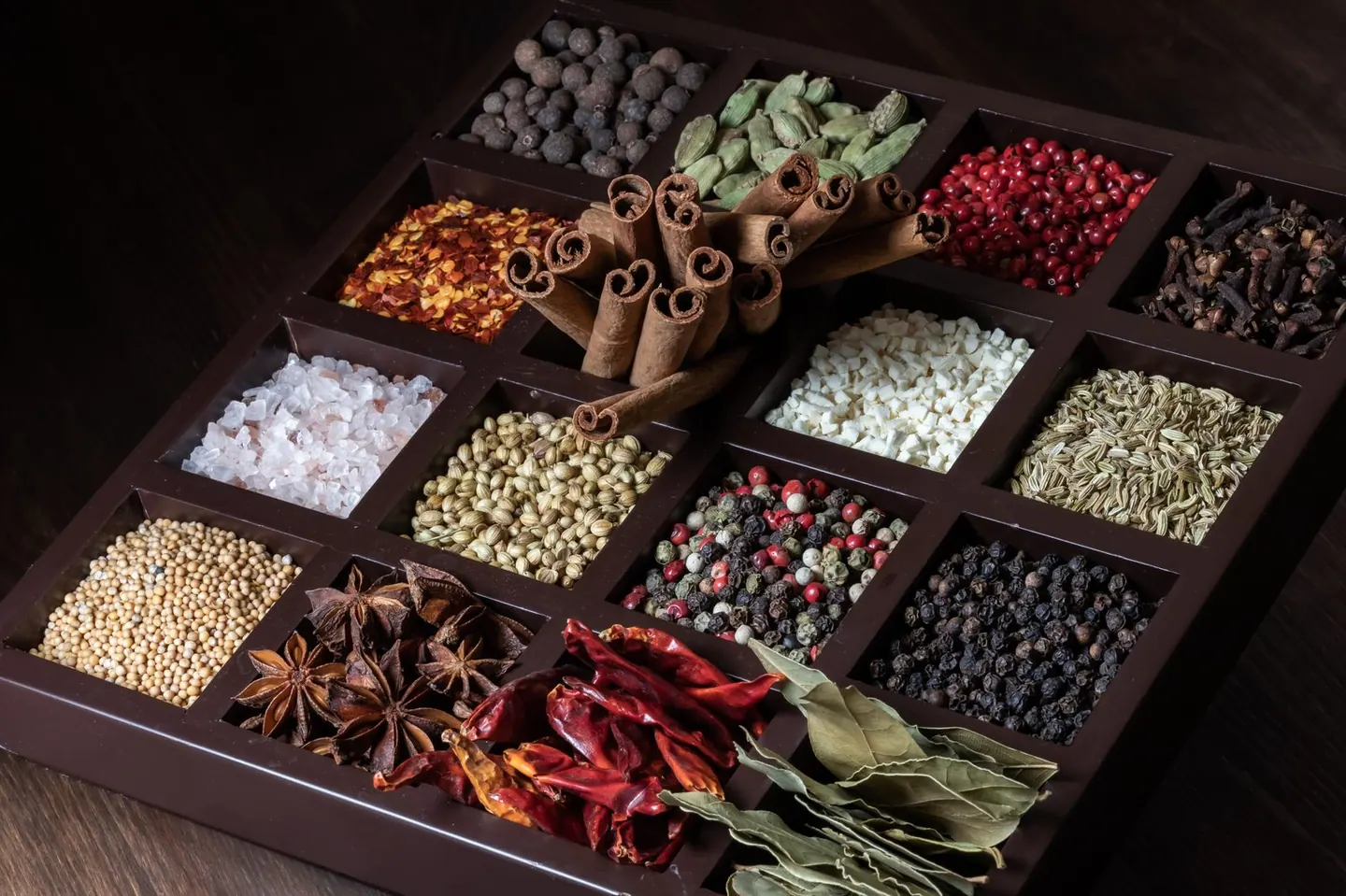
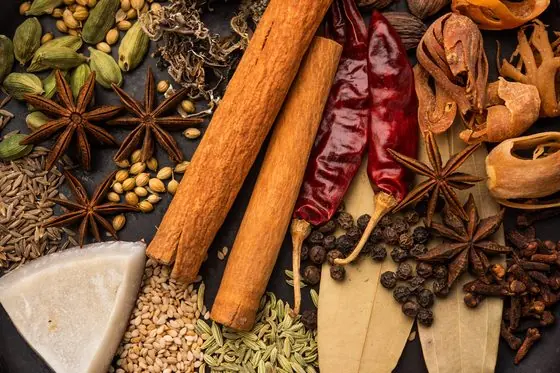
Photograph: Adobe Stock · representative of the dish
YieldMakes about 145 g
Active20 minutes
Total40 minutes
DifficultyEasy
Plan ahead: plus 20 minutes cooling — required.
The re-engineeringNothing taken out. What changed is the pepper-to-chilli ratio: this leans on piperine rather than on chilli and salt, because rasam is drunk rather than eaten and a salty rasam is the easiest way to add 400 mg of sodium to a meal unnoticed.
Pepper-and-cumin, for the closing liquid of a meal [LOW SODIUM] [VEGAN]
Rasam — from Sanskrit rasa, juice or essence — is the third rice course of a sadya and often the last thing before buttermilk. Its job is explicitly digestive, its character sharp, thin and pungent. This is a pepper podi with cumin behind it, and a rasam made from it needs almost no salt because the tamarind and the pepper do the work between them.
Rasam Podi
Active 20 minutesTotal 40 minutes
Scale145 servings
Ingredients — tap to tick off
✓60 g (¾ cup) coriander seed
✓30 g (2½ tbsp) toor dal
✓25 g (3 tbsp) black peppercorns
✓20 g (3½ tbsp) cumin seed
✓10 g (about 6) dried red chilli
✓5 g (2 sprigs) curry leaves
✓5 g (2 tsp) ground turmeric
✓3 g (½ tsp) asafoetida
Allergens: None of the major allergens as the recipe is written. Gluten (wheat) — only if your asafoetida is compounded with wheat flour, as most brands are.
Equipment: Heavy dry pan; spice grinder.
Method — tap a step to mark it done, tap a time to start a timer
Roast the coriander over medium-low heat until brittle and fragrant, . Tip out.
Roast the toor dal until pale honey-coloured, . Tip out.
Roast the pepper and cumin together until the pepper begins to pop and the cumin darkens a shade and smells nutty, . Cumin goes from nutty to acrid in about thirty seconds, so watch it rather than the clock.
Roast the chillies and the curry leaves 30–45 seconds, until they crumble.
Cool completely, , then grind with the turmeric and asafoetida. Do not sieve; a slightly coarse rasam podi gives better mouthfeel in a thin liquid.
Why this worksPiperine stimulates the trigeminal nerve rather than the taste buds — a physical warmth rather than a taste — and that warmth raises the perceived intensity of everything else in the bowl, saltiness included. A properly peppery rasam tastes fully seasoned at half the usual salt, and cumin's aroma does the same job through the nose.
Sourcing note
Pepper is the whole point, so buy it whole and buy it recently — Malabar pepper is GI-registered and worth the premium for this blend specifically. Pre-ground pepper has lost most of its aroma and kept only the burn.
Swap it
No toor dal → omit; the rasam is very slightly thinner and no worse.
Less pepper, more chilli → a milder, redder rasam that needs more salt to taste finished. Make the trade knowingly.
Make ahead · store · freeze
Cupboard 2 months — shorter than the other podis, because pepper aroma fades fastest and it is the reason the blend exists. Fridge 4 months. Freeze 9 months.
Leftovers
Rasam podi loses its pepper first and its cumin last, so an old jar tastes flat rather than wrong. Use the remainder in a dal or over steamed vegetables, where the shortfall is not the point, and start a fresh jar for rasam itself. Two months is the honest limit at room temperature.
Troubleshooting
Rasam hot rather than fragrant: the podi is old, or went in at a rolling boil. Add at a bare simmer and take the pan off within 2–3 minutes.
Sandy: grind longer. Coarse is intended; sandy is not.
Serve with R086 Rasam · R118 Sadya Sambar · R020 Kanji, Three Ways — and, more broadly, pepper-water for a cold, thin tomato broths, and a dusting over steamed vegetables.
Chilli-forward, turmeric-heavy, built for a sour gravy
40 minutes
The 7-Day Reset is already here, free
No email required and nothing to sign up for. The full seven-day menu, the Sunday preparation block and the shopping list are on this site, open to everyone — the same programme that opens the book.
 M01
M01