 R089
R089Kerala Kitchen Salad
Raw vegetables the way a Kerala kitchen cuts them
Recipes › Salads, Pachadis, Chutneys, Podis and Pickles
R090
Beetroot in curd with ground mustard and coconut
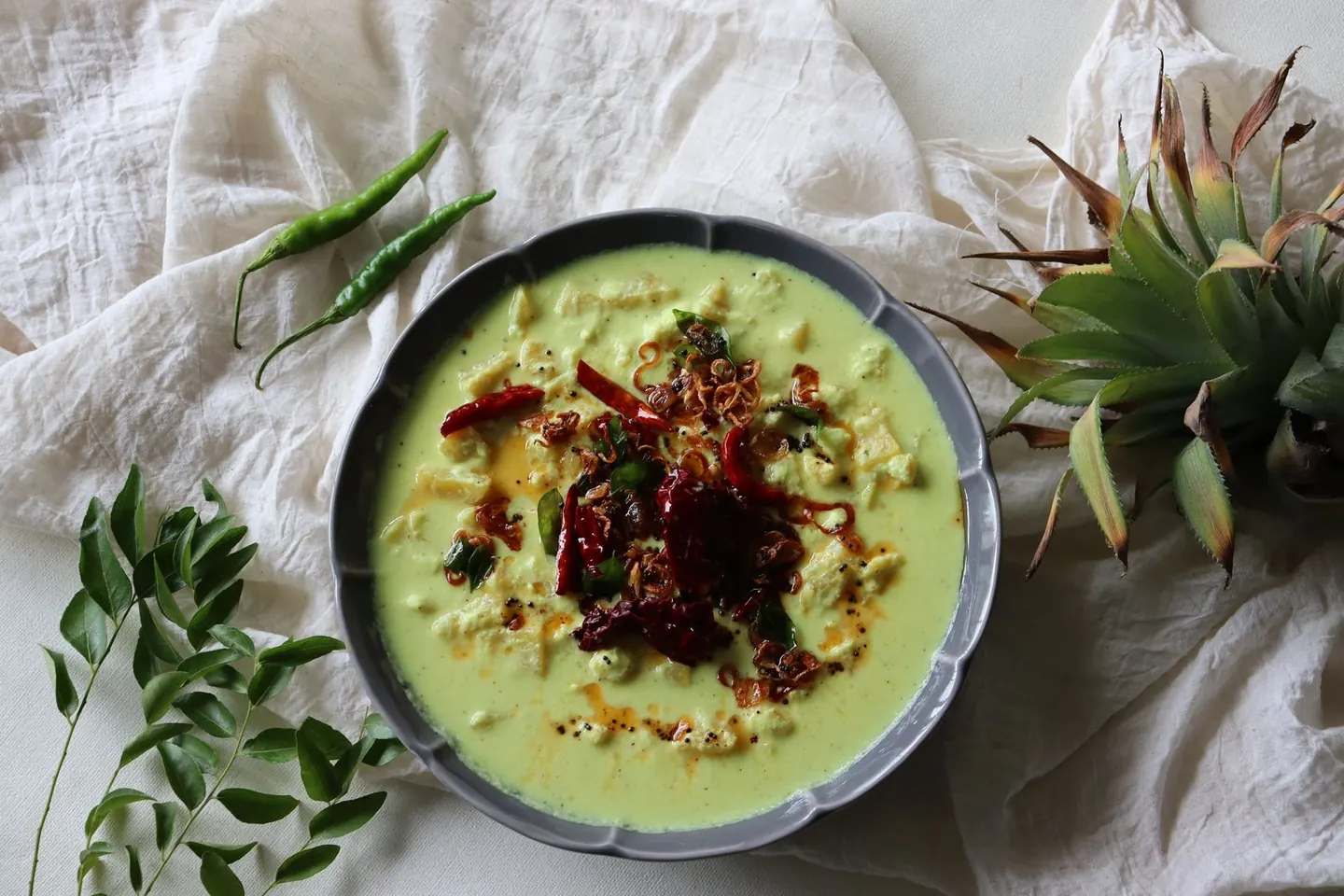
Photograph: Adobe Stock · representative of the dish
Plan ahead: plus 20 minutes cooling — required.
Beetroot pachadi is the youngest dish on a sadya leaf and the one that makes non-Malayalis stare, because it comes to the table the colour of a hibiscus. The chemistry is simple and worth knowing: beetroot's betalain pigments are pH-sensitive, and the lactic acid in curd shifts them from earthy purple towards pink. Cook the beetroot in the barest water, let it cool before the curd goes in, and you get that colour and a clean, sweet-sour finish.
Before you start: The curd must go in off the heat and into a mixture that is no warmer than blood heat, or it will split. Get the beetroot cooked and cooling before you whisk the curd.
Allergens: Milk, mustard.
Equipment: Small heavy pan with a lid; mixie or small blender for the paste; small tempering pan (cheena chatti). Substitute: an ammikkallu or mortar gives a coarser, better-textured paste and takes 5 minutes longer.
| Energy | 99 kcal |
| Protein | 2 g |
| Fibre | 2 g |
| Net carbohydrate | 8 g |
| Total carbohydrate | 10 g |
| Sugars | 6 g |
| Fat | 7 g |
| Saturated fat | 5 g |
| Sodium | 190 mg |
From ICMR-NIN IFCT 2017 and USDA FoodData Central. Per-serving figures stay the same when you scale.
Any beetroot works, though the small dense ones sold loose have more sugar and less earth than the large ones sold in bunches. Outside India, use plain whole-milk yoghurt rather than Greek yoghurt: Greek yoghurt has been strained, so it is thicker, more acidic and about half again as energy-dense, and a pachadi made with it needs thinning with 40 ml of water. Frozen grated coconut is fine, fully thawed and patted dry.
Blood pressure: 190 mg per serving. Curd itself carries about 46 mg of sodium per 100 g before any salt is added, so the floor here is around 120 mg even with no added salt at all — worth knowing before you try to cut it further.
Blood sugar: beetroot is sweeter than most Kerala vegetables and this is a 6 g-of-sugars dish. It is still only 8 g of net carbohydrate per serving, and the curd's protein and fat slow the meal.
Cholesterol: 5 g of saturated fat, from coconut and whole-milk curd. Low-fat curd takes it to about 3.5 g at some cost to body.
Low-fat curd for whole → saturated fat falls from about 5 g to 3.5 g. Consequence: thinner, and more likely to weep on standing; whisk in 10 g of extra ground coconut to compensate.
No mustard seed in the paste → use 2 g of crushed black pepper. Consequence: the pungency becomes warm rather than sharp, and the dish loses the specific sadya character that mustard gives.
Beetroot replaced with 300 g of grated raw beetroot, uncooked → Consequence: brighter, crunchier, more earthy, and it will not keep beyond a few hours.
At 12 servings cook the beetroot in two batches or add 5 minutes to step 1; a crowded pan steams rather than reduces.
Best on the day. Fridge 2 days in a covered non-metal container, after which the curd sours noticeably and the colour dulls. Freeze — do not. Curd emulsions break irreversibly on thawing. Make ahead by cooking the beetroot and grinding the paste up to 2 days in advance and adding the curd on the day.
Thin day-two pachadi with 100 ml of water and a pinch of cumin and drink it cold as a beetroot sambharam, or spoon it over hot matta rice as a one-bowl lunch with a pappadam broken over it.
Split, grainy, watery: the curd went into a mixture that was too hot. There is no repair. Cool properly next time.
Muddy brown rather than pink: not enough acid, or the beetroot was overcooked. Add 10 ml of lime juice and it will shift back some of the way.
Bitter: the mustard seed in the tempering burned. It should pop and stop; a further 20 seconds turns it acrid.
Serve with
R015 Perfect Matta Rice · R059 Sambar · R069 Avial · R118 the lightened Onam sadya
Tap a star to rate this recipe
The Kindle edition is on its way. Until it lands, the complete book — all 25 chapters and 137 recipes — is free to read here, and it stays free after.