 R089
R089Kerala Kitchen Salad
Raw vegetables the way a Kerala kitchen cuts them
Recipes › Salads, Pachadis, Chutneys, Podis and Pickles
R092
Sweet, sour and pungent all at once
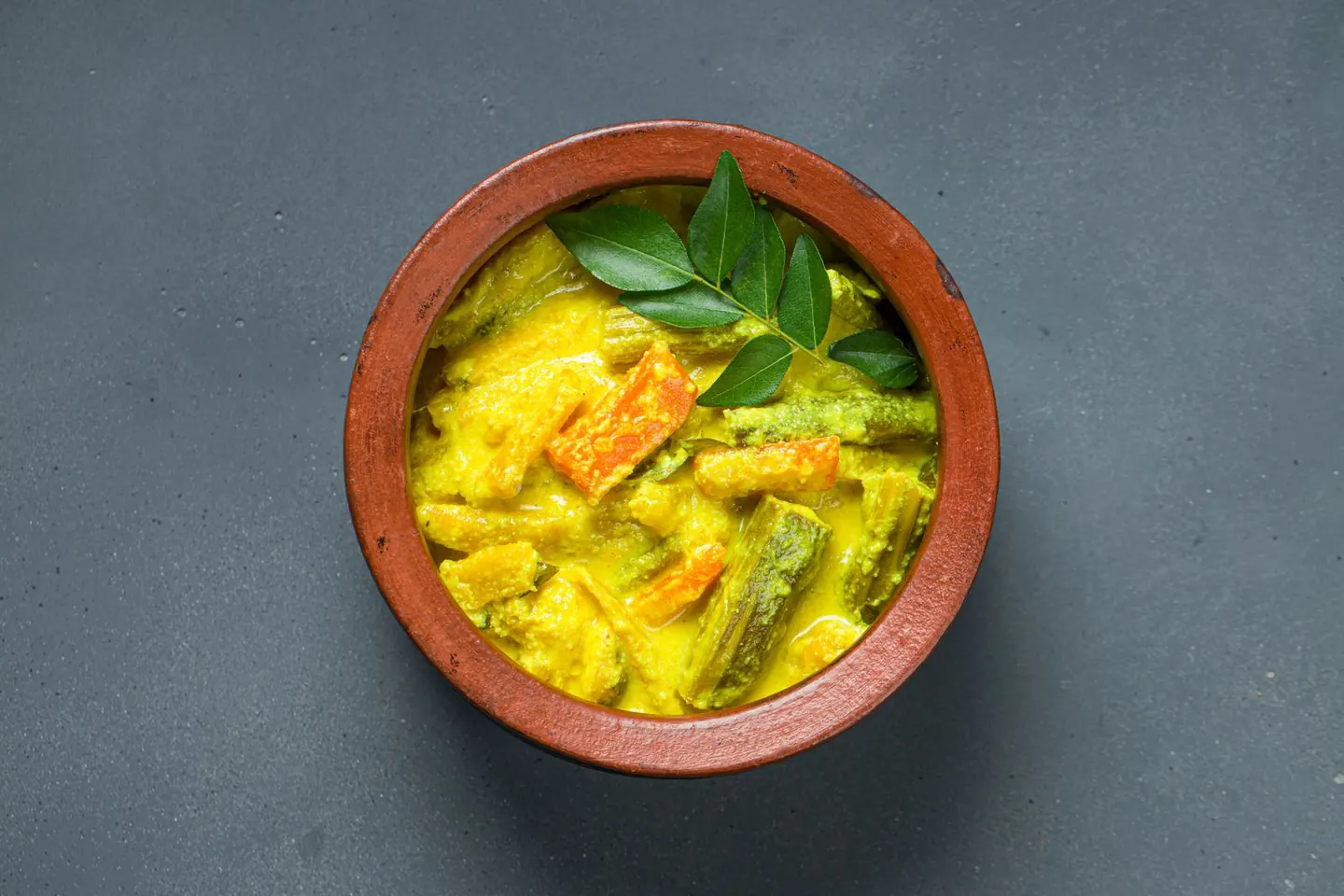
Photograph: Adobe Stock · representative of the dish
Plan ahead: plus 15 minutes cooling — required.
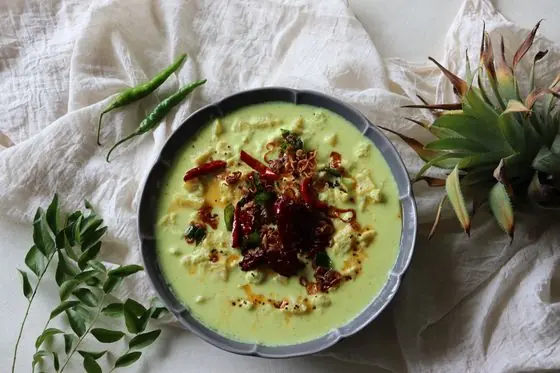
The pineapple pachadi is the loudest dish on a sadya leaf and the one that teaches the sadya's logic best: sweet from the fruit, sour from the curd, pungent from ground mustard and green chilli, all in a single spoonful. Vazhakulam pineapple from Ernakulam is what a Kerala cook reaches for, low in acid and high in sugar. Use fruit that is ripe enough to smell from across the kitchen, cut small, and cooked only briefly.
Before you start: Curd goes into a cooled mixture, never a hot one. And taste the pineapple before you weigh the jaggery: a very ripe fruit may need only 10 g, and a sour one 20 g.
Allergens: Milk, mustard.
Equipment: Small heavy pan with a lid; mixie; small tempering pan.
| Energy | 120 kcal |
| Protein | 4 g |
| Fibre | 3 g |
| Net carbohydrate | 14 g |
| Total carbohydrate | 17 g |
| Sugars | 12 g |
| Fat | 6 g |
| Saturated fat | 5 g |
| Sodium | 180 mg |
From ICMR-NIN IFCT 2017 and USDA FoodData Central. Per-serving figures stay the same when you scale.
Tinned pineapple in juice, drained hard, works at 350 g drained weight; tinned in syrup does not, because the syrup pushes the sugars up by several grams a serving and no jaggery is then needed at all. Frozen pineapple chunks are good and need 3–4 minutes less cooking. Where jaggery is unavailable, dark muscovado or Latin American panela is essentially the same product at about 1:1 by weight.
Blood sugar: this is the highest-sugar dish in the chapter at 12 g per serving, and 9 g of that is the fruit. It belongs beside a rice meal with a pulse on the plate rather than eaten alone, and a reader watching post-meal glucose should treat it as part of the meal's carbohydrate rather than as a free vegetable.
Blood pressure: 180 mg per serving against a 2,000 mg target.
Cholesterol: 5 g of saturated fat. Low-fat curd brings it to about 3.5 g.
Ripe mango for pineapple → Consequence: sweeter and less acidic, so drop the jaggery entirely and add 10 ml of lime juice at the end.
No jaggery at all → Consequence: noticeably sharper and perfectly good with a properly ripe fruit; sugars fall from 12 g to about 9 g and energy to about 110 kcal.
Ash gourd for half the pineapple → Consequence: the dish becomes a pulissery-leaning pachadi, 30 kcal lighter and much lower in sugars, at the cost of most of its character.
Cook the fruit and the paste up to 2 days ahead and keep it in the fridge, adding curd on the day. Finished, fridge 2 days. Do not freeze — the curd breaks and the pineapple turns fibrous.
Spoon it over hot rice with a pappadam, or thin it with 100 ml of water into a cold soup with a pinch of roasted cumin. Cooked pineapple with the paste, before the curd goes in, also freezes for 1 month on its own.
Split: the curd went in hot.
Cloying: too much jaggery for the ripeness of the fruit. Add 10 ml of lime.
Watery: step 2 was skipped. Reduce properly before the paste goes in.
Serve with
R015 Perfect Matta Rice · R059 Sambar · R069 Avial · R119 the lightened sadya menu
Tap a star to rate this recipe
The Kindle edition is on its way. Until it lands, the complete book — all 25 chapters and 137 recipes — is free to read here, and it stays free after.