 R100
R100Baked Ethakka Appam
Pazham pori out of the oven, and what that costs
R102
Stuffed nendran, from the steamer instead of the pan
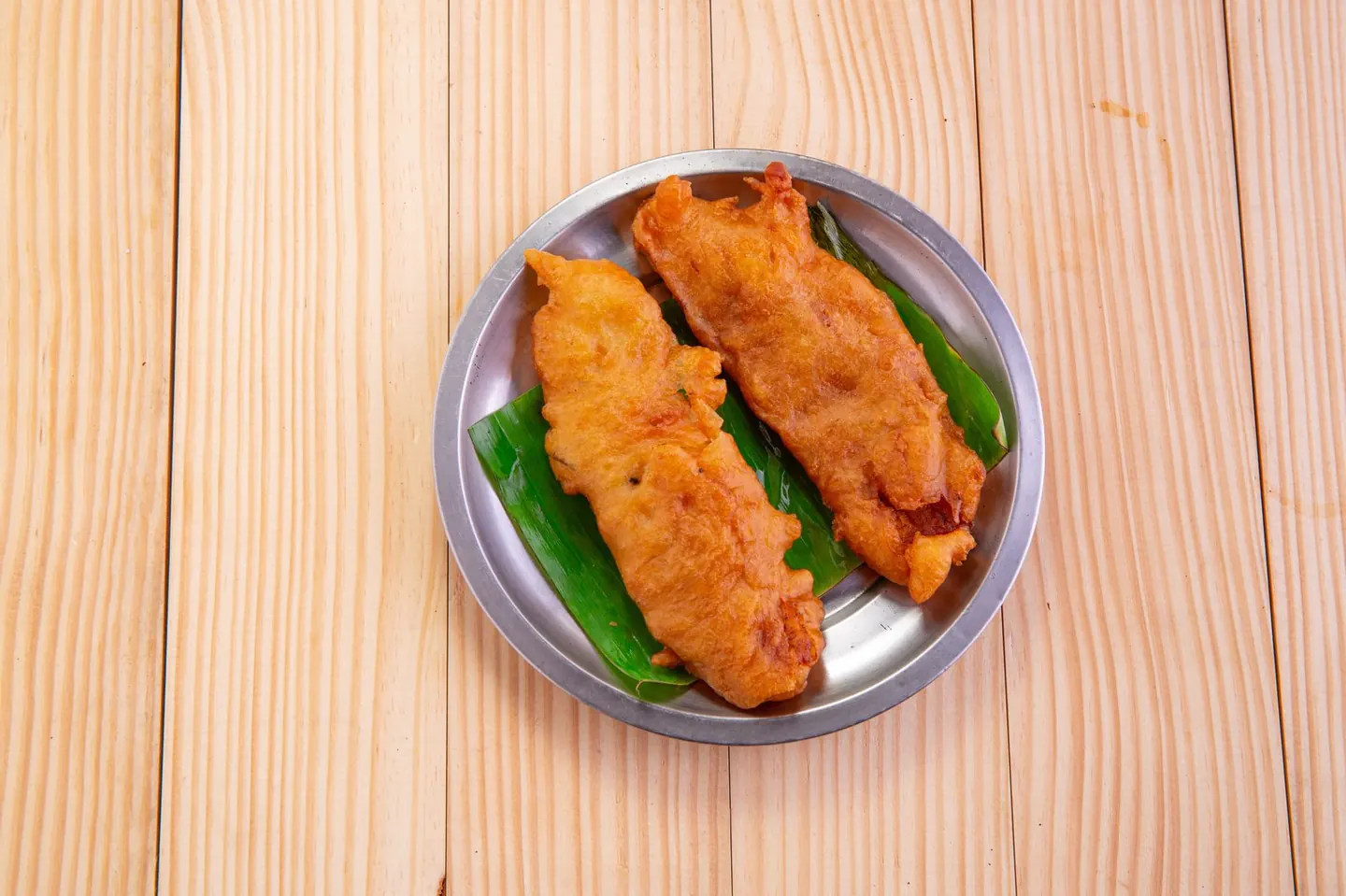
Photograph: Adobe Stock · representative of the dish
This is a Malabar tea-time dish and an iftar dish, and it is one of the very few sweets in the Kerala repertoire that needs almost no re-engineering at all — the banana and the coconut were always the whole point, and the batter was only ever there to hold the filling in. A banana leaf holds it in better. Twenty minutes, one steamer, no oil.
Before you start: Get the steamer to a rolling boil before the parcels go in. Parcels put into a cold steamer sit in condensation and the leaf tears.
Allergens: Sulphites.
Equipment: Steamer, or a puttu kutti with the top removed, or a colander over a pan with a tight lid; banana leaf, or baking parchment. Substitute: parchment works exactly as well mechanically and gives up the faint vegetal aroma the leaf contributes — a real loss, but a small one.
| Energy | 224 kcal |
| Protein | 2 g |
| Fibre | 4 g |
| Net carbohydrate | 38 g |
| Total carbohydrate | 42 g |
| Sugars | 35 g |
| Fat | 7 g |
| Saturated fat | 6 g |
| Sodium | under 10 mg |
From ICMR-NIN IFCT 2017 and USDA FoodData Central. Per-serving figures stay the same when you scale.
The plantains must be ripe — the skin blackening at the tips, the fruit yielding to a thumb — because underripe nendran stays starchy through steaming and the dish tastes of raw flour. Frozen banana leaf is sold in every South Asian and South East Asian grocery and is better than fresh for this, because freezing has already broken the leaf's fibres so it folds without splitting. Pass fresh leaf briefly over a flame until it darkens and goes glossy, 5–10 seconds a side, to make it pliable.
Blood sugar: be clear-eyed about this one. It is 38 g of net carbohydrate and 35 g of sugars a portion, nearly all of it from the fruit, and steaming does not change that. It is a sweet, and this book's position on sweets is about frequency rather than substitution. Halve the portion, eat it after a meal that contained a pulse, and do not eat it at four o'clock on an empty stomach.
Cholesterol: 6 g of saturated fat, all of it from 60 g of fresh coconut. The traditional fried version adds 8–12 g of coconut oil on top of that. Cutting the coconut to 40 g takes this to about 4 g.
Blood pressure: under 10 mg. There is no added salt in this dish.
Dates for the jaggery and raisins, 40 g stoned and chopped → Consequence: stickier, more caramel, a little fibre, and sugars land around 33 g rather than 35 g. A modest change, honestly reported.
No jaggery at all, with a very ripe fruit → Consequence: sugars fall to about 30 g and the filling is looser. Perfectly good; most people will not notice.
Shallow-fried in the traditional batter → Consequence: the crust, plus roughly 90–110 kcal and 8–10 g of saturated fat a portion from the absorbed oil and the egg batter. (Allergen: this swap introduces egg.)
Green plantain, steamed and stuffed with a savoury coconut mix → Consequence: a different dish, at 17.6 g of available carbohydrate per 100 g against 25 g, and one that belongs beside R093 rather than after it.
At eight servings steam in two batches; a crowded steamer runs cool and the parcels in the middle stay underdone.
Assemble the parcels up to 1 day ahead and keep them in the fridge, then steam from cold with 3–4 minutes added. Cooked: fridge 3 days in their parcels; freeze 2 months wrapped, re-steamed from frozen for 15–18 minutes. Reheat by steaming, never in a microwave, which makes the fruit weep.
Slice cold leftovers into rounds and warm them on a dry tawa until the cut faces caramelise, 2–3 minutes a side — arguably better than the original. Or mash one into 200 ml of milk with a pinch of cardamom for a banana drink.
Starchy and bland: the fruit was underripe. Nothing fixes this.
Filling ran out into the steamer: the slit went all the way through, or the parcel was loosely folded.
Leaf split: fresh leaf that was not heated first. Pass it over a flame until it goes glossy.
Watery: condensation dripped from the lid onto the parcels. Lay a cloth under the lid next time.
Serve with
R106 Chai, unsweetened · R111 Sulaimani · R107 Sambharam
Tap a star to rate this recipe
The Kindle edition is on its way. Until it lands, the complete book — all 25 chapters and 137 recipes — is free to read here, and it stays free after.