 R100
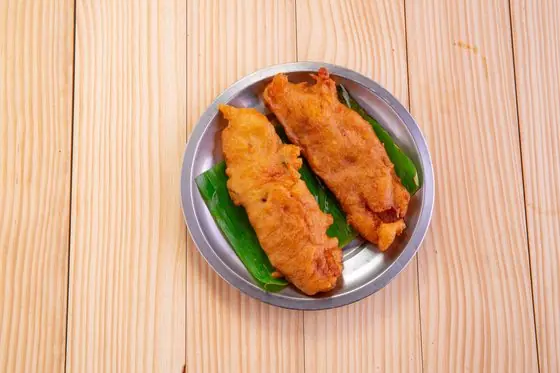
R100Baked Ethakka Appam
Pazham pori out of the oven, and what that costs
R106
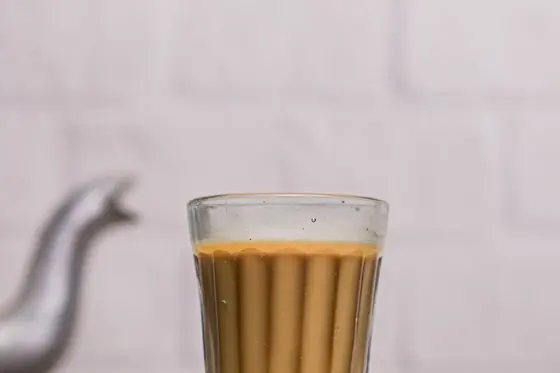
A proper Kerala chaya, and the number nobody adds up
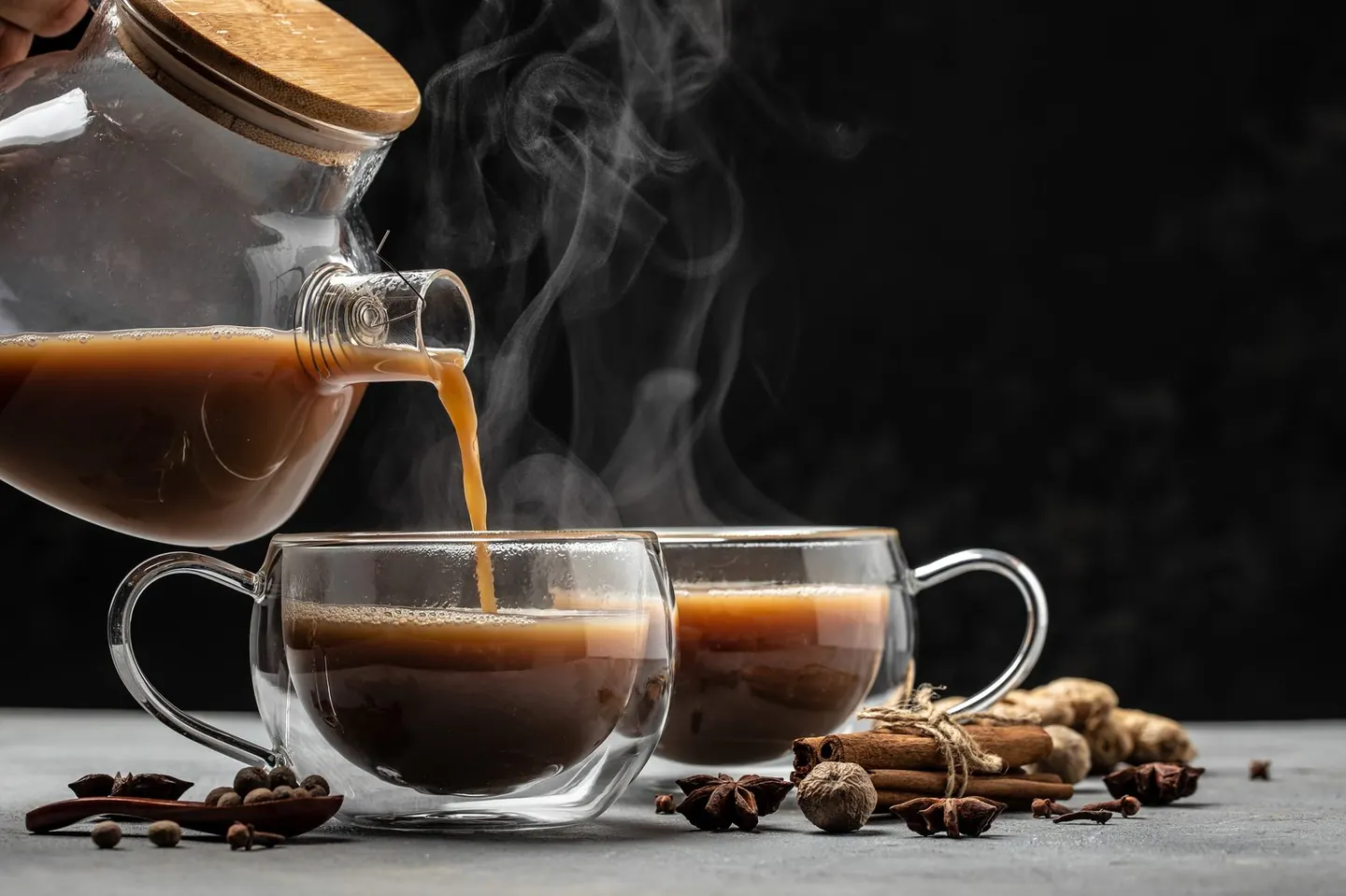
Photograph: Adobe Stock · representative of the dish
Kerala's chaya is not Indian masala chai and it is not English tea. Tea dust is boiled hard in water with a little crushed ginger, milk goes in, the whole thing is brought up once, and then it is poured from height between two vessels — adichu, "beaten" — until it foams. The pouring is not showmanship: it aerates and cools the tea, and it is why tea-shop chaya has a texture nothing made in a cup has. Learn the method first. The sugar is a separate conversation, and it is the one that matters.
Before you start: Have the strainer, the glasses and the pouring vessels out before the milk goes in. From the moment the milk is in, the tea has about 90 seconds before it boils over or stews.
Allergens: Milk.
Equipment: Small deep pan; fine strainer; two vessels tall enough to pour between — a metal tumbler and a jug will do. Substitute: pour between two mugs from about 30 cm and accept less foam. Do not skip the pouring altogether; it changes the drink.
| Energy | 84 kcal |
| Protein | 3 g |
| Fibre | 0.6 g |
| Net carbohydrate | 9.4 g |
| Total carbohydrate | 10 g |
| Sugars | 8 g |
| Fat | 4 g |
| Saturated fat | 2 g |
| Sodium | 30 mg |
From ICMR-NIN IFCT 2017 and USDA FoodData Central. Per-serving figures stay the same when you scale.
Kerala tea shops use tea dust, the finest grade, because it extracts fast and hard; a good CTC leaf from Munnar, the Nilgiris or Assam is the closest substitute and needs 30 seconds longer. Orthodox leaf teas and Darjeeling do not work — they are too delicate and go bitter under this treatment. Whole milk is what makes the foam; skimmed milk will not hold it.
Blood sugar: the sugar in tea is free sugar in liquid form, arriving without fibre, fat or protein to slow it, four times a day. Of everything in this book, it is the cheapest thing to change and the item where a reader watching post-meal glucose will see a difference soonest.
Blood pressure: 30 mg of sodium a glass, from the milk. Not an issue.
Cholesterol: 2 g of saturated fat a glass from whole milk, and 8 g a day across four glasses, which is worth knowing. Semi-skimmed milk halves it and costs you most of the foam; the fermented-dairy evidence does not resolve the full-fat question in either direction, so this is a straightforward choice about the fat, not about the milk.
Sulaimani — black tea with lime, no milk, the Malabar after-feast tea → Consequence: about 5 kcal a glass unsweetened, no saturated fat, and it is genuinely a different and very good drink. The single largest change available in this chapter.
Semi-skimmed milk → saturated fat falls from about 2 g to 1 g a glass. Consequence: a thinner drink that will not hold foam.
Jaggery for the sugar → Consequence: almost none that matters. Jaggery is unrefined sugar and behaves like sugar; what it gives is a better flavour, and better-tasting sugar is a real advantage only if it lets you use less. If it does not, this is not a change.
Extra ginger and cardamom, sugar down a full teaspoon in one step → Consequence: aroma partly covers the missing sweetness, and this is the one place where a faster cut sometimes holds.
Tea does not scale linearly — a larger pot extracts more efficiently, so use proportionally less leaf and taste at 90 seconds.
Chaya is a made-to-order drink and does not keep; reheated tea is stewed tea. Fridge 1 day as the base of a cold tea, strained and unsweetened. Freeze — no. What you can make ahead is the ginger-cardamom water: boil 15 g of crushed ginger and 4 cardamom pods in 600 ml of water for 5 minutes, strain, and keep it in the fridge 3 days or freeze 2 months in an ice-cube tray, which takes the tea from eight minutes to four.
Cold strained chaya, unsweetened, over ice with a squeeze of lime is a better iced tea than most. Two tablespoons of strong strained tea also darkens a rice-flour batter usefully.
Bitter and flat: the tea boiled after the milk went in. Take it off the moment the surface lifts.
No foam: skimmed milk, or the pour was too short. Pour from higher and more times.
Weak: orthodox leaf instead of dust, or not enough boiling at step 2.
Skin on the surface: the milk was boiled. Strain it and pour again; next time watch step 3.
Tastes wrong at one teaspoon: you stepped down too fast. Go back half a step and hold it for three weeks. The plan works at the pace it is written.
Serve with
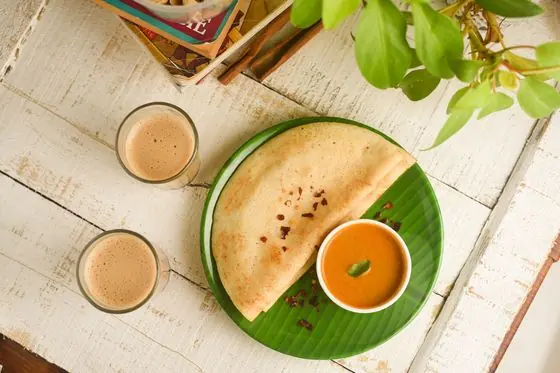
R105 Roasted Kadala Mix · R104 Savoury Kozhukkatta · R100 Baked Ethakka Appam · R111 Sulaimani, which takes this further
Tap a star to rate this recipe
The Kindle edition is on its way. Until it lands, the complete book — all 25 chapters and 137 recipes — is free to read here, and it stays free after.