 R100
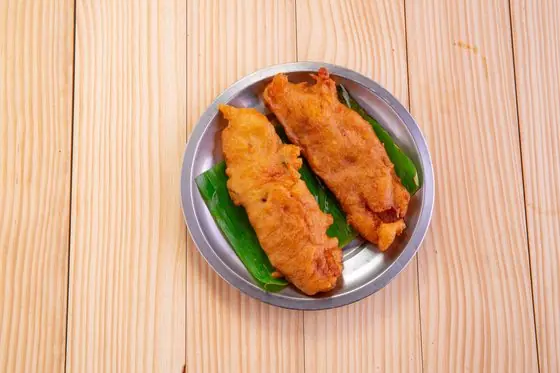
R100Baked Ethakka Appam
Pazham pori out of the oven, and what that costs
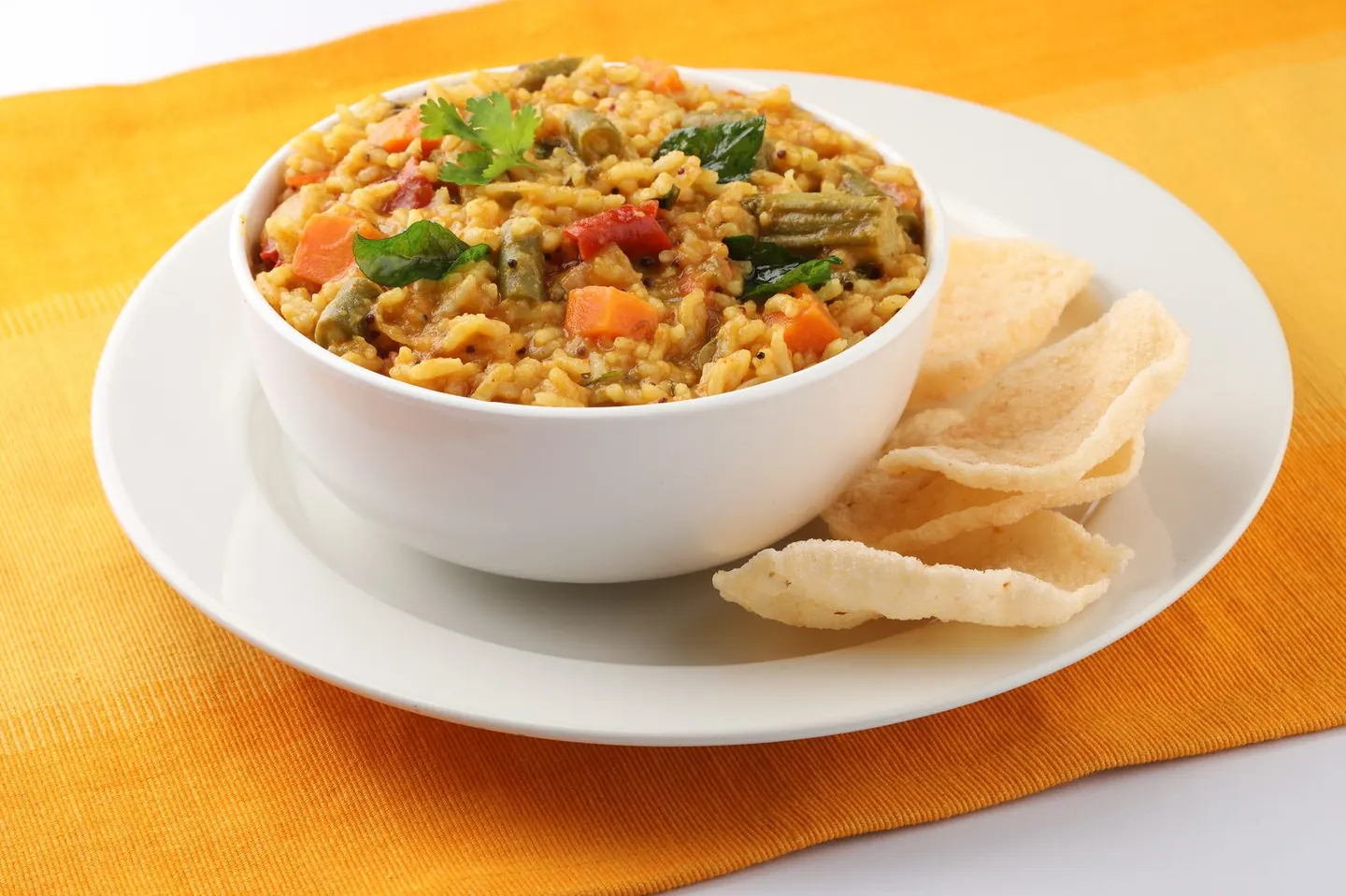
Photograph: Adobe Stock · representative of the dish
Plan ahead: plus 8 hours soaking — required.
Black chickpeas are the highest-fibre pulse in the Kerala repertoire by a wide margin: 25.2 g per 100 g, against 15.2 g in chana dal and 11.5 g in vanpayar. Soaked and roasted they go from a curry ingredient to something you eat with your fingers, and a 35 g portion carries 6 g of protein and 8 g of fibre for 116 kcal. That is the best satiety-per-calorie snack in this book. The portion is the whole recipe, so weigh it the first six times.
Before you start: The chickpeas must be dried thoroughly after soaking. Wet chickpeas steam rather than roast and come out leathery, and no extra oven time fixes it.
Allergens: Sesame. Gluten (wheat) — only if your asafoetida is compounded with wheat flour, as most brands are (it arrives with M06).
Equipment: Oven; large baking tray; clean tea towel. Substitute: an air fryer at 180°C (350°F) for 20–24 minutes, shaken every 6 minutes, in two batches. A heavy pan on the hob also works and needs near-constant stirring for 20–25 minutes.
Black chickpeas are sold as kala chana, kadala or "brown chickpeas" in every South Asian grocery and in most supermarkets now. Ordinary white chickpeas work and give a softer, less nutty result with about 10 g less fibre per 100 g. Do not use tinned chickpeas — they are already cooked soft and will not crisp. Fresh coconut chips are worth the trouble; desiccated coconut burns before it colours.
Blood sugar: 13 g of net carbohydrate against 8 g of fibre, in a pulse. This is the snack in the book with the best case behind it, and it works best eaten around 4pm in place of something fried rather than in addition to it.
Blood pressure: 120 mg a portion, from 2 g of salt across the batch. Halve the salt and lean on the M06 and it drops to about 65 mg. Commercial fried mixtures are a different order of magnitude and the reason ICMR-NIN's 2024 guidance names salted snacks specifically.
Cholesterol: 2 g of saturated fat a portion, all from the coconut chips. Leave them out and it falls to under 0.5 g, at a real cost to the flavour.
White chickpeas for black → Consequence: softer, milder, and fibre falls from 8 g to about 5 g a portion.
Coconut oil for sesame → Consequence: the tea-shop smell, and saturated fat up from 2 g to about 3 g a portion.
Add 40 g of roasted peanuts after cooling → Consequence: better as a mixture, more monounsaturated fat, and about 25 kcal more per portion. (Allergen: this swap introduces peanuts.)
Fried, as the tea shop makes it → Consequence: roughly 30–40 g of absorbed oil across the batch, so about 45 kcal and 4 g more fat a portion, and a crunch the oven does not quite reach.
Skip the M06 and use 1 g more salt → Consequence: simpler, and sodium rises from 120 mg to about 175 mg a portion for no gain in flavour.
At 400 g use two trays and swap shelves halfway, or the lower tray stays leathery. Oil does not scale linearly; a fuller tray needs proportionally less.
Cupboard 2 weeks in a genuinely airtight jar, and they soften noticeably by week three in a humid kitchen. Fridge 6 weeks — the better option in Kerala, or anywhere above 25°C (77°F). Freeze 4 months; they thaw crisp in 10 minutes on the counter and this is the best way to keep a large batch. Refresh any batch that has gone soft in a 160°C (325°F) oven for 6–8 minutes and cool completely.
Leathery rather than crisp: not dried after soaking, or pulled from the oven too early. Return them for 8–10 minutes.
Burnt coconut and leaves: they went in at the start rather than in the last 5–6 minutes.
Soft after three days: the jar is not airtight, or they were jarred warm. Refresh in the oven and cool completely.
Hard as gravel: over-roasted by 10 minutes or more, or the chickpeas were old. Old pulses never soften properly, in a curry or here.
Serve with
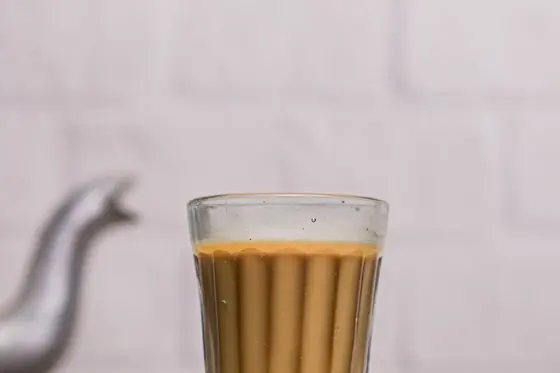
R106 Chai · R107 Sambharam · R099 Carrot and Coconut Raita · R100 Baked Ethakka Appam, if one sweet thing is wanted alongside
Tap a star to rate this recipe
The Kindle edition is on its way. Until it lands, the complete book — all 25 chapters and 137 recipes — is free to read here, and it stays free after.