 M01
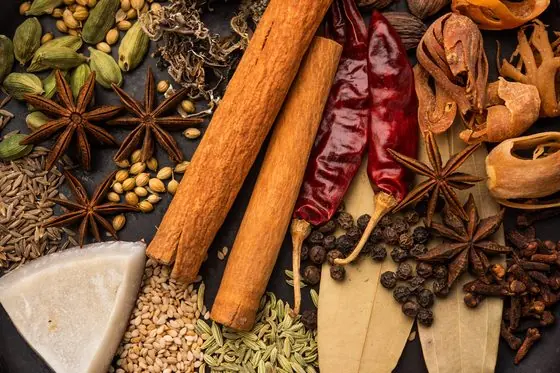
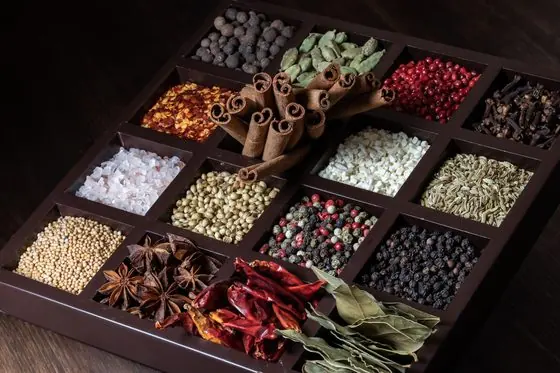
M01Kerala Garam Masala
The southern register — aromatic, not earthy
M06
The jar that lets you take the salt out
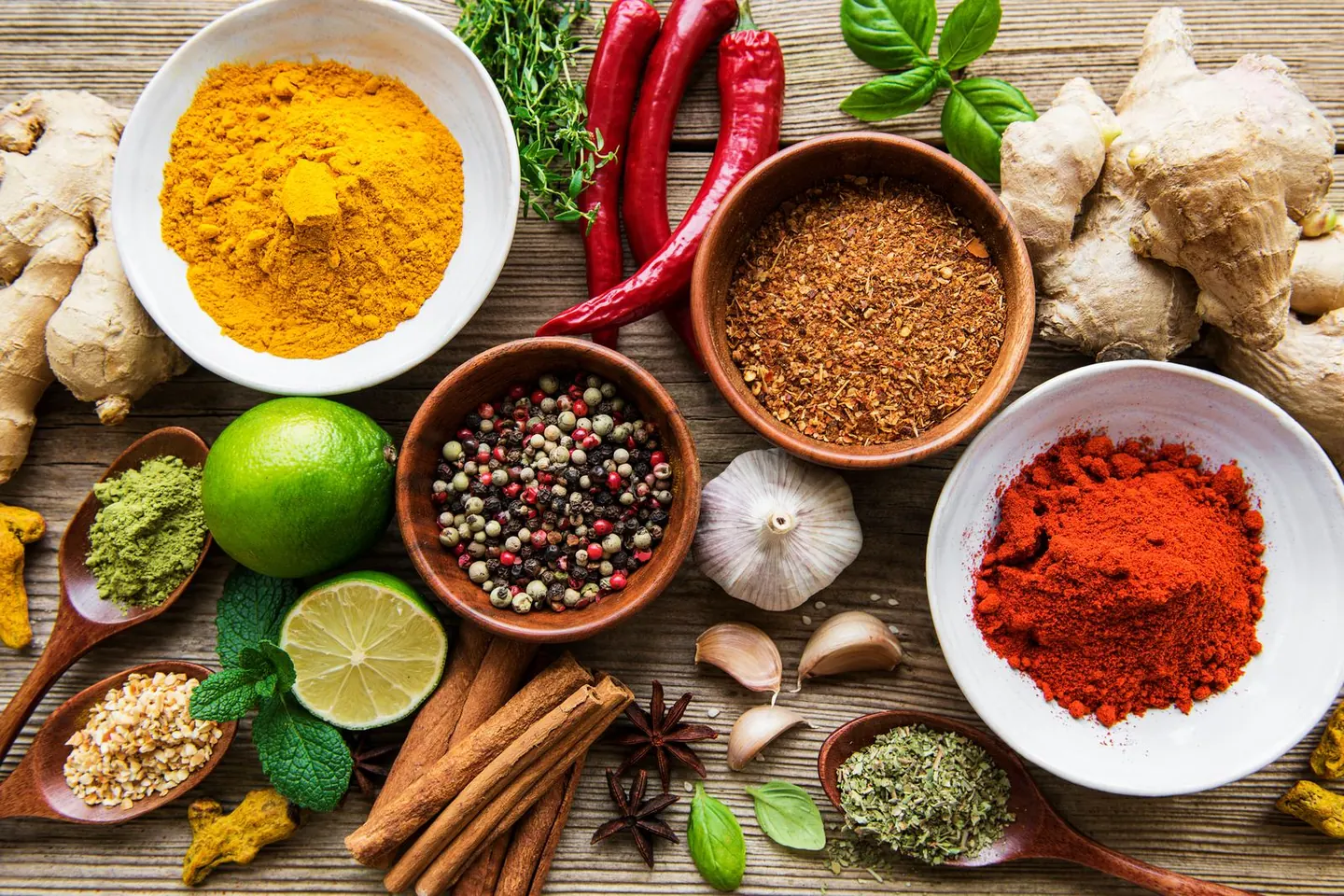
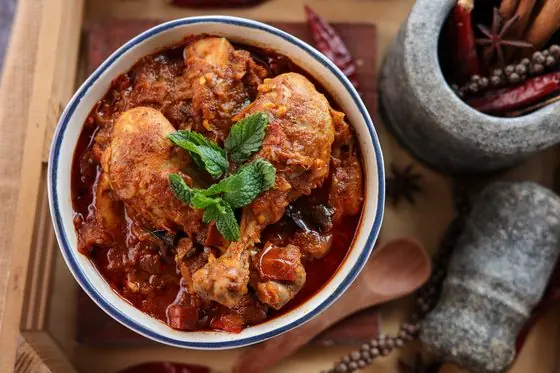
Photograph: Adobe Stock · representative of the dish
Plan ahead: plus 20 minutes cooling — required.
The jar that lets you take the salt out [LOW SODIUM] [VEGAN]
Everything else in this chapter is a version of something a Kerala grandmother made. This one is an invention, and it is the most useful thing in the book. Salt-taste preference adapts over roughly eight to twelve weeks, so a 10–15% cut each month goes undetected where a single steep cut does not; and the levers that make a lower-salt dish taste finished are acid, umami, aroma, pungency and texture. This podi delivers four of the five at once. Keep it beside the hob and use it wherever your hand would reach for the salt cellar.
Before you start: Strip the curry leaves from their stalks and check them for moisture. Damp leaves will not crisp and will make the podi cake.
Allergens: None of the major allergens as the recipe is written. Gluten (wheat) — only if your asafoetida is compounded with wheat flour, as most brands are.
Equipment: Heavy dry pan; spice grinder.
Curry leaves are the one ingredient with no substitute — dried jar leaves have almost no aroma and the coriander-leaf swap tastes of something else entirely. Fresh leaves freeze well on the stalk for six months, so buy a large bunch when you see one, or grow a Murraya koenigii on a windowsill and strip it twice a year.
Blood pressure: a tablespoon carries under 10 mg of sodium and replaces roughly a quarter-teaspoon of salt's worth of perceived seasoning — about 590 mg — in the dishes it suits. Against a 2,000 mg daily target, using it twice a day instead of the salt cellar closes a meaningful part of the gap.
Blood sugar: the roasted dal contributes protein and fibre, and a pulse on the plate is the habit with the best evidence in this book.
No urad dal → all chana. Slightly less aroma, no other loss.
Add 20 g roasted white sesame → richer and nuttier, better on idli and rice, worse on vegetables. Fat rises about 1 g per tablespoon. (Allergen: this swap introduces sesame.)
Add 10 g dried prawn or 8 g powdered dried fish → a large jump in savoury depth. Stated honestly: dried fish is heavily salted, so the podi is no longer low-sodium and no further salt should go into the dish at all. (Allergen: this swap introduces fish, crustaceans.)
Cupboard 6 weeks — shorter than the spice podis, because roasted dal fat oxidises and curry-leaf aroma goes first. Fridge 4 months. Freeze 9 months in a small jar, taking out a fortnight at a time so the main jar is never warmed and cooled.
This is the one jar in the chapter you want to finish quickly, because a salt-free podi has nothing preserving it and the roasted dals go stale in about six weeks. Sprinkle the remainder over anything at all — curd, boiled vegetables, kanji, a plate of rice — and treat the empty jar as the signal to make the next one. Do not stretch it to three months.
Tastes of nothing: the curry leaves were damp or the dals under-roasted. Both faults are invisible until you taste.
Caked solid: moisture, almost certainly from the leaves. Dry the jar at 60°C (140°F) for 15–20 minutes, cool, re-grind.
Bitter: the urad dal burned at step 2.
Serve with
R020 Kanji, Three Ways · R036 Unakka Meen Thoran · R105 Roasted Kadala Mix · R065 Cheera Thoran · R099 Carrot and Coconut Raita — and, more broadly, steamed and boiled vegetables, idli and dosa, dals, boiled tubers, and anywhere a recipe says "taste before you salt".
Tap a star to rate this recipe
The Kindle edition is on its way. Until it lands, the complete book — all 25 chapters and 137 recipes — is free to read here, and it stays free after.