 R024
R024Meen Vevichathu
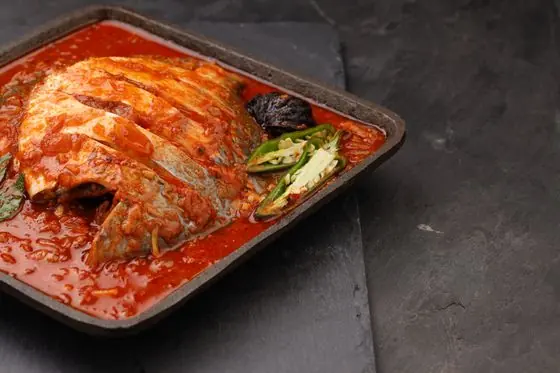
Kudampuli fish curry, the Kottayam Syrian Christian way
R036
Cheera with dried fish used as a seasoning, not as a portion
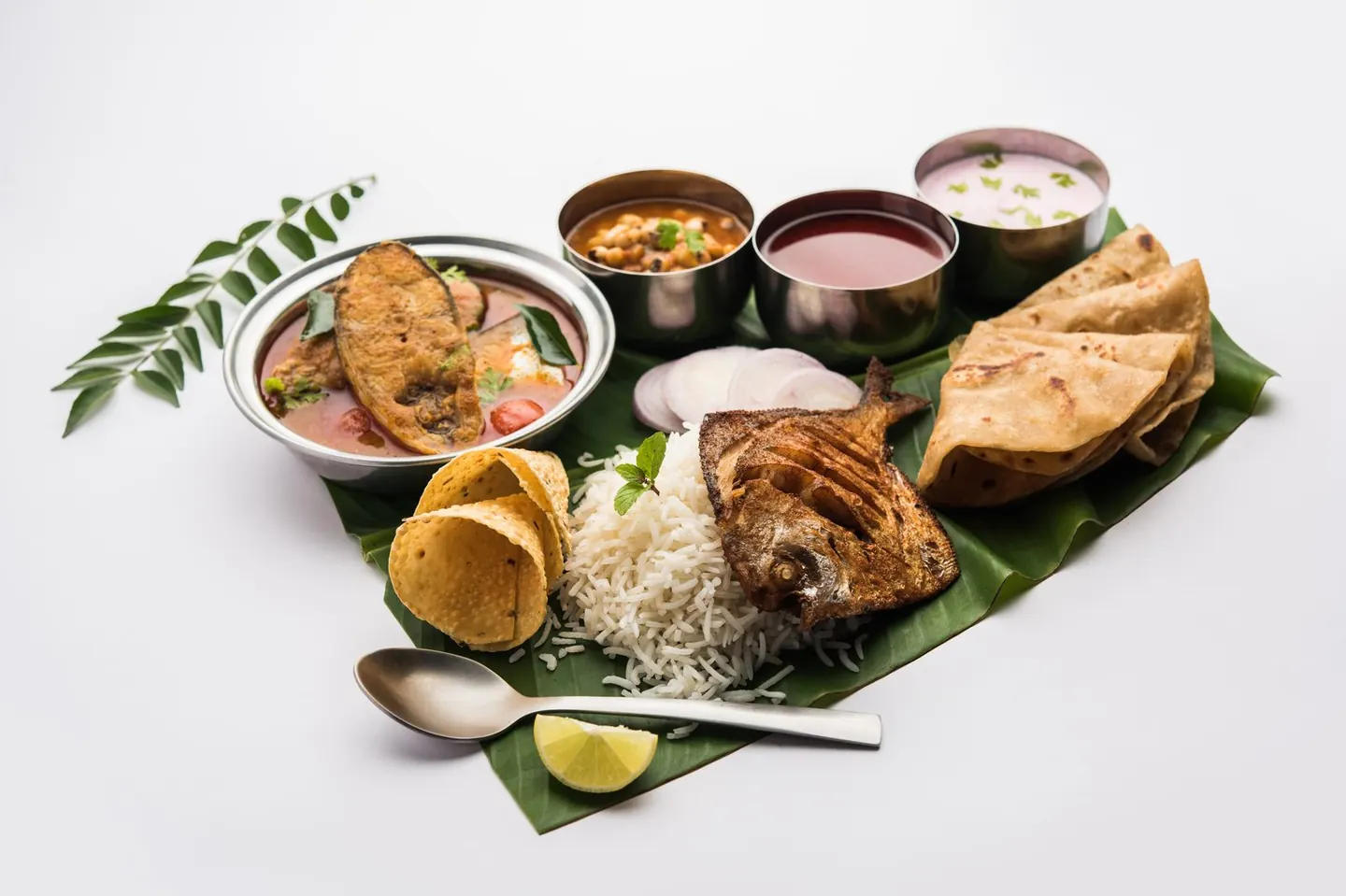
Photograph: Adobe Stock · representative of the dish
Plan ahead: including 20 minutes soaking the fish — required.
Dried fish is one of the oldest flavour concentrates in this cuisine and one of its largest hidden sodium sources. Kerala's own state survey measured 6.7 g of salt a day against WHO's target of under 5 g, and unakka meen, achar and pappadam are where a great deal of it sits. The dish does not need to go. It needs to be re-proportioned, which is the whole of this recipe: a small quantity, finely broken, giving a whole panful of greens a savoury depth nothing else provides.
Allergens: Fish, mustard.
Equipment: Wide heavy pan, 26 cm, with a lid; chattuvam or a flat wooden turner. Substitute: any wide pan with a lid. Use wood rather than metal: a metal spatula bruises the greens and turns a thoran to mush.
| Energy | 151 kcal |
| Protein | 11 g |
| Fibre | 7 g |
| Net carbohydrate | 6 g |
| Total carbohydrate | 13 g |
| Sugars | 3 g |
| Fat | 10 g |
| Saturated fat | 7 g |
| Sodium | high — see note |
From ICMR-NIN IFCT 2017 and USDA FoodData Central. Per-serving figures stay the same when you scale.
In the US, UK, Gulf and Australia: Kerala- and Sri Lanka-facing shops sell unakka kozhuva (dried anchovy) and unakka chemmeen (dried prawn) in packets. The Filipino aisle is an excellent alternative source — dilis is dried anchovy and tuyo is dried herring or sardine — and so is the Chinese and Thai dried-shrimp shelf. Italian salted anchovies work surprisingly well, rinsed hard under running water and then soaked once; use 25 g rather than 40 g, because they are wetter and saltier. Buy dried fish firm, dry and pale rather than dark, with no caked salt crust and no sharp smell of old oil, which means it has oxidised. Store it airtight in the freezer, 6 months — it is high in fat, will go rancid at room temperature, and will perfume an entire kitchen from inside a cupboard. Buy carefully rather than treat carelessly, and here is why. Mackerel, sardine and anchovy are all scombrotoxin-forming species, and the FDA's seafood guidance states that "histamine formation is possible during processes such as brining, salting, smoking, drying, fermenting, and pickling until the product is fully shelf-stable" — and, decisively for a cook, that "once histamine is produced, it cannot be eliminated by heat (including retorting) or freezing". No soak, no fry and no freezer rescues fish that was mishandled before it was dried. The FDA's guidance level is 50 ppm histamine in the edible portion. That is a supplier's number, not a kitchen one, which is exactly the point: the only control you hold is where you buy. For the greens: cheera is sold as amaranth, callaloo, bhaji or Chinese spinach; spinach, chard leaves or water spinach all substitute, with spinach releasing considerably more water.
Blood pressure: this is the recipe in the chapter that exists for you, and it is also the one with an unverified sodium figure — which is itself the honest answer. Soak twice, add no salt, treat the fish as a condiment at 10 g a head, and serve it alongside dishes whose sodium you do know. If you are working to a strict sodium budget and want certainty rather than an estimate, make the same thoran without the dried fish and 15 g of M06 low-sodium podi instead.
Blood sugar: 6 g of net carbohydrate and 7 g of fibre, which is the best fibre figure in this chapter.
Cholesterol: 7 g of saturated fat, nearly all from the 60 g of grated coconut, arriving with about 6 g of fibre. Forty grams of coconut takes it to about 5 g.
Cheera → 400 g cabbage (drier, sweeter, 2 minutes longer), 400 g green beans (finely cut, 3 minutes longer), or 350 g spinach (much wetter, so uncover 3 minutes earlier). Any thoran vegetable works.
Dried fish → 30 g dried prawn (unakka chemmeen), which is sweeter and stronger; soak it once only, for 10 minutes, because it is smaller and loses flavour fast. (Allergen: this swap introduces crustaceans.)
Dried fish → omit entirely and use 15 g M06 podi. Sodium becomes a known quantity, the dish becomes vegetarian, and it loses the marine depth that is the point.
Fresh fish → 100 g flaked cooked mackerel. A pleasant dish and a different one: no umami concentration, no sodium problem, and considerably more protein.
Soak and fry the dried fish ahead: fridge 3 days in a closed jar. Finished thoran: fridge 2 days. Freeze 1 month, though the greens go limp on thawing and it is better made fresh. Reheat dry in a pan for 2–3 minutes; do not microwave a thoran, which steams it.
Fold cold into rice, or into an omelette, or spread it on a dosa. It also makes a very good filling for a pathiri.
Too salty: the fish was not soaked, or soaked once instead of twice, or salt was added. Stir in 100 g more cooked greens and a squeeze of lime to spread the load.
Wet and khaki: the lid stayed on too long at step 5, or the greens were wet when they went in. Finish uncovered on a higher flame.
Fishy in an unpleasant, oily way: the dried fish was rancid. Smell it before you buy it and keep it in the freezer.
Greens turned brown: too much acid, too high a flame, or an iron pan. Cheera browns easily; medium heat and no lime until serving.
Serve with
R015 Matta Rice · R020 Kanji · R058 Parippu Curry · R081 Moru Curry
Tap a star to rate this recipe
The Kindle edition is on its way. Until it lands, the complete book — all 25 chapters and 137 recipes — is free to read here, and it stays free after.