 R024
R024Meen Vevichathu
Kudampuli fish curry, the Kottayam Syrian Christian way
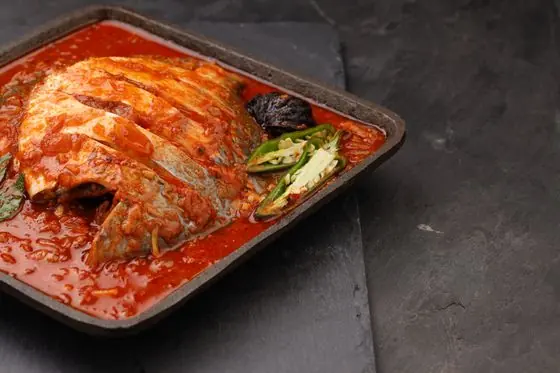
Photograph: Adobe Stock · representative of the dish
Koonthal roast is toddy-shop food, and it is on every shaap menu on the Kerala coast because squid is cheap, quick, and takes pepper and garam masala like meat. Squid also has a reputation for turning to rubber, and that reputation is deserved but avoidable: there are exactly two windows in which squid is tender, one under three minutes and one over twenty, and the whole method below is built around using both rather than getting stuck between them.
Before you start: Cut and dry the squid before you light the flame. Rings 1 cm wide, tentacles left in bunches, hoods scored inside in a fine crosshatch if you want them to curl. Then pat everything very dry, because wet squid steams and the sear is the point.
Allergens: Molluscs. Gluten (wheat) — only if your asafoetida is compounded with wheat flour, as most brands are (it arrives with M05).
Equipment: Wide heavy pan, 26–28 cm, with a lid. Substitute: any wide pan; a cheena chatti is traditional. The lid is not optional — the braise happens under it.
| Energy | 160 kcal |
| Protein | 22 g |
| Fibre | 3 g |
| Net carbohydrate | 7 g |
| Total carbohydrate | 10 g |
| Sugars | 3 g |
| Fat | 5 g |
| Saturated fat | 3 g |
| Sodium | 280 mg |
From ICMR-NIN IFCT 2017 and USDA FoodData Central. Per-serving figures stay the same when you scale.
Squid is one of the few seafoods where frozen is genuinely as good as fresh, because freezing breaks down some of the connective tissue and the thawed flesh is often more tender. In the US, UK and Australia: cleaned squid tubes and rings are in every supermarket freezer, usually labelled calamari; ask for whole squid at a fish counter if you want the tentacles, which are the best part. In the Gulf: fresh local squid is superb and cheap. Baby squid needs 1 minute less at every stage. Cuttlefish is an excellent substitute and slightly sweeter; it needs 3–4 minutes more in the braise. Do not buy pre-battered calamari rings for this.
Blood sugar: 8 g of net carbohydrate, mostly shallot and tomato. A very low-load dish.
Blood pressure: 280 mg, which earns the low-sodium tag, and squid is naturally one of the lowest-sodium seafoods there is. With no added salt it lands near 200 mg.
Cholesterol: 3 g of saturated fat is the second-lowest figure in this chapter. Squid is often flagged for dietary cholesterol; dietary cholesterol has a modest effect on blood cholesterol in most people compared with saturated fat, and this book's position is that the saturated-fat figure is the one to watch. Sesame oil takes it to about 1.5 g.
Cuttlefish → sweeter, thicker-walled, 3–4 minutes longer in the braise.
Baby squid, whole → 1 minute less at each stage; leave them whole and they look better than rings.
Octopus → 600 g, and the timing changes completely: no sear, 40–50 minutes covered, then the roast. Excellent, and a different recipe.
Prawns → do not use this method. Prawns have no second window; see R033.
Cook through step 5 and hold; the braise is the slow part. Fridge 2 days, and it is arguably better on day two because the collagen has fully relaxed. Freeze 2 months — squid freezes better than any other seafood in this chapter. Reheat in a hot dry pan, 3–4 minutes.
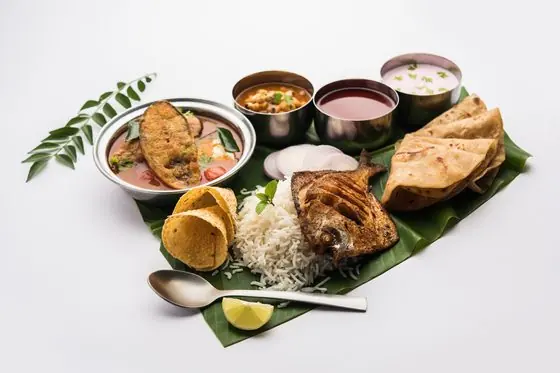
Chop and fold through rice, or through a cabbage thoran, or into an appam. Cold koonthal roast with lime and raw onion is a proper snack.
Rubbery: the squid was cooked for 5–10 minutes total, which is exactly the wrong amount. Either under 3 minutes or over 15 — go back and braise it for another 10 and it will come back.
Watery and grey: the squid was wet at step 1, or the pan was crowded at step 2. Two batches, dry squid, high flame.
Pan liquid never cooked off: frozen squid holds more water. Give step 6 another 3–4 minutes with the flame up.
Bitter: the M01 was added over heat and its whole spices scorched. Off the heat, at the end.
Serve with
R015 Matta Rice · R001 Appam · R063 Cabbage Thoran · R053 Vanpayar Thoran
Tap a star to rate this recipe
The Kindle edition is on its way. Until it lands, the complete book — all 25 chapters and 137 recipes — is free to read here, and it stays free after.