 R024
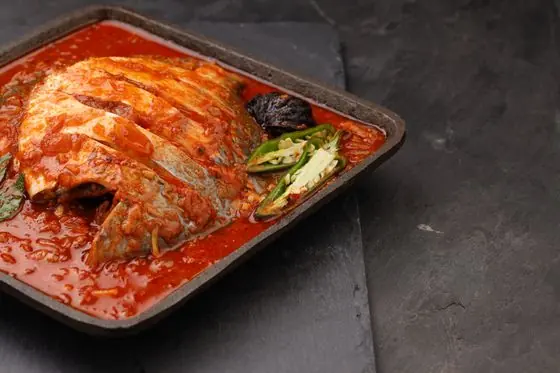
R024Meen Vevichathu
Kudampuli fish curry, the Kottayam Syrian Christian way
R038
Steamed or baked parcels with a green coconut-coriander paste
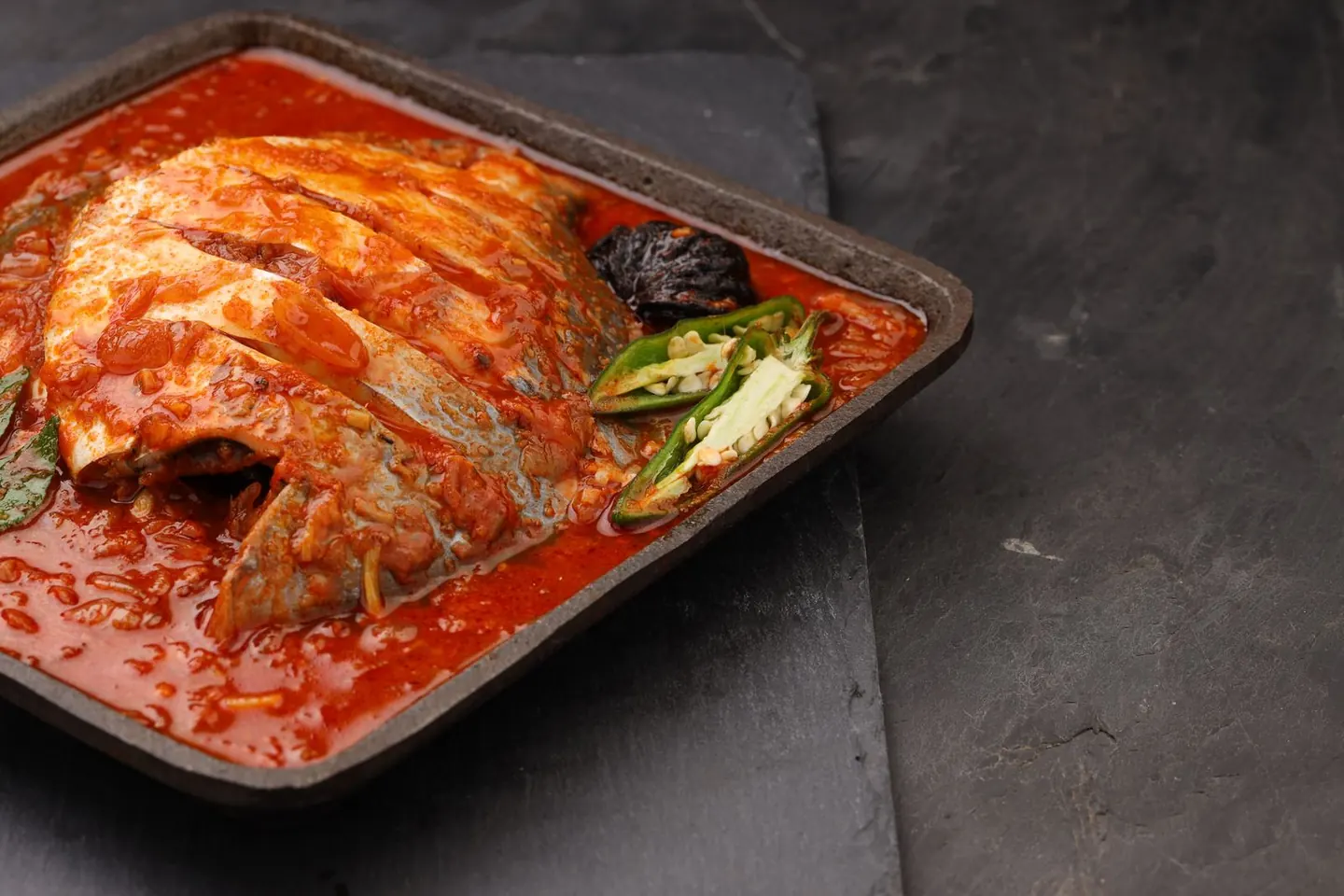
Photograph: Adobe Stock · representative of the dish
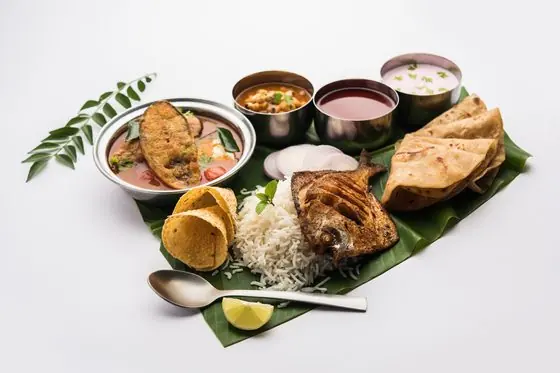
The banana-leaf parcel is the oldest cooking vessel in Kerala and the most efficient piece of equipment in this book. It costs nothing, it needs no fat, it cooks a fish in its own moisture at just under boiling point so overcooking becomes difficult, and it perfumes the food with its own aromatics while it does so. This recipe is the one to give a reader who has never cooked fish and is afraid of ruining it. It is very hard to ruin.
Before you start: Soften the banana leaves over a flame or in boiling water, 10–15 seconds each, until glossy, dark and pliable. Cut them roughly 30 × 30 cm. A brittle leaf splits at the fold.
Allergens: Fish.
Equipment: Steamer with a lid, or an oven; banana leaves; a mixie or small blender; string or toothpicks. Substitute: a colander over a pot of simmering water with a plate on top steams four parcels perfectly well. Baking parchment works in place of banana leaf and gives you a competent steamed fish with none of the aroma.
| Energy | 251 kcal |
| Protein | 34 g |
| Fibre | 1 g |
| Net carbohydrate | 4 g |
| Total carbohydrate | 5 g |
| Sugars | 2 g |
| Fat | 11 g |
| Saturated fat | 5 g |
| Sodium | 320 mg |
From ICMR-NIN IFCT 2017 and USDA FoodData Central. Per-serving figures stay the same when you scale.
Almost any fish works, which is the point of the method — the parcel is forgiving of species in a way frying is not. In the US: cod, halibut, mahi-mahi, snapper or salmon. In the UK: hake, pollack, sea bream, or salmon fillets. In the Gulf: hamour, safi or chanad. In Australia: barramundi, snapper, blue-eye or ocean trout. This is the one recipe in the chapter where frozen fillets are entirely acceptable, because there is no crust to compromise — thaw in the fridge and pat dry. Frozen banana leaf is in every Asian and Latin American freezer aisle. Grated coconut can be frozen; desiccated will not grind into a paste and will make the paste gritty.
Blood sugar: 3 g of net carbohydrate and 34 g of protein, which is the highest protein figure in this chapter. This is the dish to build a plate around when the rice portion is generous.
Blood pressure: 320 mg. Two grams of salt gives about 250 mg, and the lime and chilli in the paste carry the loss more easily than in any other recipe here.
Cholesterol: 5 g of saturated fat, and about 3.5 g of that is the fish's own rather than added. With a lean white fish and the same paste it falls to about 2 g, which makes this the lowest-saturated-fat main dish in the chapter.
Steam → oven at 200°C (390°F), 18–22 minutes. Slightly drier, slightly more leaf flavour. Or a covered griddle as R029, 12–16 minutes, for char.
Banana leaf → parchment. A competent steamed fish and no aroma. Do not use foil; the paste is acidic.
Green paste → the fried masala from R029, which makes it a pollichathu with 15 g more oil. Or 60 g of M09 loosened with 20 ml of water and lime, for a roasted-coconut version.
Add 100 g thinly sliced tomato or 80 g of sliced shallot under the fish → a small amount of liquid collects in the parcel and becomes a sauce. Adds about 2 g of net carbohydrate a serving.
Prawns → 500 g, 8–10 minutes steamed. Mussel meat → 500 g, 6–8 minutes. (Allergen: this swap introduces crustaceans, molluscs.)
Assemble and hold — this is the best make-ahead fish dish in the chapter. Fridge 24 hours assembled and raw, which is a genuine advantage for entertaining. Freeze 1 month assembled and raw, cooked from frozen with 8–10 minutes added. Cooked: fridge 2 days, and it is good cold. Reheat by steaming the parcel again for 5–6 minutes.
Fish watery and the parcel full of liquid: the fish was frozen and not dried, or the parcel was loose. Pat dry, wrap snug.
Paste turned grey: over-ground, or ground too long so it heated in the jar. Short bursts.
Leaf split in the steamer: not softened enough. Ten to fifteen seconds over a flame changes the leaf completely.
Bland: the paste was not seasoned aggressively enough before wrapping. There is no way to adjust a sealed parcel, so taste at step 2 without fail.
Serve with
R015 Matta Rice · R016 Chilled-and-Reheated Rice · R053 Vanpayar Thoran · R089 Kerala Salad
Tap a star to rate this recipe
The Kindle edition is on its way. Until it lands, the complete book — all 25 chapters and 137 recipes — is free to read here, and it stays free after.