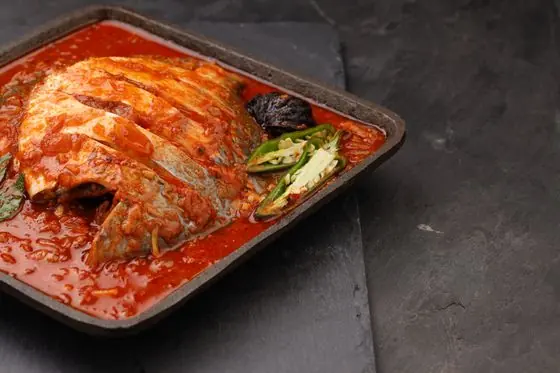
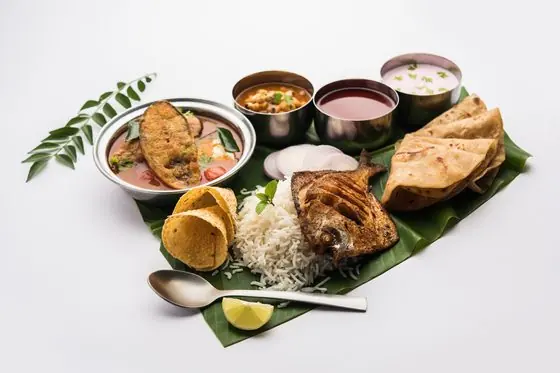
 R024
R024Meen Vevichathu
Kudampuli fish curry, the Kottayam Syrian Christian way
R039
The Kerala fish cutlet, out of the fryer and onto a tray
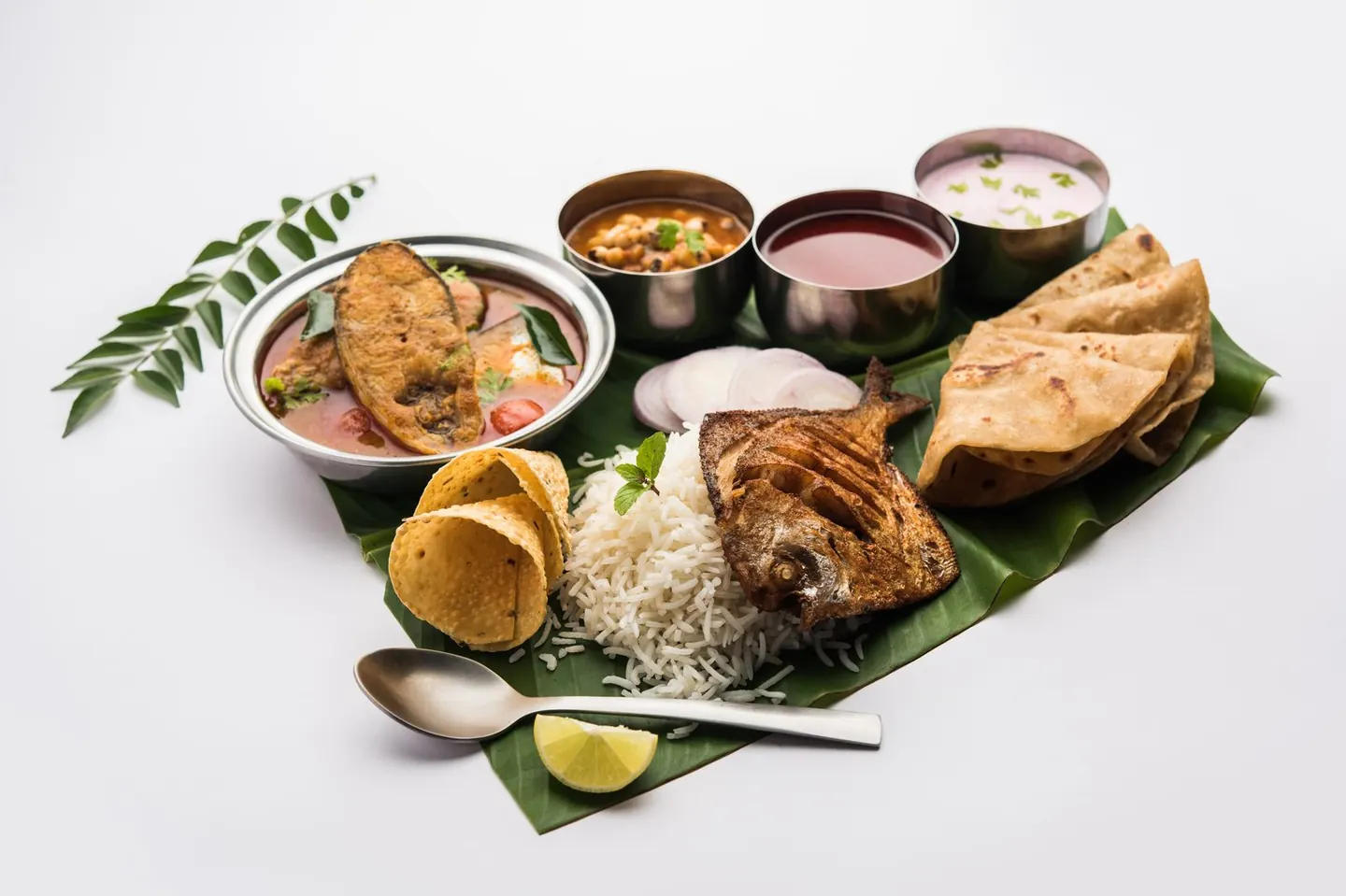
Photograph: Adobe Stock · representative of the dish
Plan ahead: including 20 minutes chilling — required.
The cutlet came into Kerala through Anglo-Indian and Cochin Jewish kitchens and was adopted wholesale by Syrian Christian ones, and it is the reason every Kerala bakery counter smells the way it does. The traditional version is a deep-fried potato patty with some fish in it. This one inverts that ratio and bakes it, which is a real change and not a disguised one — a baked cutlet does not shatter the way a fried one does, and it browns rather than blisters. What it does do is give you three cutlets for 298 kcal.
Before you start: The mixture must be genuinely dry or the cutlets will spread and fall apart on the tray. Boil the potato in its skin rather than peeled and diced, drain it thoroughly, and let the steam come off for 5 minutes before mashing. Cook the fish and let it cool and drain too. Twenty minutes in the fridge after shaping is not optional.
Allergens: Fish, egg. Gluten (wheat) — only if your asafoetida is compounded with wheat flour, as most brands are (it arrives with M05).
Equipment: Wire rack over a lined baking tray; oven; potato masher; silicone brush. Substitute: an air fryer at 200°C (390°F), 8–10 minutes a side, which browns considerably better. Baking directly on a lined tray works if you turn them once, at the cost of a soggy underside.
| Energy | 298 kcal |
| Protein | 23 g |
| Fibre | 3 g |
| Net carbohydrate | 23 g |
| Total carbohydrate | 26 g |
| Sugars | 3 g |
| Fat | 13 g |
| Saturated fat | 5 g |
| Sodium | 310 mg |
From ICMR-NIN IFCT 2017 and USDA FoodData Central. Per-serving figures stay the same when you scale.
Tinned sardines are the honest shortcut and a good one: use 3 × 120 g tins in water, drained hard, which gives about 300 g of drained flesh — reduce the salt to 1 g because tinned sardines carry roughly 300 mg of sodium per 100 g, and note that the bones, mashed in, add substantial calcium. In the US, UK and Australia: fresh sardines or sprats as R026; tinned sardines everywhere. In the Gulf: fresh oum year-round. Aval, also sold as poha, beaten rice or flattened rice, is in every South Asian grocery — buy the thick variety and crush it in a bag with a rolling pin. Substitutes for aval: panko (crisper, more absorbent, about 4 g more carbohydrate a serving), crushed cornflakes, or semolina.
Blood sugar: 22 g of net carbohydrate per serving is the highest in this chapter, and it is potato and aval. Treat three cutlets as occupying part of the grain quarter of the plate, not just the protein quarter — with three cutlets, a 100 g portion of cooked rice rather than 150 g. Or make the swap below.
Blood pressure: 310 mg. With tinned sardines and 1 g of salt it lands near 400 mg, which is the cost of the convenience.
Cholesterol: 5 g of saturated fat, of which about 2.5 g is the sardine's own, 1.5 g the egg and 1 g the brushed oil. Brushing with sesame takes it to about 4 g.
Potato → 250 g chena (elephant foot yam), boiled and mashed. Nearly identical carbohydrate, and it brings 2.56 g of protein and 4.17 g of fibre per 100 g against potato's 2.05 g and 2.1 g. Slightly firmer and faintly earthy, and a better cutlet.
Potato → 150 g potato plus 150 g cooked vanpayar, mashed. Net carbohydrate falls to about 18 g a serving and fibre rises to about 6 g. The cutlet is denser and holds together better.
Sardine → mackerel, tuna, or any leftover cooked fish, including R027. Leaner fish makes a drier cutlet; add 10 ml more lime juice.
Egg → 20 g of gram flour slaked with 40 ml water. The coating adheres slightly less well and the cutlet is vegan apart from the fish.
Aval → panko, cornflakes or semolina, as the sourcing note. Panko crisps best of the three.
Deep-fry them → about 175 kcal and 12 g of fat per cutlet, or roughly 525 kcal a serving. Shattering, glorious, and 227 kcal a serving more than this recipe. R028 makes the general argument.
This is the best batch dish in the chapter. Fridge 2 days shaped, coated and raw, or 3 days baked. Freeze 3 months shaped and coated raw, open-frozen on a tray then bagged, and baked from frozen at 200°C (390°F) for 26–30 minutes. Reheat on a rack at 200°C (390°F) for 6–8 minutes, which restores most of the crispness. Never microwave a cutlet.
Break them into a sandwich or a wrap with raw onion and lime. Crumble them over a salad. Or split one, warm it, and eat it with the gravy from R024, which is not traditional and is very good.
Cutlets spread and flattened on the tray: mixture too wet, or not chilled. Drier potato, longer chill, and 10 g more crushed aval into the mixture itself.
Coating fell off: not pressed on firmly enough, or the egg was too thick and slid. Press hard, and let the excess egg drip off.
Pale and soft on the underside: baked on a tray rather than a rack, or not turned. Rack, and turn once.
Fell apart when turned: turned too early. Give the first side its full 10–12 minutes and it will have set enough to move.
Tastes of potato rather than fish: the ratio drifted. Four hundred grams of fish to 250 g of potato is the floor, not a suggestion.
Serve with
R089 Kerala Salad · R095 Kanji Podi · R107 Sambharam · R020 Kanji
Tap a star to rate this recipe
The Kindle edition is on its way. Until it lands, the complete book — all 25 chapters and 137 recipes — is free to read here, and it stays free after.