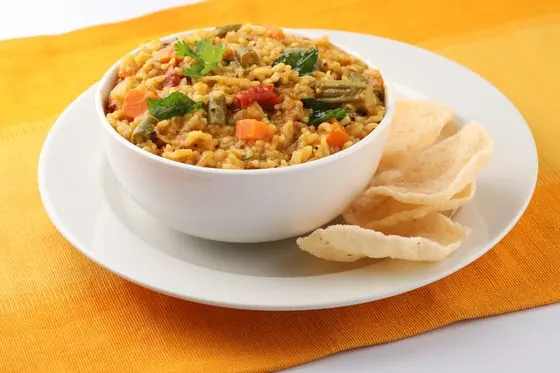
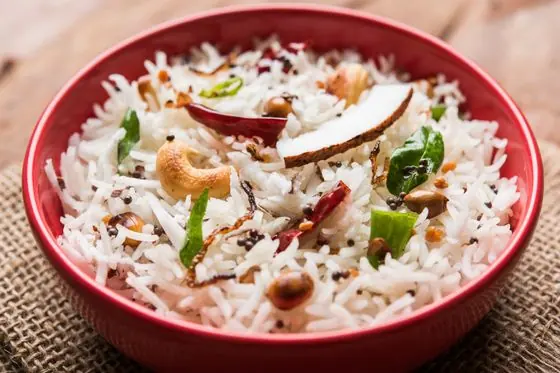
 R015
R015Matta Rice, Properly Cooked
Kerala's parboiled red rice, by absorption and by draining
Recipes › Rice, Grains and the Grain Question in Practice
R016
Cooked rice, chilled overnight, reheated once
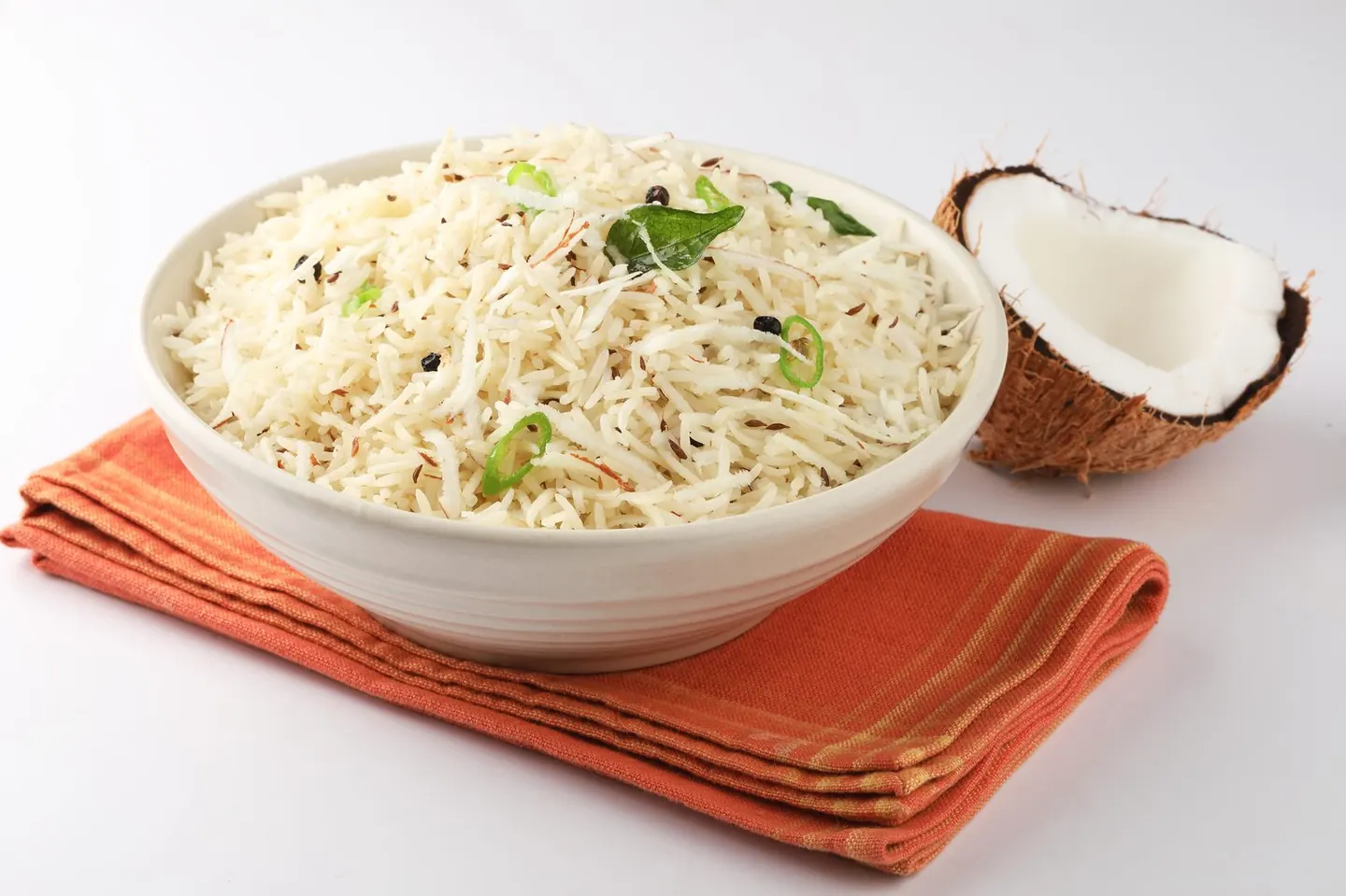
Photograph: Adobe Stock · representative of the dish
Plan ahead: of which 24 hours is chilling — required.
> ## READ THIS BEFORE YOU USE THIS METHOD > > If you take insulin or a sulfonylurea, do not adopt this method as a routine without speaking to the clinician who set your dose. > > In 32 adults with type 1 diabetes on pump therapy, long-grain white rice chilled for 24 hours at 4°C (39°F) and reheated produced a lower peak glucose (9.9 against 11.0 mmol/L, P = 0.0056), a smaller maximum rise (2.7 against 3.9 mmol/L, P < 0.0001), and 12 hypoglycaemic episodes against three (P = 0.0039) — because participants dosed insulin for the carbohydrate count they were used to (Strozyk et al., 2022). The technique worked exactly as intended, which is precisely why people went low. Sulfonylureas — glimepiride, gliclazide, glibenclamide — carry the same logic, because they raise insulin whether or not glucose is rising. > > This book does not tell anyone to change or stop a medicine, and it does not tell you what your dose should be. It tells you that this method changes the glucose response of a food whose dose you have already calibrated, that the change is in the direction of lower, and that the person who set the dose needs to know. > > The second warning is about bacteria, and it applies to everyone. Cooked rice carries Bacillus cereus spores that survive cooking; left to cool slowly at room temperature they germinate and produce a toxin that reheating does not reliably destroy. The UK Food Standards Agency's Home food fact checker is the authority for every number in this paragraph. Chill "as quickly as possible, ideally within one hour" — spread shallow in a covered container, and divide it into smaller portions, which is the FSA's own suggestion for getting the temperature down — to 4°C (39°F) or below. "Keep rice in the fridge for no more than one day until reheating." Reheat once, until — in the FSA's words — "it is steaming hot all the way through"; the FDA Food Code puts that at 74°C (165°F) throughout. "You should never reheat rice more than once." Never leave cooked rice out overnight to chill in the morning.
Do not expect much and you will not be disappointed. Resistant starch in freshly cooked white rice measured 0.64 g per 100 g; after 24 hours at 4°C (39°F) and reheating, 1.65 g (Sonia et al., 2015). That is a gain of about one gram of fibre-like material per 100 g of cooked rice. The glycaemic effect in the same study was larger than a gram of fibre would predict — area under the curve about 18% lower — but it came from 15 people over one sitting. This is a refinement to a portioned plate, not a way to make an unportioned one safe.
Before you start: Clear a shelf in the fridge and make space in the freezer for a tray or an ice pack. The single most important variable in this recipe is how fast the rice gets from 60°C (140°F) to 4°C (39°F), and a hot box in a crowded fridge does not manage it.
Allergens: None of the major allergens.
Equipment: Everything for R015, plus a wide shallow container with a lid — a 20 × 20 cm box, not a deep bowl. A fridge thermometer, if you have never checked what your fridge actually runs at. Substitute: a metal tray covered with a plate chills faster than plastic and is the better choice in a hot kitchen.
| Energy | 176 kcal |
| Protein | 3.9 g |
| Fibre | 1.9 g |
| Net carbohydrate | 38.6 g |
| Total carbohydrate | 40.5 g |
| Sugars | 0.1 g |
| Fat | 0.3 g |
| Saturated fat | 0.1 g |
| Sodium | 140 mg |
From ICMR-NIN IFCT 2017 and USDA FoodData Central. Per-serving figures stay the same when you scale.
Nothing to source. If you cannot verify that your fridge holds 4°C (39°F) or below — many domestic fridges in warm climates run at 8 to 10°C (46 to 50°F) on the door shelves — buy a fridge thermometer before you use this method at all. At 8°C (46°F) you get the bacteria and not the retrogradation.
Blood sugar: the measured effect was an 18% lower glucose area under the curve in 15 healthy adults, and a substantially lower peak in 32 adults with type 1 diabetes. Treat it as a useful addition to a portioned plate with a pulse on it, not as a replacement for either.
Blood pressure: unchanged from R015 at 140 mg per portion.
Cholesterol: unchanged. Nothing about chilling rice touches lipids.
If you use insulin or a sulfonylurea: re-read the box at the top of this recipe.
Matta → any rice. Retrogradation is a property of starch, not of a variety, and the two studies behind this method both used ordinary long-grain white rice.
Chilled 24 hours → chilled 10 hours at room temperature. Resistant starch measured 1.30 g per 100 g rather than 1.65 g, so you lose about half the gain — and you take on the Bacillus cereus risk that the whole point of rapid chilling is to avoid. This book does not recommend it.
Reheated → eaten cold, as in a rice salad with lime, chopped shallot and coriander. Slightly more resistant starch retained; a texture some people dislike.
Do not scale by using a deeper container. Depth is the variable that decides whether this is safe.
The recipe is the make-ahead. Fridge 24 hours, no more. Freeze 1 month — freezing after the 24-hour chill preserves the retrograded starch and resets the safety clock, and this is the sensible way to batch it; thaw in the fridge overnight, then reheat once. Reheat once only, to steaming hot throughout.
There are no leftovers from this recipe. Rice that has been chilled and reheated is finished. Cook the amount you will eat.
Dry, separate, faintly hard grains after reheating: not enough water, or reheated uncovered. Two to three tablespoons per portion and a lid.
Sour or faintly fermented smell: the rice cooled too slowly or has been in the fridge longer than 24 hours. Throw it away. This is the one place in the book where the answer is not a rescue.
Rice reheated hot outside, cold in the middle: the portion was too large or too dense for the method. Break it up with a fork halfway through and give it another 45–60 seconds.
Serve with
R023 Kerala Khichdi · R081 Moru Curry · R086 Rasam · R084 Ulli Theeyal
Tap a star to rate this recipe
The Kindle edition is on its way. Until it lands, the complete book — all 25 chapters and 137 recipes — is free to read here, and it stays free after.