 R015
R015Matta Rice, Properly Cooked
Kerala's parboiled red rice, by absorption and by draining
Recipes › Rice, Grains and the Grain Question in Practice
R018
Jeerakasala, dum-cooked, in a portion you can name
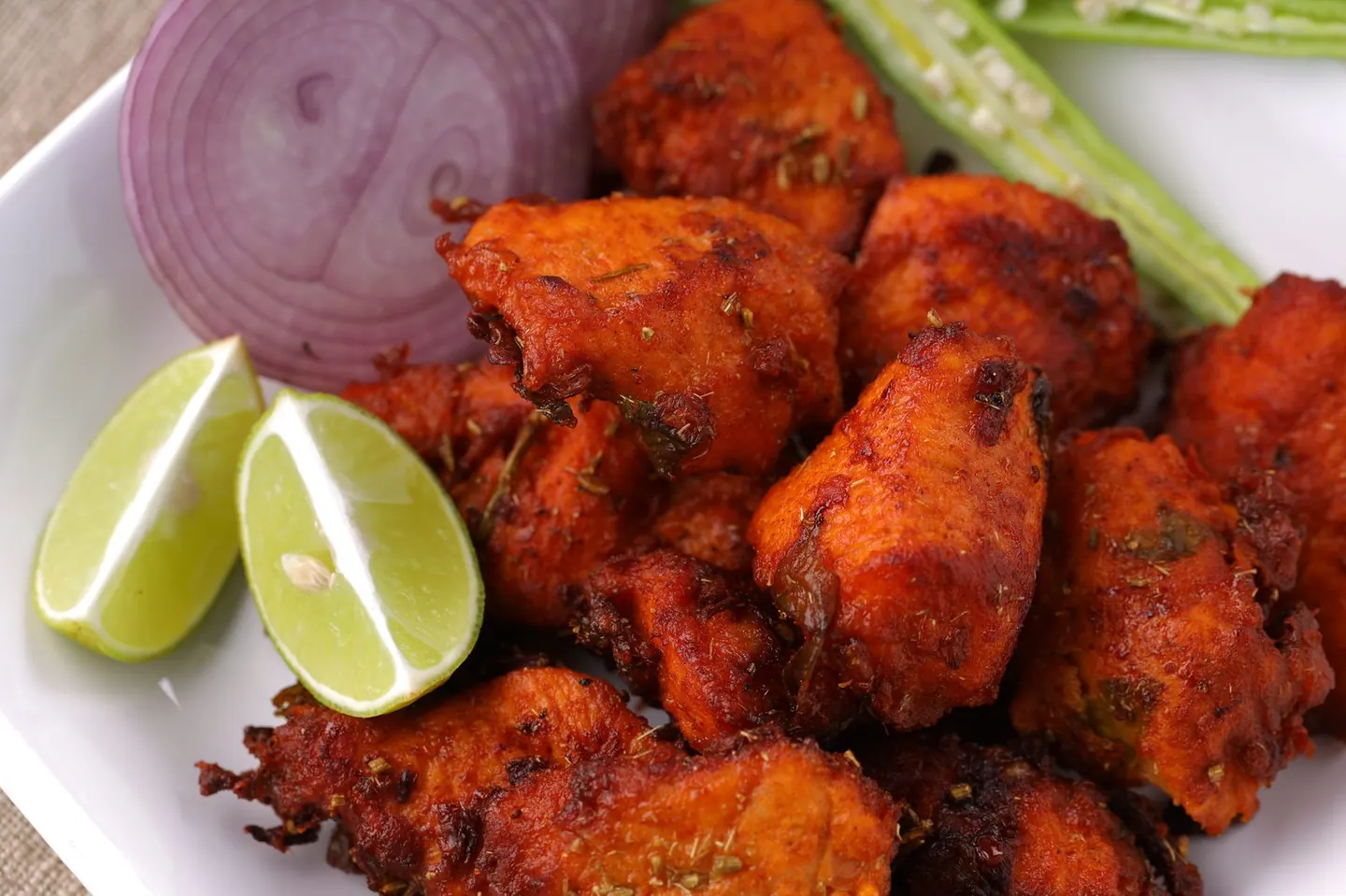
Photograph: Adobe Stock · representative of the dish
Plan ahead: plus 30 minutes marinating — required.
Thalassery biryani is not a lighter northern biryani. Its distinguishing feature is not technique but grain: it uses jeerakasala, also called kaima, a short, thin, intensely aromatic Wayanad rice that needs no soaking, and it is cooked pakki style, layered and sealed with live charcoal on the lid. The chicken goes into the masala raw, not pre-fried, which is why a properly made one is less oily than its reputation. The vanaspati that fills restaurant versions is an artefact of the Gulf-remittance decades, not of the dish. What follows respects the method and refuses the vanaspati.
Before you start: This dish has three streams and they must be ready together. Marinate the chicken first and let it sit while you slice 300 g of shallots — that is 20 minutes of knife work and the single largest job in the recipe. Have the fried garnish, the herbs and the seal ready before the rice goes on, because from the moment the rice is drained you have about four minutes to assemble.
Allergens: Milk, tree nuts (cashew), sulphites.
Equipment: Wide heavy pan or uruli, 28–30 cm, with a lid that sits flat. A second pan for the rice. Aluminium foil or a strip of atta dough to seal. Substitute: a cast-iron casserole with a lid is ideal. For the charcoal on the lid, a baking tray of preheated 180°C (350°F) oven does the same job — set the sealed pot on the hob's lowest flame with a tawa underneath and put the whole thing in the oven for 20 minutes instead.
| Energy | 549 kcal |
| Protein | 31.9 g |
| Fibre | 4.3 g |
| Net carbohydrate | 50.9 g |
| Total carbohydrate | 55.2 g |
| Sugars | 6.1 g |
| Fat | 23.4 g |
| Saturated fat | 9.1 g |
| Sodium | 390 mg |
From ICMR-NIN IFCT 2017 and USDA FoodData Central. Per-serving figures stay the same when you scale.
Jeerakasala is the recipe, so try hard before substituting. Kerala grocers in the Gulf, London, Toronto and the New Jersey corridor stock it as "Kaima" or "Jeerakasala"; online sellers ship it everywhere. If you genuinely cannot get it, use basmati and change three things: soak it 20 minutes, boil it 4–5 minutes rather than 6–7, and accept that the finished dish will be longer-grained and less perfumed — recognisably a biryani, not recognisably a Thalassery one. Shallots are not optional either; onions make a sweeter, flatter masala. Where shallots are dear, use 220 g shallots and 100 g red onion.
Blood sugar: 50.9 g of net carbohydrate is the largest single figure in this chapter, and it is a whole main course rather than a side. It is built to be eaten as the meal, with a pachadi and a pulse, not with a parotta on the side. If your glucose runs high, cut the rice to 250 g dry for six — 42 g a head — and add a third more vegetable to the plate; the dish survives it.
Blood pressure: 390 mg per portion is the highest sodium figure in this chapter and it does not earn the low-sodium icon. Two ways down: drop the M07 to 4 g and finish with lime rather than salt, which brings it to about 300 mg; or leave the salt out of the rice water entirely, which the drained rice barely notices, for about 340 mg. Against a 2,000 mg daily target this is a fifth of the day in one plate, so plan the rest of it.
Cholesterol: 9.1 g of saturated fat per portion is honest and it is not small. Most of it is the chicken's own fat plus the ghee. Using all breast instead of half thigh takes it to about 7 g; dropping the ghee and using coconut oil for the garnish takes it to about 8 g and costs you the aroma. A traditional restaurant portion would be nearer 20 g. This dish needs some of its fat and the book is not going to pretend otherwise.
Chicken → 900 g bone-in skinless chicken. Better flavour, more work at the table, and the weights change: reckon 150 g bone-in as 100 g meat, and add 4–5 minutes at step 5.
Chicken → 750 g firm white fish in 5 cm pieces, added at step 5 for 4–5 minutes only. Protein drops to about 26 g a portion and saturated fat to about 5 g; the dish becomes a meen biryani and is genuinely good. (Allergen: this swap introduces fish.)
Jeerakasala → basmati. Longer grains, drier mouthfeel, less perfume; soak 20 minutes and boil 4–5.
Ghee → coconut oil throughout. Saturated fat is barely different, because coconut oil is 90.9% saturated against ghee's roughly 62%. This is not the swap it looks like.
Curd → thick coconut milk in the marinade. Dairy-free, sweeter, and the chicken tenderises less because you lose the lactic acid.
Brown 600 g of shallots in two batches. Above 12 servings, cook two pots rather than one deep one: a 10 cm layer of rice does not dum evenly.
The chicken masala can be made a full day ahead and is arguably better for it — cool it fast, refrigerate, and bring it back to a simmer before you layer. Fridge 3 days, covered. Freeze 2 months, in portions, masala and rice together; the rice softens a little on thawing and the chicken does not suffer. Reheat covered with 2 tablespoons of water per portion, over a low flame or in a 160°C (325°F) oven for 20–25 minutes, until steaming hot right through. Chill within 1 hour of serving, as for any cooked rice.
Cold biryani reheats better than almost anything else in this chapter. Otherwise: pull the chicken out and fold it through R081, or fry the rice with a beaten egg and shredded cabbage for a very good and entirely inauthentic breakfast.
Rice mushy at the bottom, hard on top: the masala was too wet at step 6, or the flame was too high during the dum. Boil the masala down until a spoon drawn across the base leaves a clear track.
Rice hard throughout after the dum: it was drained too early — under six minutes — or the seal leaked. Sprinkle 60 ml of hot water over the surface, reseal, and give it 8–10 minutes more.
Bland, despite everything: the shallots were not browned far enough. Fourteen minutes is the floor and eighteen is better; pale shallots make a pale biryani no quantity of garam masala will rescue.
Chicken breast dry and stringy: it cooked with the thigh for the full 15 minutes. Add the breast pieces 5 minutes after the thigh next time.
Serve with
R081 Moru Curry · R087 Moru Kachiyathu · R088 Thakkali Curry · a raita from Chapter 23 · M01 Kerala Garam Masala
Tap a star to rate this recipe
The Kindle edition is on its way. Until it lands, the complete book — all 25 chapters and 137 recipes — is free to read here, and it stays free after.