 R081
R081Moru Curry
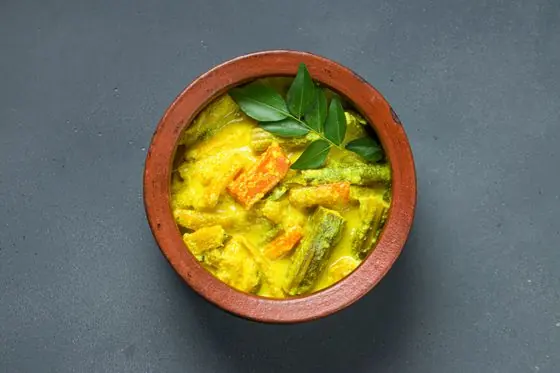
Tempered buttermilk curry with ground coconut
Recipes › Curries, Pulissery and the Sour Family
R087
Buttermilk, warmed and tempered, with nothing else in it
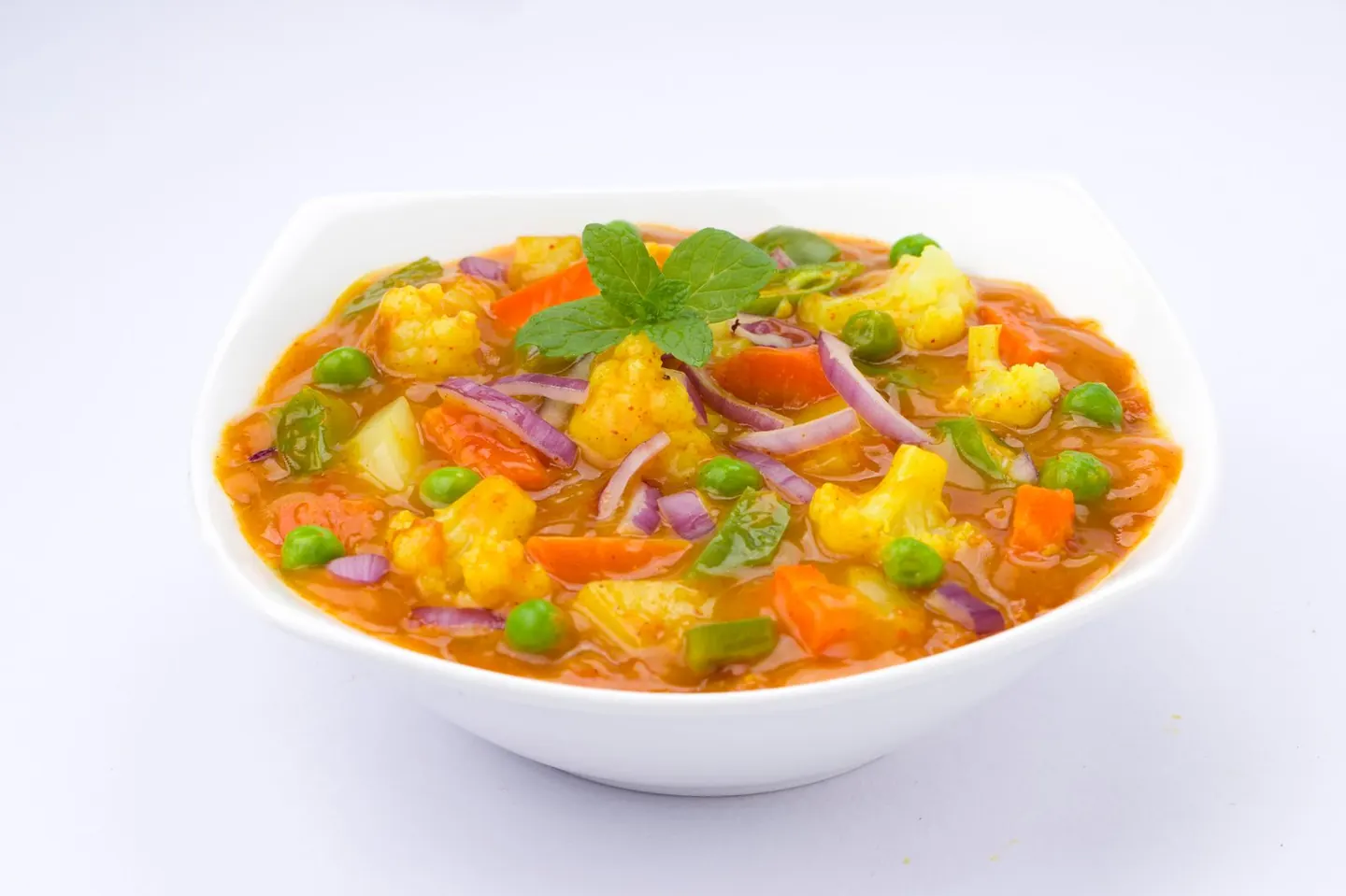
Photograph: Adobe Stock · representative of the dish
Moru kachiyathu is "warmed buttermilk", and it is the simplest cooked thing in Kerala: curd let down with water, turmeric, a slit chilli, a scrap of ginger, warmed to just below a bubble and finished with mustard and curry leaf. It closes a meal, it rescues a plate that has too much rice on it, and in the hot months it is what people eat instead of a curry. If you cook one dish from this chapter on a weeknight, cook this. It takes eight minutes and it is almost impossible to get wrong, provided you do the one thing.
Before you start: Whisk the curd absolutely smooth before it goes near the pan, and have the tempering ingredients in one bowl. The whole dish is over in eight minutes and it cannot be paused.
Allergens: Milk, mustard.
Equipment: Heavy 2-litre pan; small pan or steel ladle for the tempering. Substitute: a clay pot is the traditional vessel and it makes the "just below a bubble" instruction easier to obey, because clay heats slowly and holds.
| Energy | 80 kcal |
| Protein | 3.9 g |
| Fibre | 0.5 g |
| Net carbohydrate | 6.0 g |
| Total carbohydrate | 6.5 g |
| Sugars | 5.2 g |
| Fat | 4.5 g |
| Saturated fat | 3.0 g |
| Sodium | 180 mg |
From ICMR-NIN IFCT 2017 and USDA FoodData Central. Per-serving figures stay the same when you scale.
Two or three days of age improves the curd for this dish considerably; fresh sweet curd makes a bland moru. If you buy cultured buttermilk rather than diluting curd, use 700 ml of it and leave the M07 out entirely — cultured buttermilk carries about 148 mg of sodium per 100 g before anyone adds anything, so 700 ml already brings over 1,000 mg to the pot. Plain whole-milk yoghurt from any supermarket works. Coconut yoghurt makes a good dairy-free version that splits less readily.
Blood sugar: 6.0 g of net carbohydrate a portion, all of it lactose, against 3.9 g of protein. This is the closest thing to a free dish in the book, and putting it beside 130 g of rice raises the volume of the meal by 200 g at a cost of 80 kcal.
Blood pressure: 180 mg a portion as written, and about 110 mg with the M07 left out, which is what the ginger and chilli make possible. If you use bought cultured buttermilk instead, add no salt at all. Fermented dairy shows the most consistent inverse associations in the cohort literature across weight, type 2 diabetes and blood pressure — low-fat dairy at a relative risk of 0.94 for hypertension per 200 g a day (Feng et al., 2022) — and those are associations, not demonstrated causes.
Cholesterol: 3.0 g of saturated fat a portion, from 400 g of whole-milk curd and less than a teaspoon of coconut oil across four. Low-fat curd takes it to about 1.4 g and the dish is nearly as good, which is not something this book says often about a fat reduction.
Whole curd → low-fat curd or bought buttermilk. Saturated fat roughly halves. Watch the sodium if you buy buttermilk.
Curd → coconut yoghurt. Dairy-free, marginally more stable on the heat, and saturated fat rises to about 4.5 g a portion. The protein falls to under 1 g, which matters if this was carrying your protein.
Add 30 g ground coconut-and-cumin paste → the dish becomes R081, with body, at about 45 kcal more a portion.
Skip the warming entirely, dilute further and add crushed ginger and curry leaf → sambharam, the cold drink, in Chapter 25.
At eight servings use a wide pan rather than a deep one. A deep pot will take the base past 80°C (176°F) while the surface is still cool, and the split starts at the bottom where you cannot see it.
Fridge 2 days in a covered non-metal container; it is arguably better cold on the second day, when the tempering's aroma has gone through it. Do not freeze — the emulsion splits on thawing and cannot be brought back. Reheat only to barely warm over the lowest flame, or better, do not reheat at all: this is a dish that is perfectly good at room temperature and is served that way on every sadya leaf in Kerala.
Dilute with an equal volume of cold water, add more crushed ginger and a pinch of asafoetida, and drink it as sambharam. Or use it as the liquid in a dosa batter, where its acid speeds the ferment.
Split into grains and whey: it boiled, or the pan was deep and the base overheated unseen. No repair. Wide pan, low flame, constant stirring, off at the first shudder.
Lumpy, with pieces of set curd: it was not whisked smooth before heating. Heat sets those lumps permanently.
Bland: the curd was too fresh, or too diluted. Use curd two or three days old, and 400 g to 300 ml rather than 1:1.
Bitter: the mustard seeds burnt, or the curry leaves went in before the oil was hot enough and then sat in it. The leaves want 10–15 seconds and no more.
Serve with
R015 Matta Rice, Properly Cooked · R022 Millet Upma · R023 Kerala Khichdi · R084 Ulli Theeyal · M07 the 70:30 salt
Tap a star to rate this recipe
The Kindle edition is on its way. Until it lands, the complete book — all 25 chapters and 137 recipes — is free to read here, and it stays free after.