 R054
R054Vanpayar Erissery
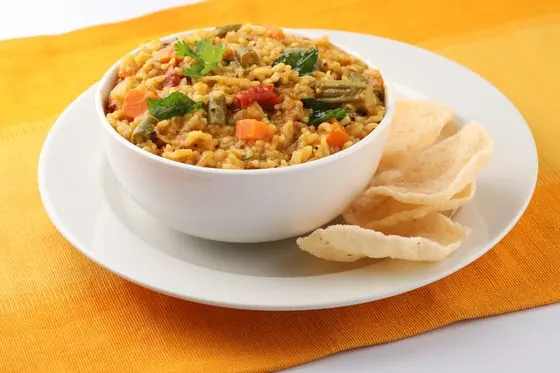
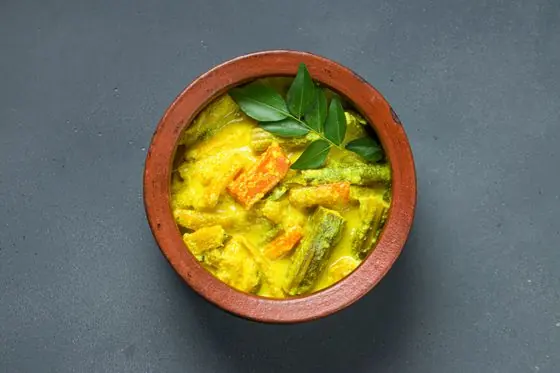
Cowpea and pumpkin, with roasted coconut on top
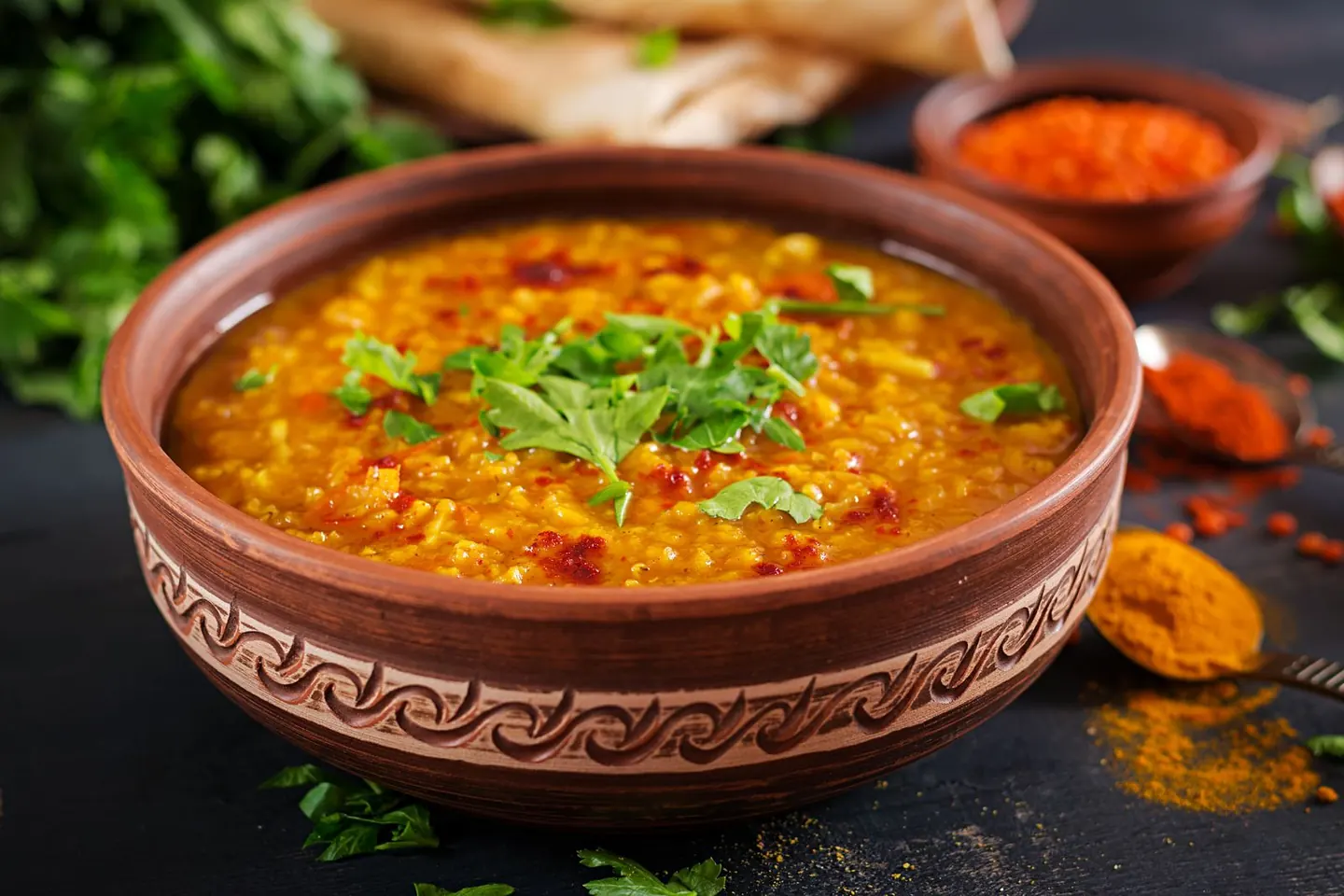
Photograph: Adobe Stock · representative of the dish
Plan ahead: plus 6–8 hours soaking and 10 minutes pressure-cooking — required.
Vanpayar is the pulse a Kerala kitchen reaches for without thinking — the small brown cowpea that goes into olan, into erissery, and into this, the plainest and best thing you can do with it. Cowpea carries 20.4 g of protein and 11.5 g of fibre per 100 g dry, and it holds its shape after cooking in a way that lentils do not, which is exactly what a thoran needs. Cook 400 g of it on a Sunday and you have four dishes' worth of the rule at the top of this chapter.
Before you start: A thoran is a three-minute dish once the pan is hot. Have the cowpea cooked and drained, the coconut mixture crushed, and the curry leaves picked before you light the flame.
Allergens: Mustard.
Equipment: Pressure cooker; 26 cm pan or cheena chatti; flat wooden turner (chattuvam). Substitute: an open pot for the cowpea, 35–45 minutes. A metal spatula will break the beans and turn the thoran to paste — use wood or coconut shell.
| Energy | 256 kcal |
| Protein | 11 g |
| Fibre | 8 g |
| Net carbohydrate | 29 g |
| Total carbohydrate | 37 g |
| Sugars | 6 g |
| Fat | 11 g |
| Saturated fat | 9 g |
| Sodium | 220 mg |
From ICMR-NIN IFCT 2017 and USDA FoodData Central. Per-serving figures stay the same when you scale.
Vanpayar is sold as brown cowpea, red cowpea, van payar or rosecoco by Kerala grocers, and the small dark-brown Kerala variety is a different bean from the large white-and-black-eyed pea sold as black-eyed bean in Western supermarkets. Either works; the black-eyed bean is softer, cooks 3–4 minutes faster and breaks up more readily, so under-cook it slightly. Tinned cowpea or black-eyed bean is a legitimate shortcut — 400 g drained, rinsed thoroughly, and skip to step 3 — but check the sodium on the tin, which can be 250 mg per 100 g and will double this dish's figure.
Blood sugar: 29 g of net carbohydrate at a category glycaemic index of about 34 gives an estimated glycaemic load near 10 — low, for a substantial dish. Eaten alongside rice it does more than lower the meal's average: this is the dish that Mohan's finding is about.
Blood pressure: 220 mg per serving, and 2.5 g of salt in the whole pan. Cowpea itself is naturally low in sodium.
Cholesterol: 9 g of saturated fat, effectively all of it the 20 g of coconut per serving. Cut the coconut to 50 g and you land at about 6 g of saturated fat and 210 kcal, with a drier, less fragrant dish. Pulses are on the other side of this ledger — a median 130 g a day lowered LDL cholesterol by about 6.6 mg/dL across 26 trials (Ha et al., 2014).
Muthira for vanpayar → see R056. Higher protein, lower fibre, a longer soak and much longer cooking.
Cherupayar (whole green gram) → 180 g, no soak, pressure-cooked 5–6 minutes. Softer, sweeter, faster, and it breaks up more.
Add 200 g of shredded cabbage or chopped amaranth at step 5 → six servings, more volume, more fibre, and the classic payar-cabbage thoran of a Travancore kitchen.
No coconut → 30 g of crushed roasted peanuts folded in at step 6. Less saturated fat, more monounsaturated, and no longer a thoran. (Allergen: this swap introduces peanuts.)
The cooked cowpea is the make-ahead, and the reason this chapter works. Fridge 4 days cooked and drained, or 2 days as a finished thoran. Freeze 3 months as plain cooked cowpea in 100 g portions — it thaws perfectly. Reheat the finished thoran in a dry pan for 2–3 minutes, or eat it at room temperature, which is how it is usually eaten in Kerala anyway.
Beans burst and mushy: overcooked at step 1. Release the pressure naturally rather than fast, which continues cooking, and check 2 minutes early.
Beans still hard after the full time: old pulses, or hard water. Another 5 minutes will help; if not, they are too old to save.
Wet, claggy thoran: the beans were not drained, or the coconut went in with them. Drain hard; coconut first, beans second.
Serve with
R015 Matta Rice · R024 Meen Vevichathu · R040 Nadan Kozhi Curry · R107 Sambharam
Tap a star to rate this recipe
The Kindle edition is on its way. Until it lands, the complete book — all 25 chapters and 137 recipes — is free to read here, and it stays free after.