 R053
R053Vanpayar Thoran
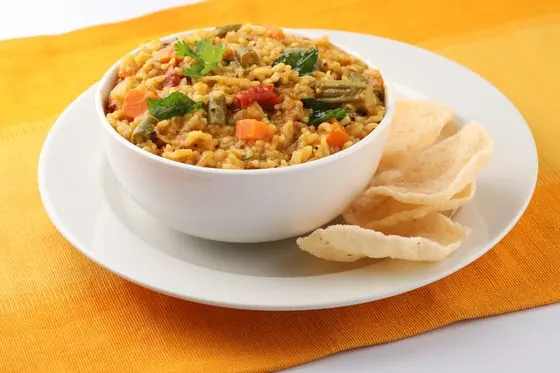
Brown cowpea with grated coconut
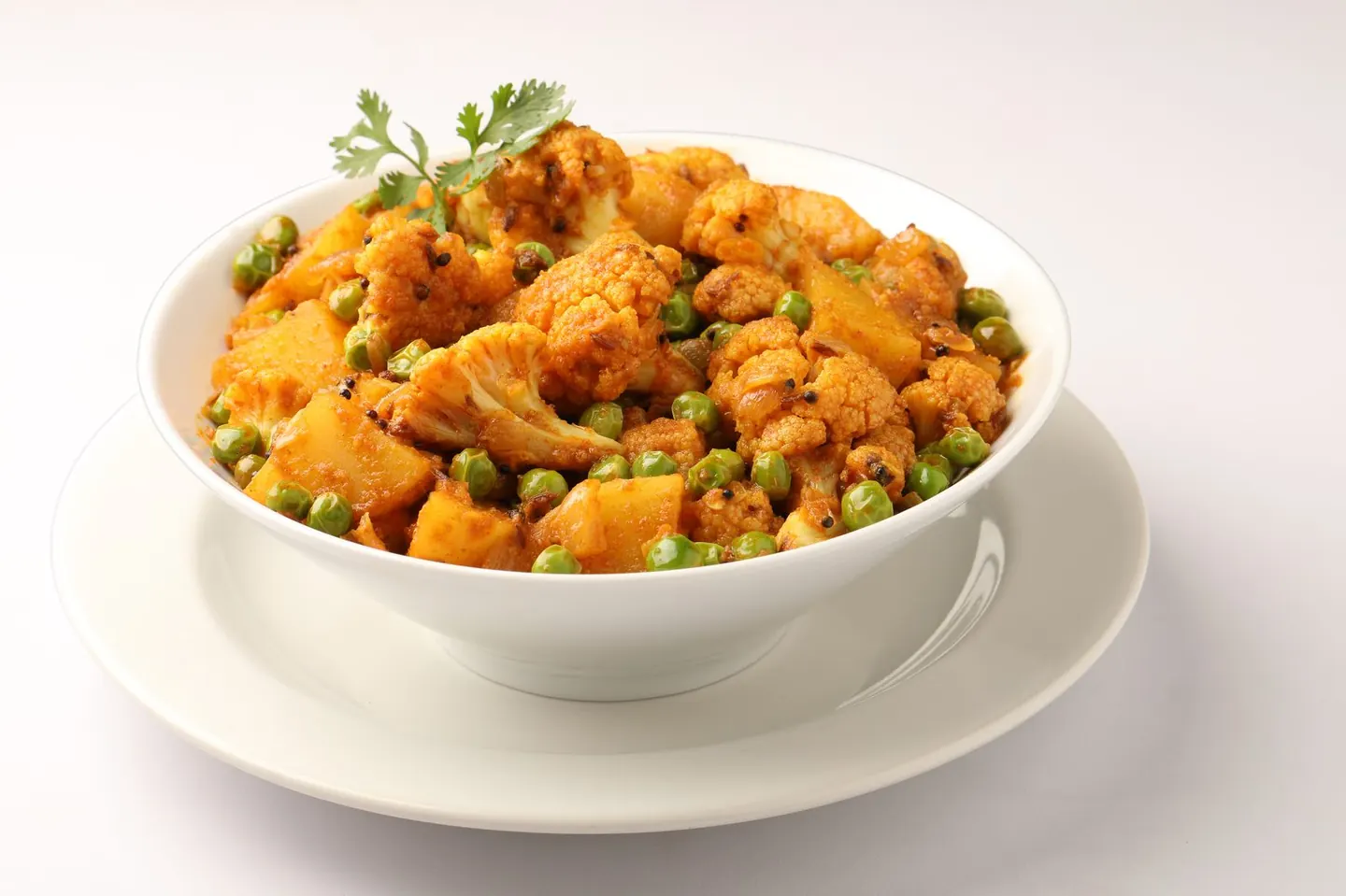
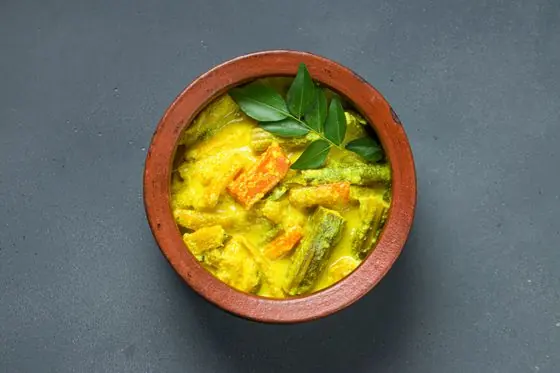
Photograph: Adobe Stock · representative of the dish
Plan ahead: plus 6–8 hours soaking and 10 minutes pressure-cooking — required.
Erissery is one of the four ceremonial curries of the Namboothiri feast, remembered as the "roasted" one — its partners being kalan for sour, olan for neutral and a sweet madhura curry. What makes it erissery rather than a pumpkin curry is the two registers of coconut in one dish: a raw ground paste in the body and a separately roasted, darkly fried coconut scattered over the top. Cowpea and pumpkin together are also, incidentally, a textbook pulse-and-vegetable plate that predates anybody's dietary guidelines by several centuries.
Before you start: Roast the topping coconut first, while the pan is clean and your attention is undivided. Once the curry is assembled the topping burns in ninety seconds of inattention.
Allergens: Mustard.
Equipment: Pressure cooker; heavy 26 cm pan; small heavy pan for the roasted topping; mixie or ammikkallu. Substitute: roast the topping in the same pan before you start the curry, and wipe it out — one pan, two stages.
| Energy | 225 kcal |
| Protein | 7 g |
| Fibre | 6 g |
| Net carbohydrate | 22 g |
| Total carbohydrate | 28 g |
| Sugars | 6 g |
| Fat | 12 g |
| Saturated fat | 10 g |
| Sodium | 200 mg |
From ICMR-NIN IFCT 2017 and USDA FoodData Central. Per-serving figures stay the same when you scale.
Mathanga is Kerala's field pumpkin — dense, dry-fleshed, deep orange, closer to a Western winter squash than to a Halloween pumpkin, which is watery and will collapse. Butternut squash, kabocha or crown prince are all good substitutes at the same weight. Note honestly that ICMR-NIN IFCT 2017 has no mathanga entry, so the panel below uses USDA "pumpkin, raw", which may understate the carbohydrate of a dense Kerala pumpkin. Frozen grated coconut works for both the paste and the topping; thaw and pat the topping portion dry or the first five minutes of roasting go on driving off water.
Blood sugar: 22 g of net carbohydrate, split between cowpea and pumpkin. The pumpkin's glycaemic index is not a figure this book can source for mathanga, so the honest statement is that the cowpea half of this dish is low-GI and the pumpkin half is unquantified. Treat it as a moderate-load dish and portion the rice accordingly.
Blood pressure: 200 mg per serving, one of the lowest in the book, from 4 g of salt across six servings.
Cholesterol: 10 g of saturated fat, all of it coconut, and 23 g of coconut per serving is what makes this dish what it is. If that number is the problem, R059 sambar and R060 parippu with cheera give you the pulse at 2 g of saturated fat.
Elephant foot yam (chena) or raw plantain for the pumpkin → both are traditional in erissery and both land near 17.5 g of available carbohydrate per 100 g against pumpkin's 6, so net carbohydrate per serving rises to about 30 g. Denser, more filling, higher load.
Ash gourd (kumbalanga) → 2.84 g of available carbohydrate per 100 g and a much lighter dish. Not traditional here, and it works.
Chana dal for the cowpea → 130 g dry, pressure-cooked 10–12 minutes. Different texture, slightly higher fibre.
Skip the topping → do not. Make R053 instead if you have not the time; an erissery without the roasted coconut is a pumpkin curry with beans in it.
Cook the cowpea and the topping up to three days ahead; keep the topping in a sealed jar at room temperature, where it stays crisp. Fridge 3 days assembled. Freeze 2 months without the topping, which goes soggy; add fresh topping on reheating. Reheat gently with a splash of water, 4–5 minutes.
Mash it, thin it with second-extraction coconut milk and it becomes a soup. Or spread it thickly and eat it with pathiri as the whole meal.
Topping bitter and ashy: the coconut went past dark toast. There is no correction; roast a fresh 40 g.
Curry watery: too much cooking liquid kept at step 1, or the pumpkin was a watery variety. Reduce uncovered for 4–5 minutes and crush more of the pumpkin.
Grainy, split-looking gravy: the ground paste boiled hard. A bare simmer only, once the paste is in.
Serve with
R015 Matta Rice · R069 Avial · R024 Meen Vevichathu · R086 Rasam
Tap a star to rate this recipe
The Kindle edition is on its way. Until it lands, the complete book — all 25 chapters and 137 recipes — is free to read here, and it stays free after.