 R002
R002Puttu, Matta Rice
The steamed cylinder, made with red parboiled rice
R001
The lace-edged fermented appam, the Syrian Christian breakfast bread
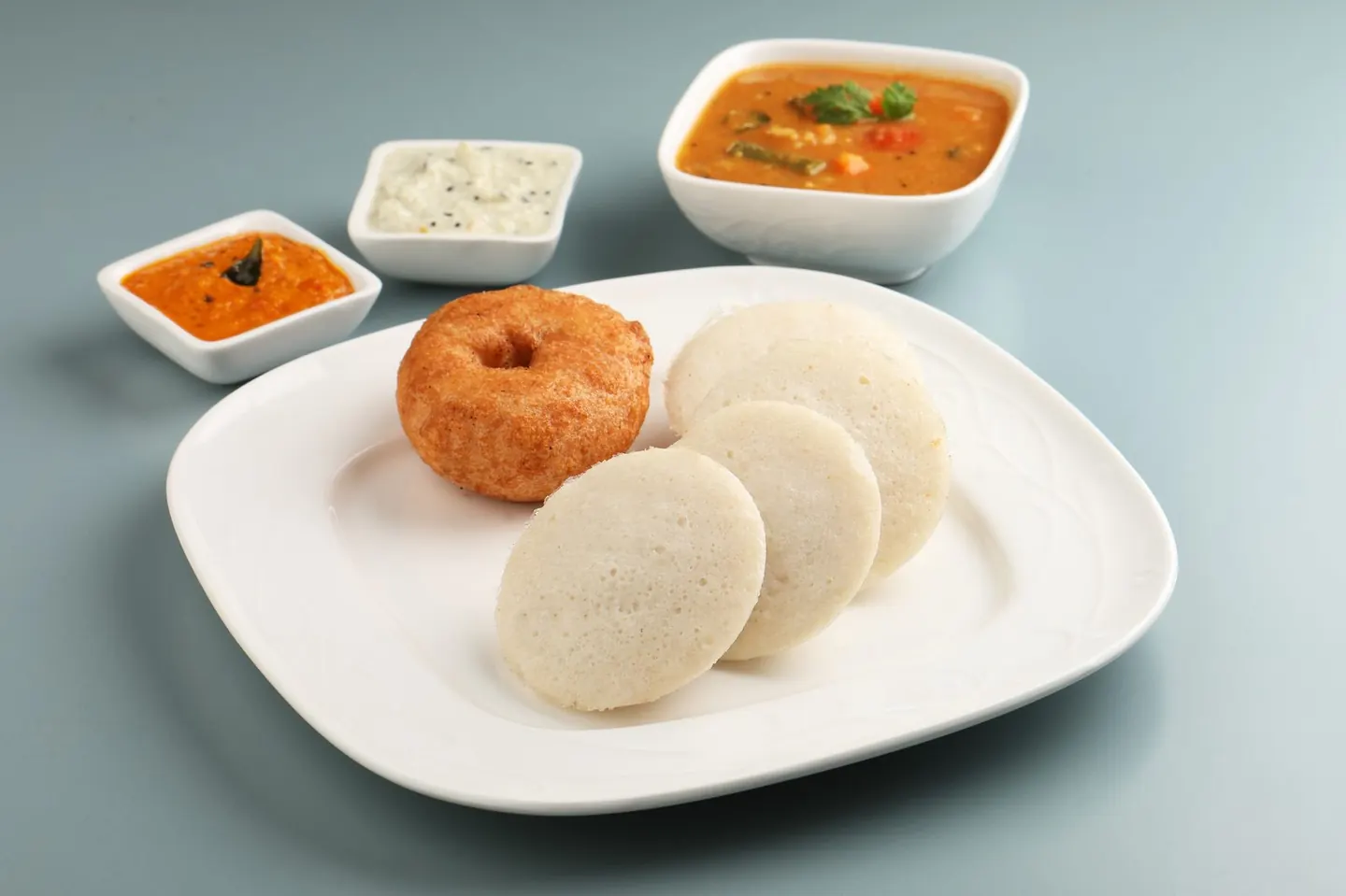
Photograph: Adobe Stock · representative of the dish
Plan ahead: plus 8–20 hours fermenting the M10 batter — required.
A Sangam-era Tamil verse describes appams "like honeycombs", which after two thousand years is still the best description available: crisp brown lace at the rim, thick spongy white at the centre, the two textures in one disc. Palappam is the Central Travancore version, enriched with coconut milk, and it is the Easter and Christmas breakfast of Syrian Christian households across Kottayam and Pathanamthitta. Achaya notes that the appam recipe has been essentially unchanged for centuries. Do not improve it. Cook it properly and put a pulse beside it.
Before you start: The pan must be properly hot before the first ladle and the lid must be within reach. An appam is a two-minute dish and there is no time to look for anything once the batter is in.
Allergens: None of the major allergens.
Equipment: Appachatti — a small deep lidded pan with curved sides, 18–20 cm. Substitute: a small deep non-stick wok with a domed lid; the rim comes out less lacy and the appam is still an appam.
| Energy | 251 kcal |
| Protein | 4 g |
| Fibre | 3 g |
| Net carbohydrate | 37 g |
| Total carbohydrate | 40 g |
| Sugars | 3 g |
| Fat | 9 g |
| Saturated fat | 8 g |
| Sodium | 220 mg |
From ICMR-NIN IFCT 2017 and USDA FoodData Central. Per-serving figures stay the same when you scale.
For the coconut milk, tinned full-fat at 17–22% fat is a straight replacement for first extraction; the chilled cartons sold as milk alternatives are 6% or less and will do nothing here. Where no Kerala grocer is within reach, the M10 batter itself can be built on Thai jasmine or Italian risotto rice — any short- or medium-grain raw rice with the starch to set a lace edge. Long-grain basmati will not.
Blood sugar: two appams are two servings of rice, and this book will not tell you that fermentation lowers glycaemic index by a specific number, because no such measurement exists for appam. What changes the meal is R010 beside it. Two appams and a bowl of kadala curry is 37 g of net carbohydrate carried by 13 g of protein and 19 g of fibre; four appams and sweet tea is neither.
Cholesterol: 8 g of saturated fat a serving, nearly all of it coconut. Palappam is a coconut dish and this is where the fat is. The swap below halves it if your LDL cholesterol is the number you are working on.
Second-extraction coconut milk for first → saturated fat drops from about 8 g to about 5.5 g a serving. The appam is slightly less tender at the centre and no less lacy.
Parboiled rice for raw in the M10 batter → more fibre and roughly three times the thiamine, at a real cost in lace. The rim comes out sturdier and paler.
Toddy, or 60 ml coconut water with a pinch of yeast, as the leaven → the traditional article, slower and more variable. Cochin Jewish households fermented appam batter with fresh toddy, and it is worth doing once.
The batter keeps in the fridge 3 days and day-two appams are often the best. Cooked appams hold 4 hours covered at room temperature. Freeze the cooked appams 1 month, interleaved with paper, and reheat in a covered pan over a low flame 2–3 minutes. Do not freeze the batter; the starch network never recovers.
Tear cold appams into a bowl and pour warm second-extraction coconut milk over them with a scrape of jaggery — the Kottayam way with leftovers. Or shred them into a pan with mustard, curry leaf and a chopped shallot for a five-minute appam upma.
No lace, thick opaque rim: the batter was too thick, or you swirled twice.
Appam sticks and tears: the pan was not hot enough before the oil went on. Heat it longer, not hotter.
Wet centre after three minutes: the lid came off, or the ladle was too generous for the pan.
Flat, sour, no rise in the pan: the batter over-fermented. It will still make a good dosa.
Serve with
R010 Kadala Curry · R080 Mixed Vegetable Stew · R011 Cherupayar Curry · M08 for the coconut milk
Tap a star to rate this recipe
The Kindle edition is on its way. Until it lands, the complete book — all 25 chapters and 137 recipes — is free to read here, and it stays free after.