 R001
R001Palappam
The lace-edged fermented appam, the Syrian Christian breakfast bread
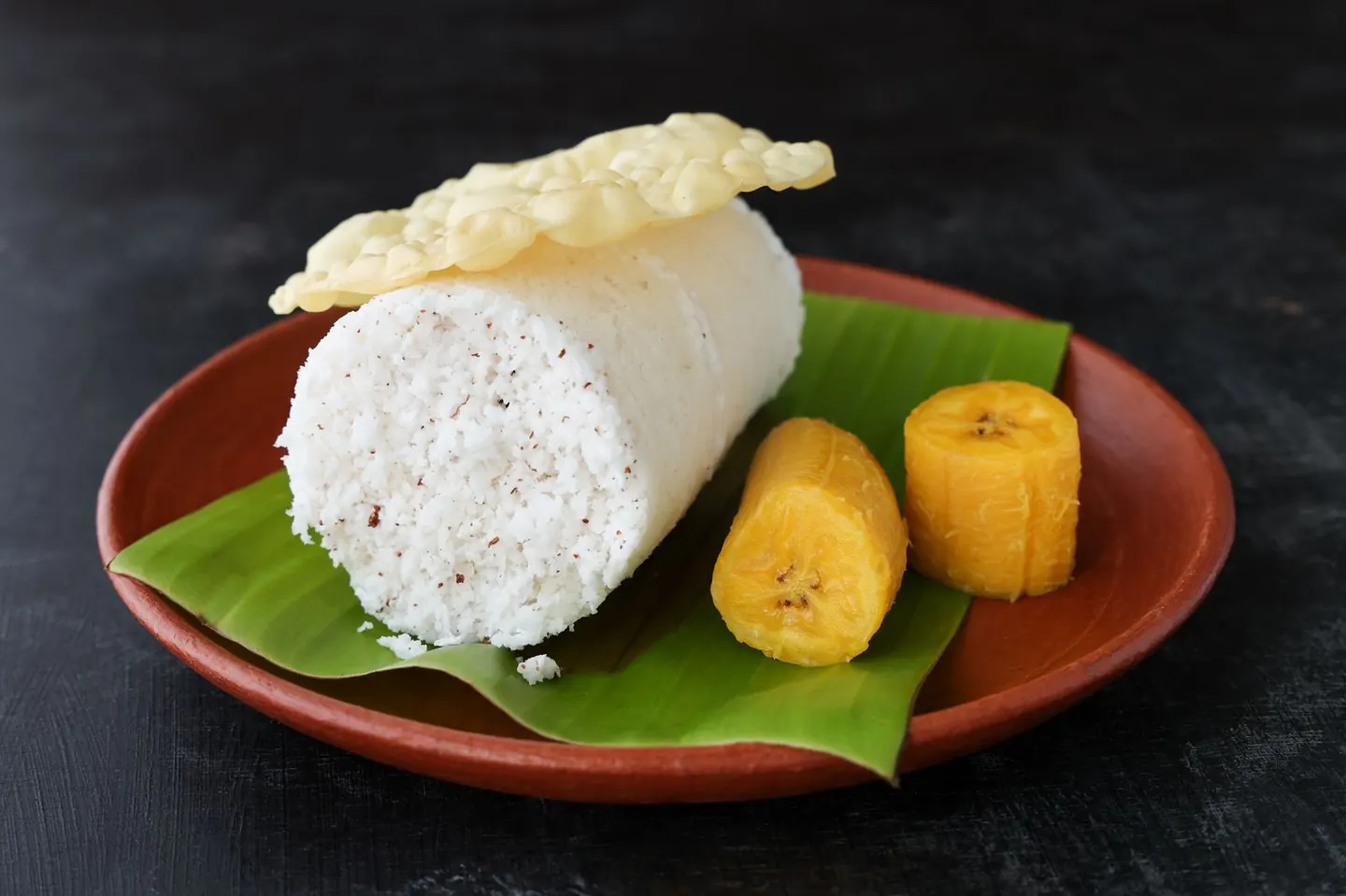
Photograph: Adobe Stock · representative of the dish
Ragi puttu is not a modern health invention — finger millet has been ground and steamed in the Kerala highlands and across the Karnataka border for a very long time — but it is undergoing a revival for reasons that outrun the evidence. Here is the honest position. Millets average GI 52.7 against milled rice at 71.7 in pooled data, and ragi carries 11.18 g of fibre per 100 g against parboiled rice's 3.74 g. But process it too finely and the advantage evaporates: one trial measured a decorticated finger millet porridge at GI 93. The grain state matters more than the grain name.
Before you start: Ragi drinks more water than rice flour and takes longer to absorb it. Add the water, rake it through, then wait two minutes before judging the crumb — the mix that looks too dry at first will be right by then.
Allergens: None of the major allergens.
Equipment: Puttu kutti, bamboo or steel. Substitute: a stacked steamer basket lined with muslin, filled 4 cm deep.
| Energy | 245 kcal |
| Protein | 5 g |
| Fibre | 8 g |
| Net carbohydrate | 35 g |
| Total carbohydrate | 43 g |
| Sugars | 1 g |
| Fat | 9 g |
| Saturated fat | 7 g |
| Sodium | 280 mg |
From ICMR-NIN IFCT 2017 and USDA FoodData Central. Per-serving figures stay the same when you scale.
Every Indian grocer and most health-food shops stock ragi flour as finger millet or nachni flour. Buy small bags: it is high in fat for a flour, goes rancid within about three months, and rancid ragi tastes of old paint and cannot be rescued. Whole ragi grain, soaked 8–10 hours and coarsely ground wet, makes a better and noticeably coarser puttu, and coarser is the direction the evidence points in.
Blood sugar: 8 g of fibre and 35 g of net carbohydrate is the best ratio of any grain dish in this chapter. No measured glycaemic index exists for ragi puttu made this way, so no number is offered here — the composition is the claim, not a GI value.
Cholesterol: 7 g of saturated fat from the coconut, as in R002, and the same halving swap applies.
Iron and calcium: ragi is a useful source of both. That is a compositional statement and nothing more.
All ragi, no rice flour → more fibre again, and a crumb that is harder to keep light. Add 20 ml more water and expect a denser puttu.
Jowar or bajra flour for the ragi → both work. Bajra is stronger and faintly bitter, jowar milder and paler, and both carry 10–11.5 g of fibre per 100 g.
Coarsely ground soaked whole ragi for the flour → better flavour, coarser crumb, and the grain state the evidence favours. Costs 8–10 hours of soaking.
Moistened crumb keeps 24 hours refrigerated. Steamed ragi puttu holds 2 days in the fridge but stiffens faster than rice puttu. Freeze 1 month in portions. Reheat by re-steaming 4–5 minutes from chilled, 6–8 minutes from frozen.
Crumble it into hot milk or thinned coconut milk with a little jaggery for a ragi porridge, or fry it with mustard, curry leaf and leftover cherupayar as a dark, nutty puttu upma.
Hard beads through the crumb: ragi lumps that were never broken up. Rub the mix between your palms before layering.
Dense and rubbery: too much water, or steamed past 10 minutes.
Bitter, paint-like taste: the ragi flour is rancid. Nothing fixes it.
Steams in visible stripes: the two flours were not mixed dry first.
Serve with
R010 Kadala Curry · R011 Cherupayar Curry · M06 for a spoonful of podi over the top
Tap a star to rate this recipe
The Kindle edition is on its way. Until it lands, the complete book — all 25 chapters and 137 recipes — is free to read here, and it stays free after.