 R001
R001Palappam
The lace-edged fermented appam, the Syrian Christian breakfast bread
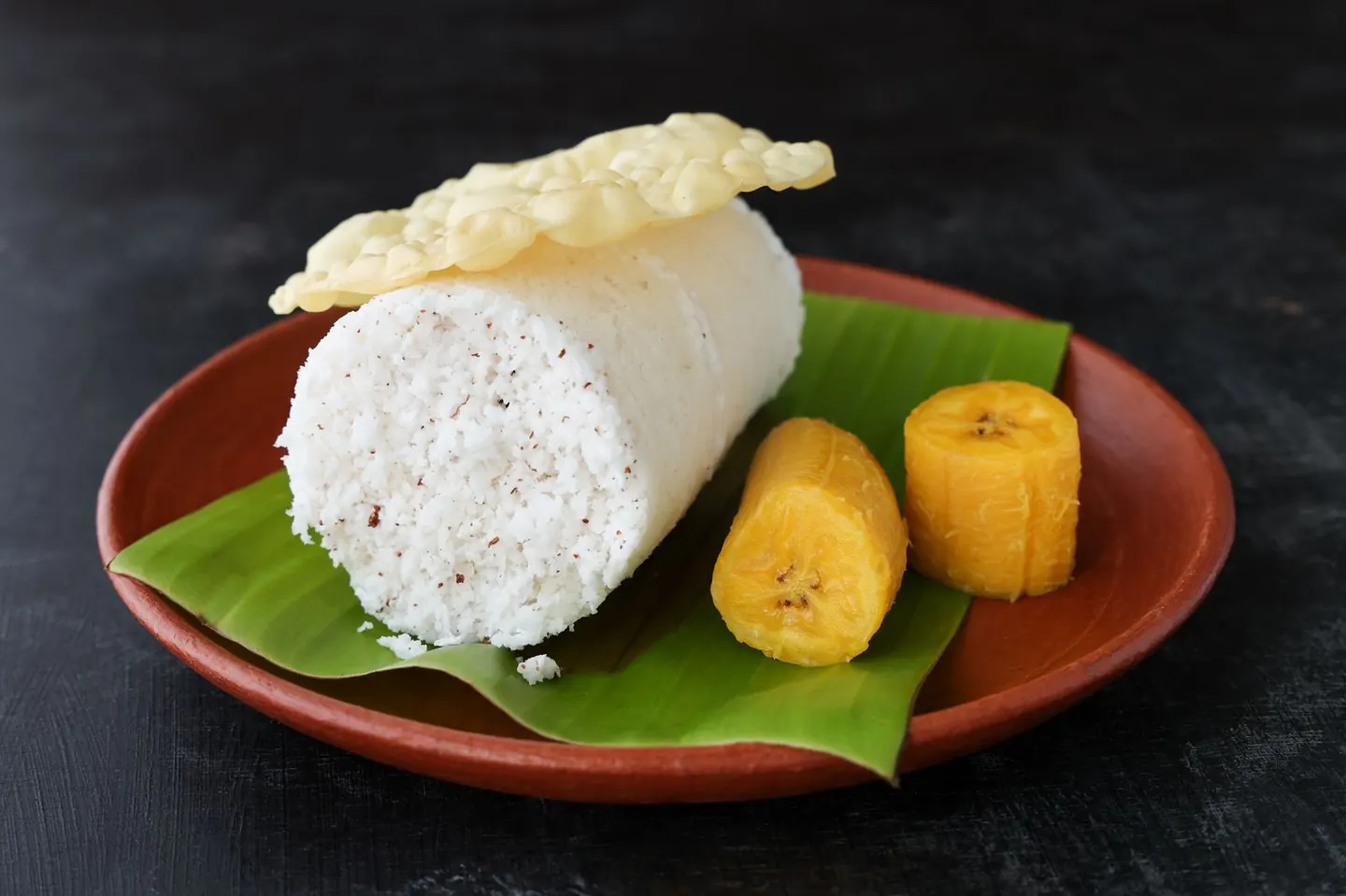
Photograph: Adobe Stock · representative of the dish
Wheat sits more comfortably in Malabar than anywhere else in Kerala — this is pathiri and aleesa country, wheat-tolerant and tea-shop-centred — and wheat puttu is a genuine northern household breakfast rather than a diet substitution. It is also the most useful thing you can do with wheat flour in Kerala, because the alternative is the same flour laminated with fat into a parotta. In Pavithran's Kerala measurements, whole-wheat puttu came out at GI 45 and whole-wheat roti at the same figure — higher than red rice puttu's 38, which is worth knowing and worth saying.
Before you start: Wheat flour forms gluten the moment it is worked wet, and gluten in a puttu means a rubbery plug. Rake the water in with your fingertips and never knead, squeeze or press.
Allergens: Gluten (wheat).
Equipment: Puttu kutti, bamboo or steel. Substitute: a stacked steamer basket lined with muslin. Wheat puttu holds together better than rice puttu, so a loose basket is less of a problem here.
| Energy | 275 kcal |
| Protein | 7 g |
| Fibre | 4 g |
| Net carbohydrate | 42 g |
| Total carbohydrate | 46 g |
| Sugars | 1 g |
| Fat | 9 g |
| Saturated fat | 7 g |
| Sodium | 280 mg |
From ICMR-NIN IFCT 2017 and USDA FoodData Central. Per-serving figures stay the same when you scale.
Ask for coarse atta or chakki atta rather than fine chapatti flour; in a British or American supermarket, wholemeal chapatti flour is the closest thing and coarse wholemeal bread flour also works. What is sold as "wheat puttu podi" in Kerala groceries is often substantially refined — hold the bag up and look for visible bran flecks. Without them you are steaming white flour.
Blood sugar: whole-wheat puttu measured GI 45 in the Kerala trial against red rice puttu's 38. Both are useful, and R002 is better. Broken-wheat upma measured 41 in the same set, which is why R013 exists.
Blood pressure: 280 mg of sodium a portion with M07, about 400 mg with plain salt.
Cholesterol: 7 g of saturated fat from the coconut, and this is the dish where cutting the coconut costs least, since wheat gives more of its own body than rice does.
Broken wheat (nurukku gothambu) coarsely ground for the flour → closer to the measured GI 41 of broken-wheat upma, and a distinctly coarser puttu. The best change on this page.
60 g ragi for 60 g of the wheat → more fibre and a darker crumb, and it works well with wheat's flavour.
Fine chapatti flour instead of coarse atta → smoother, paler, less fibre, and it turns rubbery more easily. Rake even more gently.
Toasted flour keeps 2 months in a jar, so toast a kilogram at a time. Moistened crumb keeps 24 hours refrigerated. Steamed puttu holds 2 days in the fridge and freezes 1 month. Reheat by re-steaming 4–5 minutes from chilled.
Crumbled wheat puttu fried with onion, green chilli and a beaten egg makes a good second breakfast, and it takes a spiced pulse better than rice puttu does.
Rubbery, chewy plug: the mix was kneaded or squeezed. Rake only.
Tastes raw and pasty: the flour was not toasted.
Falls apart completely: under-hydrated. Sprinkle 2 tablespoons of water, rake, re-steam.
Grey and heavy: over-steamed. Nine minutes is the ceiling.
Serve with
R010 Kadala Curry · R014 Egg Roast, Rebuilt · R011 Cherupayar Curry
Tap a star to rate this recipe
The Kindle edition is on its way. Until it lands, the complete book — all 25 chapters and 137 recipes — is free to read here, and it stays free after.