 R001
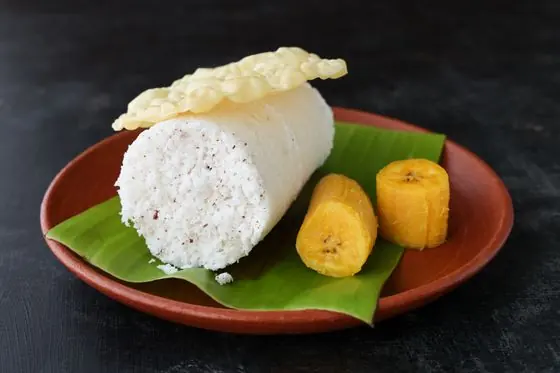
R001Palappam
The lace-edged fermented appam, the Syrian Christian breakfast bread
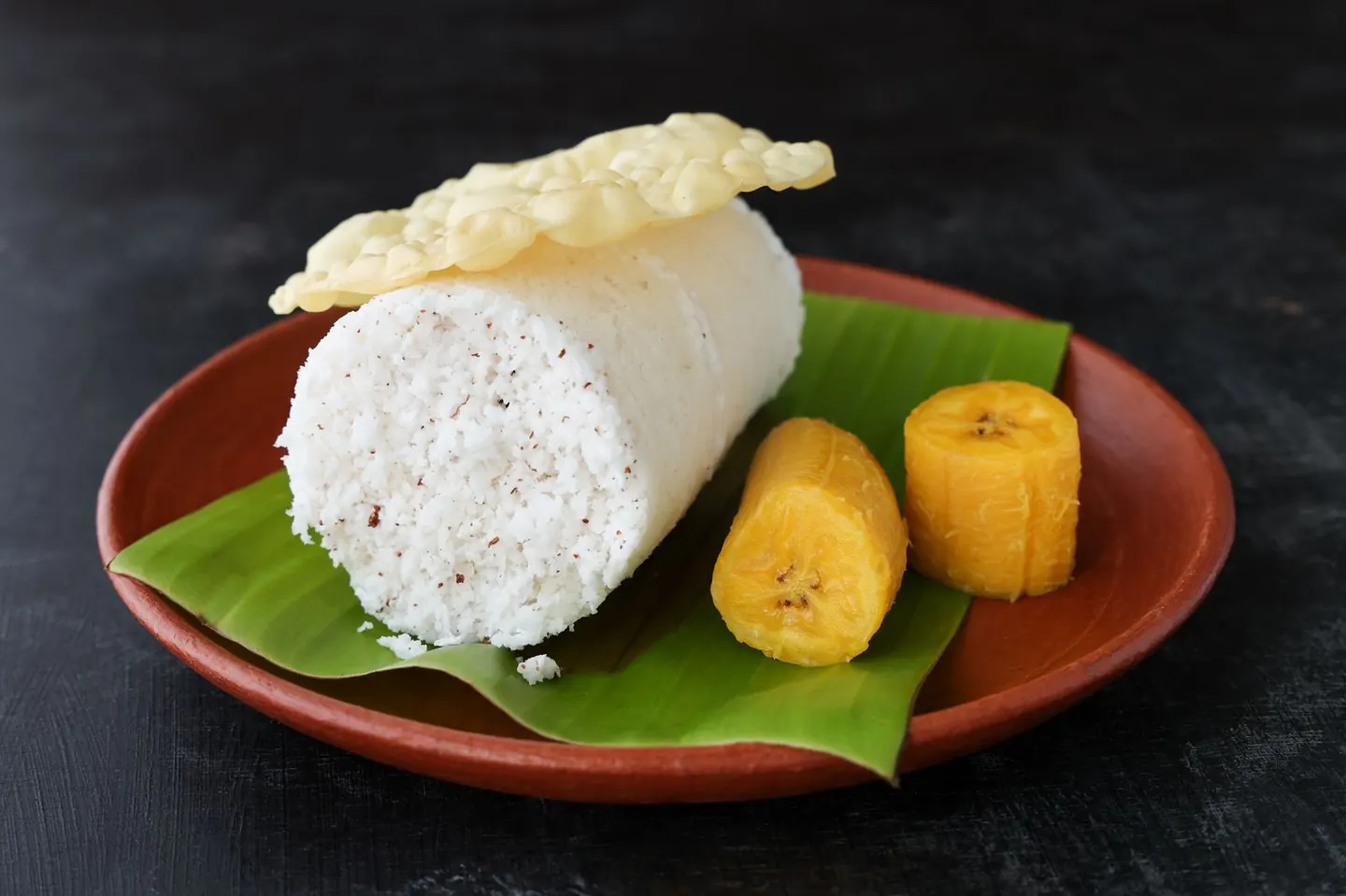
Photograph: Adobe Stock · representative of the dish
Plan ahead: plus 2–3 days sprouting, if you sprout your own.
Upma is the fastest hot breakfast in the South Indian repertoire and the one most easily rescued, because the semolina in it was never doing anything the vegetables could not do better. This version is closer to a vegetable dish that happens to contain grain than a grain dish with vegetables in it, and it holds together perfectly well — the trick is roasting the rava properly and keeping the water ratio tight. In the Kerala trial, broken-wheat upma measured GI 41, the second-lowest value in the whole set, which is the argument for the broken-wheat version in the swaps.
Before you start: Upma moves fast from the moment the water goes in, and lumps form in seconds. Have the rava roasted and beside the hob, all the vegetables cut, and the water already hot before you light the flame.
Allergens: Sesame, mustard, gluten (wheat).
Equipment: Wide heavy pan, 26 cm, with a lid. Substitute: any deep frying pan. Non-stick makes the final stirring easier and the semolina less likely to catch.
| Energy | 213 kcal |
| Protein | 11 g |
| Fibre | 9 g |
| Net carbohydrate | 34 g |
| Total carbohydrate | 43 g |
| Sugars | 4 g |
| Fat | 3 g |
| Saturated fat | 1 g |
| Sodium | 210 mg |
From ICMR-NIN IFCT 2017 and USDA FoodData Central. Per-serving figures stay the same when you scale.
Buy coarse semolina — bombay rava, sooji, or the coarser upma rava — rather than the fine flour-like grade, which turns to paste. Any South Asian grocery has both, and Italian semola rimacinata is too fine. Frozen mixed vegetables are entirely acceptable here and save all the chopping; add them straight from frozen at step 5 and give them 2 minutes longer. For sprouts, soak 40 g of whole green gram 8 hours, drain, and keep it in a damp cloth or a covered colander for 2–3 days, rinsing twice a day, until the tails are 5–10 mm. Shop-bought mung sprouts work; use 100 g.
Blood sugar: 34 g of net carbohydrate for a 250 g plateful, which is the best volume-to-carbohydrate ratio in the chapter. Broken-wheat upma measured GI 41 in the Kerala trial; no measured value exists for semolina upma, so none is given here.
Blood pressure: 210 mg with M07, about 300 mg with plain salt. The lime is doing part of the work the salt would otherwise do.
Cholesterol: 1 g of saturated fat. Sesame oil is 16.25% saturated against coconut oil's 90.86%, and the traditional handful of cashews would add about 4 g of fat a serving.
Broken wheat (nurukku gothambu) for the semolina → the measured GI 41 version, coarser and nuttier, and it needs 400 ml more water and 15 minutes longer. The best change on this page.
Ragi or oats for a third of the semolina → more fibre, softer texture, and it catches more readily on the pan.
200 g vegetables instead of 400 g → the conventional upma, and about 40 kcal more per 100 g of food. This is the ratio this recipe exists to argue against.
Coconut oil for sesame → about 2 g more saturated fat a serving and a more Kerala aroma. Defensible in a dish where the oil is this small.
At eight servings use two pans. One pan of 800 g of vegetables steams rather than fries and the upma goes wet.
Best within the hour. Fridge 2 days in a covered box; it firms up and reheats acceptably with a sprinkle of water. Freeze 1 month, with the texture noticeably coarser on thawing. Reheat in a covered pan with 2 tablespoons of water, 4–5 minutes, or steam it 5 minutes, which is better. The roasted semolina itself keeps 2 months in a jar, so roast 1 kg at a time.
Press cold upma into a flat cake, cut it into squares and crisp them in a dry non-stick pan 3–4 minutes a side — the best thing to do with leftover upma and better than the original for some people.
Lumpy: the semolina went in as a heap, or the water was not at a full boil. Rain it in and stir without stopping.
Gluey, pasty upma: the rava was unroasted, or it was fine rather than coarse grade.
Dry and crumbly: too little water, or it stood too long uncovered. Sprinkle 2 tablespoons of hot water, cover, and give it 2 minutes.
Watery, will not come together: too much water for the grade of rava. Cook it uncovered 2 minutes more, stirring.
Serve with
R011 Cherupayar Curry · R089 Kerala Kitchen Salad · R107 Sambharam
Tap a star to rate this recipe
The Kindle edition is on its way. Until it lands, the complete book — all 25 chapters and 137 recipes — is free to read here, and it stays free after.