 R001
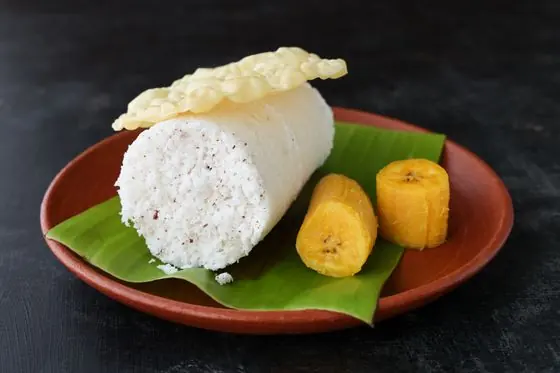
R001Palappam
The lace-edged fermented appam, the Syrian Christian breakfast bread
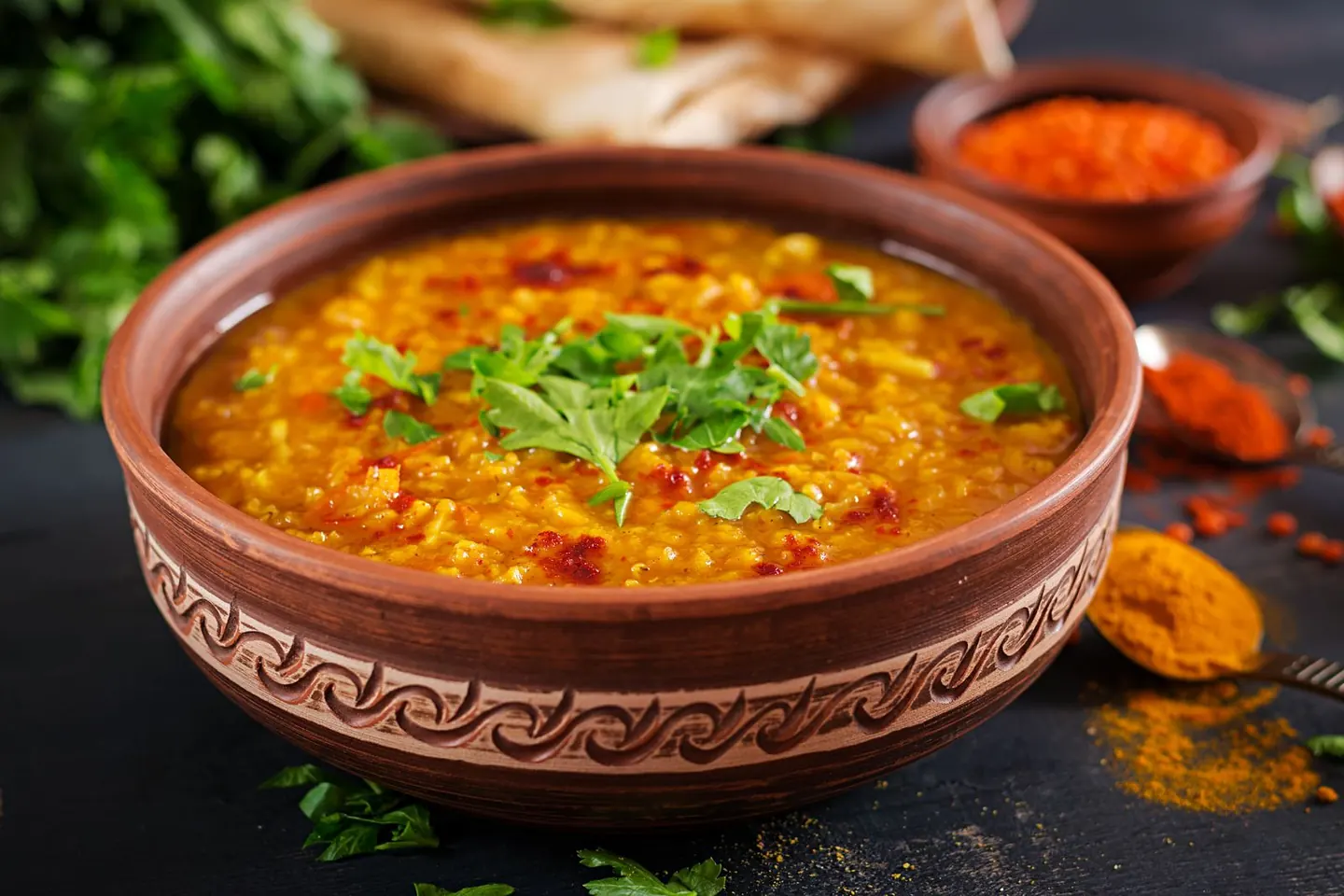
Photograph: Adobe Stock · representative of the dish
Cherupayar is the everyday pulse of a Kerala breakfast and the one to learn first, because whole green gram needs no soaking to speak of and cooks in twenty minutes. It is the lightest pulse dish in this chapter — 12 g of protein and 10 g of fibre for under 200 kcal — and the one that suits idiyappam and appam better than kadala does, since it does not fight a delicate steamed grain. In many households this is also the sprouting pulse: two or three days on a damp cloth and the same beans become a salad.
Before you start: Grind the coconut paste before you start cooking. It goes in at the end and it must not wait on the heat.
Allergens: Mustard.
Equipment: Pressure cooker, or a heavy lidded pan. Substitute: a pan takes 30–40 minutes rather than 8–10 under pressure, and whole green gram is forgiving enough that either is fine.
| Energy | 182 kcal |
| Protein | 12 g |
| Fibre | 11 g |
| Net carbohydrate | 15 g |
| Total carbohydrate | 26 g |
| Sugars | 2 g |
| Fat | 8 g |
| Saturated fat | 7 g |
| Sodium | 210 mg |
From ICMR-NIN IFCT 2017 and USDA FoodData Central. Per-serving figures stay the same when you scale.
Buy whole green gram — moong, mung bean, sabut moong — rather than the split yellow dal, which is a different dish: the skin carries most of the fibre and all of the shape. Any South Asian, Chinese or health-food shop stocks it, and it is one of the cheapest useful foods in any of them. Tinned mung beans exist and are acceptable at 450 g drained and rinsed, though they arrive softer than you want.
Blood sugar: 15 g of net carbohydrate and 12 g of protein makes this the cheapest way in the chapter to put a pulse on the plate. Pulses at about 130 g a day also lowered body weight by 0.34 kg across 21 trials without any calorie restriction (Kim et al., 2016) — a small effect, honestly reported, in diets that were not trying to lose weight.
Blood pressure: 210 mg a serving, and about 300 mg with plain salt.
Cholesterol: 7 g of saturated fat from 15 g of coconut a serving. Halve the coconut and it falls to about 3.5 g, and the dish becomes plainer but still works, which is not true of R010.
Split green gram dal for whole → cooks in 12 minutes, tastes softer and rounder, and fibre falls from 11 g to about 6 g a serving. A real loss for a small convenience.
Sprouted green gram, sprouted 2–3 days then simmered 8–10 minutes → lighter again, faintly sweet, and it needs almost no cooking. Change nothing else.
100 ml second-extraction coconut milk instead of the ground paste, added off the heat → smoother and milder, with about 2 g less fibre a serving and none of the coconut texture.
Add 150 g chopped spinach or cheera in the last 3 minutes → the vegetable half of the plate arrives in the same pan.
Best on the day, unlike R010. Fridge 3 days; the coconut paste dulls after that. Freeze 2 months, though the ground coconut turns slightly grainy on thawing, so freeze the cooked beans plain and add the paste fresh if you can plan that far ahead. Reheat gently with a splash of water and never at a boil.
Drain and toss with grated coconut, a green chilli and mustard tempering for a cherupayar thoran, 3–4 minutes. Or crush it coarsely and use it as a filling for a rolled dosa.
Beans burst and turned to mush: overcooked, or split dal was used by mistake. Two minutes under pressure separates right from wrong here.
Grainy, split-looking gravy: the coconut paste boiled. Add it off the heat next time and warm through only.
Tastes raw and grassy: the paste went in and came straight off the heat. It needs 3–4 minutes at a tremble.
Watery: step 3 was skipped. Boil the liquid down before the coconut goes in, never after.
Serve with
R005 Idiyappam — the pairing this dish was made for · R001 Palappam · R003 Ragi Puttu · R012 Kanji with Vanpayar for a two-pulse breakfast
Tap a star to rate this recipe
The Kindle edition is on its way. Until it lands, the complete book — all 25 chapters and 137 recipes — is free to read here, and it stays free after.