 R001
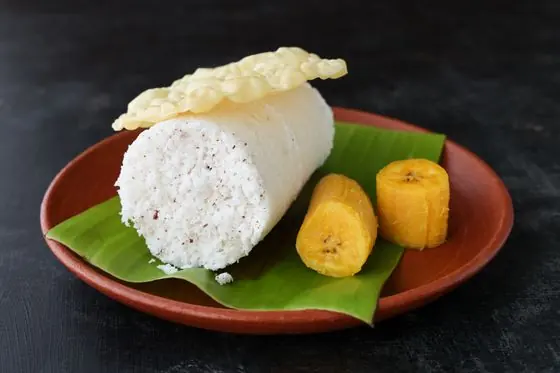
R001Palappam
The lace-edged fermented appam, the Syrian Christian breakfast bread
Photograph: Adobe Stock · representative of the dish
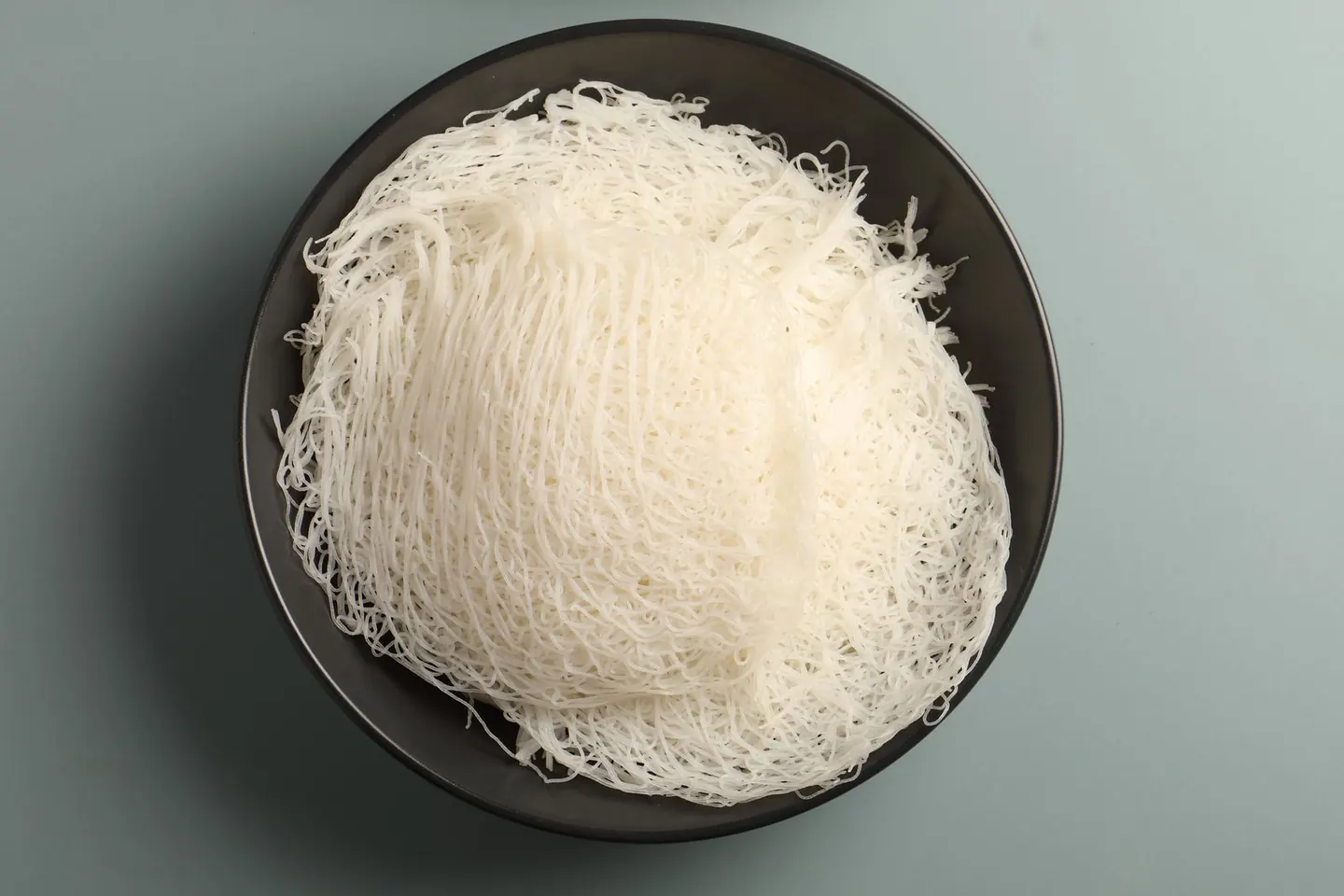
The sevanazhi — the brass or steel press with its interchangeable discs — is a documented thousand-year-old tool: the Kannada Lokopakara of 1025 CE describes both the preparation and the mould-press for shavige. The name is straightforward. Idi is to pound or press, so idiyappam is pressed appam; noolappam is thread appam, which is what it looks like. It is the gentlest thing in this chapter, the breakfast given to children and to people recovering from illness, and the one dish here where a hot dough is the entire technique.
Before you start: This dough is worked at a temperature that is uncomfortable to touch and must not be allowed to cool, because cold dough will not extrude and cannot be revived. Have the press assembled, the plates greased, the steamer at a boil and the coconut grated before the water goes on.
Allergens: None of the major allergens.
Equipment: Sevanazhi or idiyappam press with a fine disc; steamer with flat perforated plates or idli plates. Substitute: a potato ricer with the finest plate, or a piping bag with a 2 mm nozzle — slower, and the strands come out thicker.
| Energy | 274 kcal |
| Protein | 6 g |
| Fibre | 3 g |
| Net carbohydrate | 47 g |
| Total carbohydrate | 50 g |
| Sugars | 1 g |
| Fat | 7 g |
| Saturated fat | 6 g |
| Sodium | 210 mg |
From ICMR-NIN IFCT 2017 and USDA FoodData Central. Per-serving figures stay the same when you scale.
Buy flour labelled "idiyappam podi", "roasted rice flour" or pathiri podi — all three are the same thing, milled fine and pre-roasted, and it is worth buying rather than making, because home-ground flour is rarely fine enough to extrude without tearing. Ordinary rice flour must be dry-toasted over a low flame 5–7 minutes before use or the dough will be slack. Matta rice flour makes a pink-brown idiyappam with more fibre and a coarser strand; it is worth trying and it is not the classic.
Blood sugar: three idiyappams is 47 g of net carbohydrate with very little fibre and no protein, which makes this the most exposed dish in the chapter when eaten alone. It is also the one most transformed by what sits beside it. With R011 the meal gains 12 g of protein and 10 g of fibre.
Blood pressure: 210 mg of sodium, the lowest of the grain dishes here, because idiyappam needs very little salt in the dough.
Cholesterol: 6 g of saturated fat, and if you skip the coconut on top it falls to under 1 g. This is the leanest grain recipe in the chapter and the easiest one to keep that way. What a finishing pour of thick coconut milk costs, honestly: 60 ml adds about 3.6 g of saturated fat a serving.
Matta rice flour for white → more fibre, a pinkish strand, and a slightly more fragile press. Toast it first.
Ragi flour for a third of the rice flour → darker, softer strands with about 3 g more fibre a portion. It presses less cleanly.
Skip the coconut on the plates → saturated fat falls to under 1 g a serving, and the idiyappam is plainer and drier. Genuinely worth doing if you are pairing it with a coconut-milk curry.
At eight servings, make the dough in two batches. One large batch cools before the last third is pressed.
Best within an hour of steaming. Fridge 2 days in a covered box. Freeze 1 month, interleaved with paper in flat bags. Reheat by re-steaming 3–4 minutes from chilled or 5–6 minutes from frozen; sprinkle a few drops of water over them first. Do not refrigerate the dough — it hardens irreversibly.
Break cold idiyappam into a pan with mustard, curry leaf, sliced shallot, turmeric and any leftover pulse for idiyappam upma, 5–6 minutes. This is the best leftover dish in the chapter.
Dough will not go through the press: it has cooled, or there was not enough boiling water. Add 1–2 tablespoons of boiling water and knead again hot.
Strands fused into a solid mat: over-steamed, or pressed too densely onto the plate.
Idiyappam tastes of raw flour: the flour was unroasted, or the water was not at a full boil.
Strands break as they leave the press: dough too dry. One more tablespoon of boiling water.
Serve with
R011 Cherupayar Curry · R010 Kadala Curry · R014 Egg Roast, Rebuilt · M08 for a measured pour of coconut milk
Tap a star to rate this recipe
The Kindle edition is on its way. Until it lands, the complete book — all 25 chapters and 137 recipes — is free to read here, and it stays free after.