 R112
R112Palada Payasam, Rebuilt
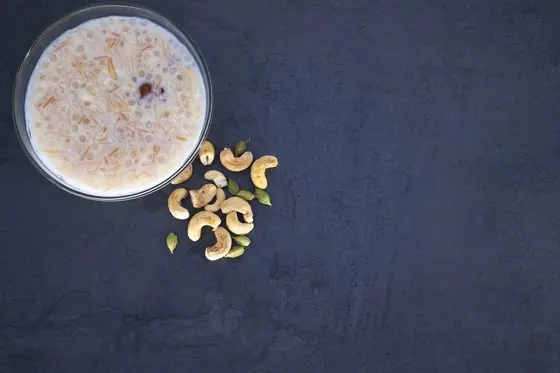
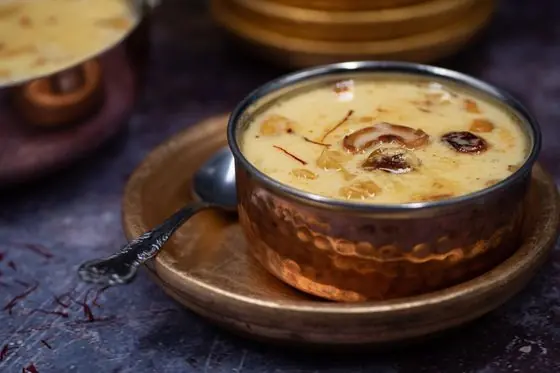
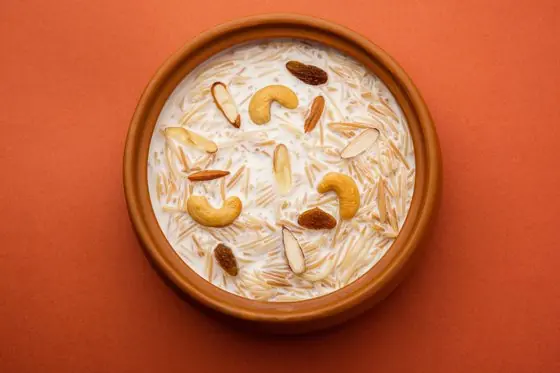
Rice ada in reduced milk, at a measured 100 millilitres
Recipes › Sweets and Payasam, Honestly
R115
Rice parcels of coconut and jaggery, steamed in banana leaf
Photograph: Adobe Stock · representative of the dish
Rice flour dough spread thin on a piece of banana leaf, a spoonful of coconut and jaggery in the middle, the leaf folded over and steamed until the parcel goes dark and translucent and smells of hot leaf. It is a monsoon teatime food, an offering at Karkidaka Vavu, a thing made in quantity when there are children in the house. It is also the only sweet in this book where portion control is a property of the object rather than a demand made of the eater, and that is worth more than most nutritional engineering.
Before you start: Soften the banana leaf before you touch the dough. A stiff leaf splits along its ribs the moment you fold it, and a split parcel leaks its filling into the steamer.
Allergens: None of the major allergens as the recipe is written. Milk — only if you use ghee rather than coconut oil.
Equipment: Steamer with at least two tiers, or an idli pot; a heavy pan for the dough; scissors; a clean tea towel. Substitute: a large lidded pan with a trivet and 3 cm of water steams eight parcels at a time perfectly well. No steamer at all — bake the parcels at 180°C (350°F) for 18–22 minutes on a tray with a cup of water beside them; the leaf chars slightly at the edges, which some people prefer.
Frozen banana leaf is sold in 400 g packets in every Asian and Latin American grocery and thaws in 20 minutes; it is what most diaspora readers should use and it works as well as fresh. If you genuinely cannot get banana leaf, baking parchment steams the parcels perfectly and gives you none of the aroma, which is a real loss rather than a cosmetic one — the vegetal smell of hot leaf is half of what elayada tastes like. Fine rice flour labelled "roasted rice flour", "puttu podi" or "ada flour" is the correct product; plain rice flour works but wants a minute of dry-roasting in the pan first. Frozen grated coconut is fine; desiccated coconut is not, because it has been dried and defatted and gives a filling that is dry and slightly chalky — if it is all you have, soak 100 g in 80 ml of warm water for 15 minutes first.
Blood sugar: 21 g of net carbohydrate a parcel, and 8 g of that is sugars. One parcel with a black tea or a sulaimani is a defensible tea-time item; three parcels is a rice meal, and it is worth knowing which one you are having.
Blood pressure: 30 mg sodium. Nothing to manage.
Cholesterol: 5 g of saturated fat a parcel, all of it coconut flesh rather than coconut oil — which is a real distinction, because fresh grated coconut carries about 10 g of fibre and 3.8 g of protein per 100 g where the oil carries neither. That does not make the saturated fat disappear. It does mean this is the form of coconut the book keeps.
Rice flour → ragi (finger millet) flour, up to half the weight. Darker, nuttier, considerably more fibre at 11.18 g per 100 g against rice flour's 2.81; the dough is harder to roll thin and wants an extra 20 ml of water.
Jaggery → cane jaggery or panela, 1:1.
Fresh coconut → frozen grated coconut, thawed, same weight. No loss. Desiccated, only as in the sourcing note.
Coconut-and-jaggery filling → the thick base of R114 Cherupayar Payasam, about 25 g a parcel. More protein, less sweet, excellent.
Banana leaf → parchment. Works mechanically, and loses the aroma that is the reason to make elayada rather than anything else.
Do not crowd the steamer at scale. Parcels stacked without a gap steam unevenly and the ones in the middle stay gummy at the fold.
Assemble the parcels up to 6 hours ahead and keep them covered with a damp cloth in the fridge, unsteamed — this is the best way to make them for a crowd. Fridge 3 days steamed, in their leaves; the dough firms and is better re-steamed than microwaved. Freeze 2 months, steamed and cooled, in their leaves in a bag; steam from frozen for 12–15 minutes. This is the best-freezing sweet in the chapter, and a bag of twelve in the freezer is a genuine defence against the bakery.
Day-old elayada, unwrapped, sliced 1 cm thick and warmed in a dry pan until the cut faces are golden, is arguably better than fresh — the filling caramelises against the pan. Two slices with a black coffee is a decent breakfast.
Dough cracks when you flatten it: too dry, or it cooled. Wet your palms and knead again while it is warm; if it has gone cold, add a tablespoon of boiling water and knead it back.
Parcels leaked in the steamer: the dough was not sealed to itself, only wrapped, or the leaf split along a rib. Press the dough edges together firmly through the leaf, and trim ribs out at step 1.
Gummy at the fold after 25 minutes: the dough was too thick, or the steamer was crowded. Thinner and fewer.
Filling dry and gritty: desiccated coconut used without soaking, or the jaggery was in lumps rather than grated fine.
Leaf tore while folding: not softened. Three seconds over a flame changes the leaf completely.
Serve with
R111 Sulaimani, which is the correct pairing and cuts the coconut fat · R106, the chai strategy · at Karkidaka Vavu, alongside R108 Karkidaka Kanji · M09 varutharacha thenga, if you want a roasted-coconut filling instead
Tap a star to rate this recipe
The Kindle edition is on its way. Until it lands, the complete book — all 25 chapters and 137 recipes — is free to read here, and it stays free after.