 R010
R010Kadala Curry
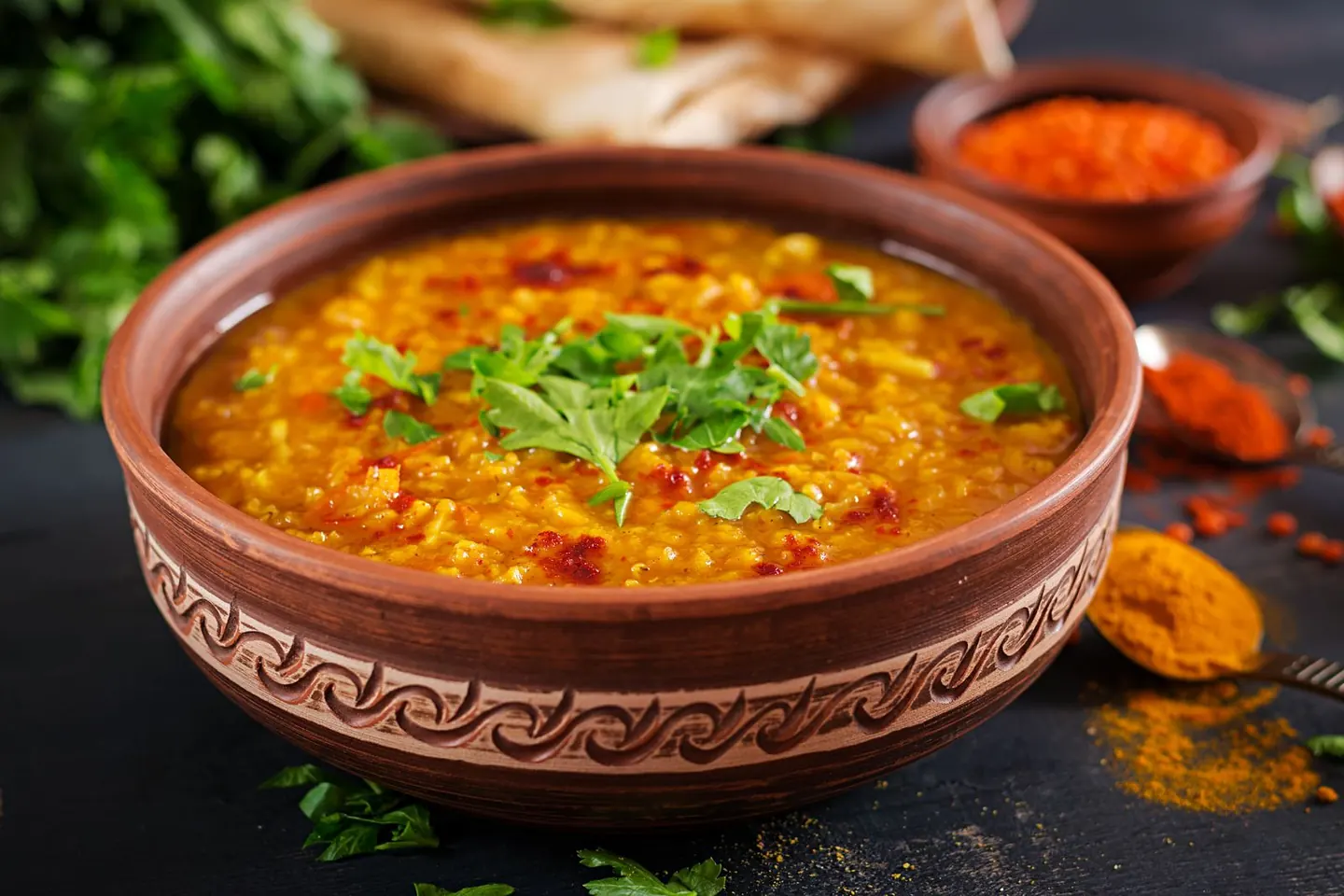
Black chickpeas with roasted coconut, the partner of puttu
From the book by Reshmi R Nair
Not a diet that asks you to give up your grandmother's cooking. 137 recipes made the way Kerala has always made them — with the numbers attached, so you can see exactly what each one does to your blood sugar, your waistline and your heart.
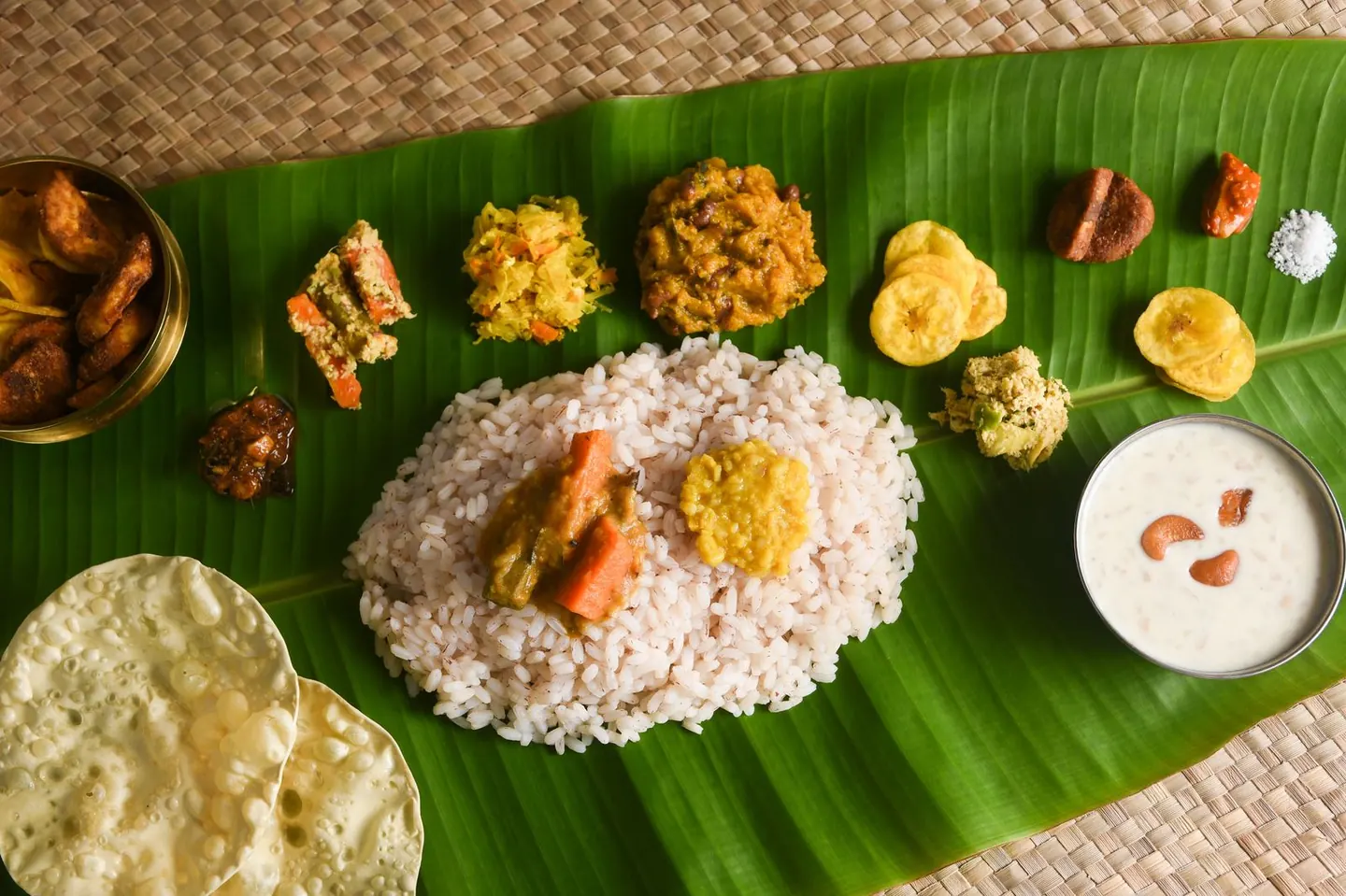
Thirteen chapters of Kerala cooking, from the mother preparations to a full Onam sadya.
The whole argument of the book fits in four words. Everything else is technique.
The largest lever, and the one that needs a number. A quarter of the plate is 125–150 g of cooked rice. Weigh it once and you can serve by eye for life.
A purchasing decision made once at the shop. Unpolished parboiled matta measures a glycaemic index of 38 against 79.6 for the same variety milled to 9.7% polish.
50 g cooked, minimum, on every plate that carries rice. Brown rice with legumes cut the five-day glycaemic response by 22.9% against white; the grain swap alone got 19.8%.
Half vegetables, a quarter grain, a quarter protein. Rice eaten off that plate behaves differently from the same rice under a poured curry.
Nine recipes that carry the argument. Each one gives per-serving energy, protein, fibre, net carbohydrate and sodium.
R010Black chickpeas with roasted coconut, the partner of puttu
 R002
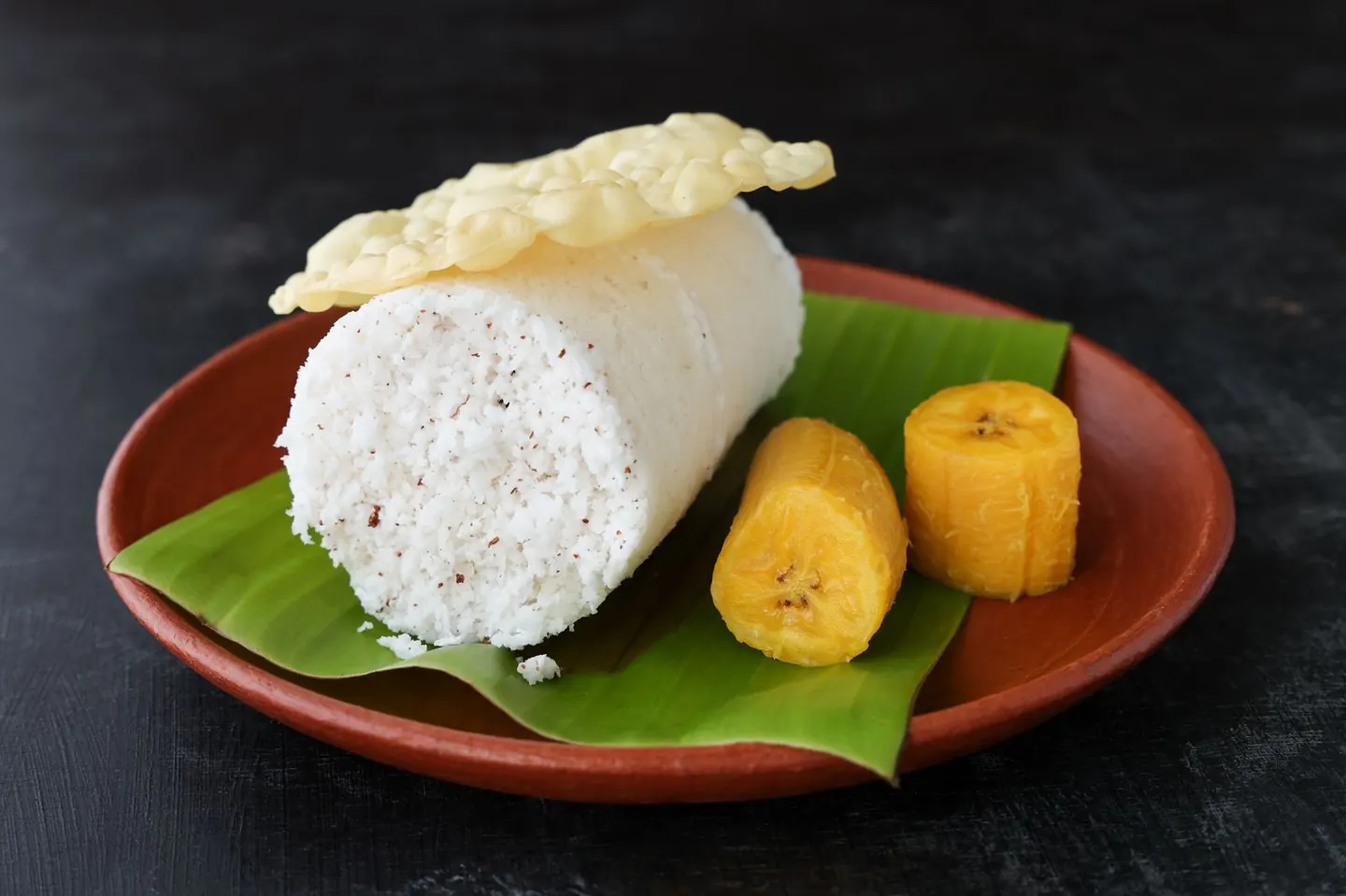
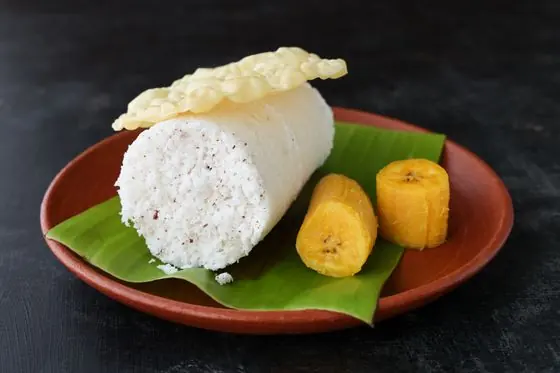
R002The steamed cylinder, made with red parboiled rice
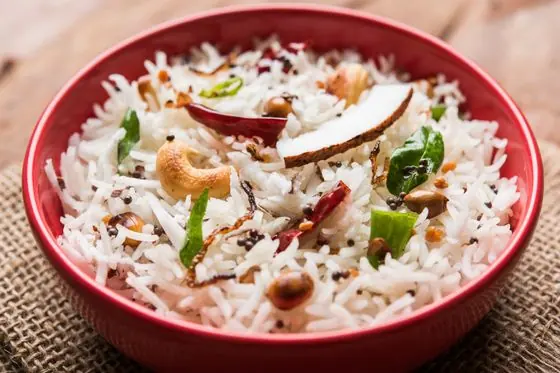 R015
R015Kerala's parboiled red rice, by absorption and by draining
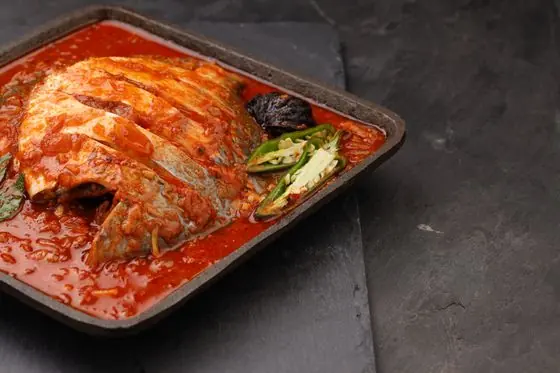 R027
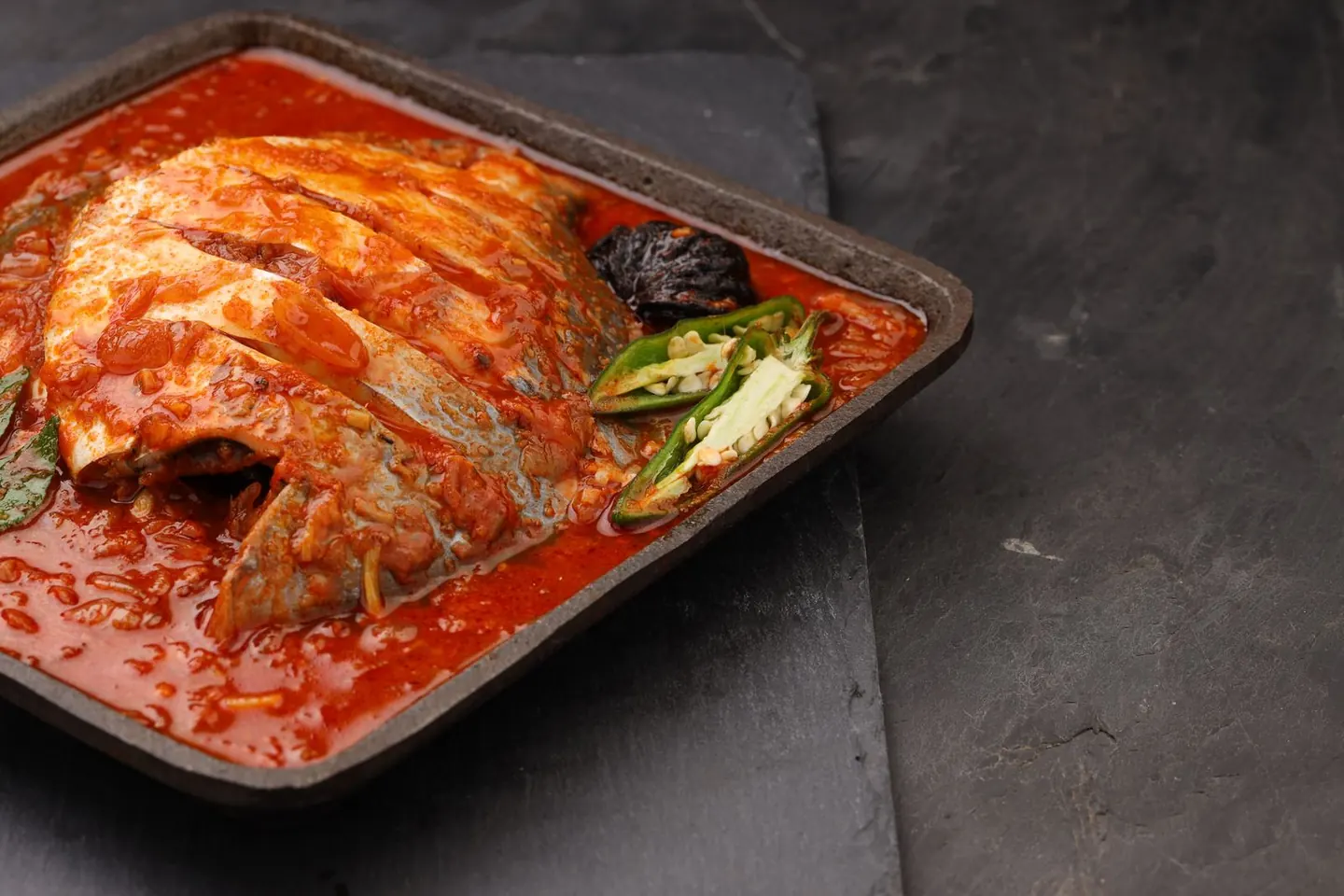
R027Mackerel with a chilli-masala rub, in a very hot oven
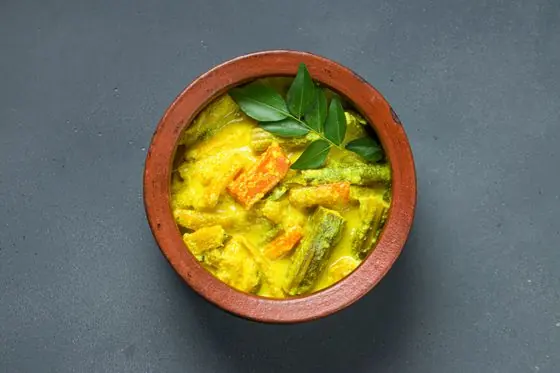 R069
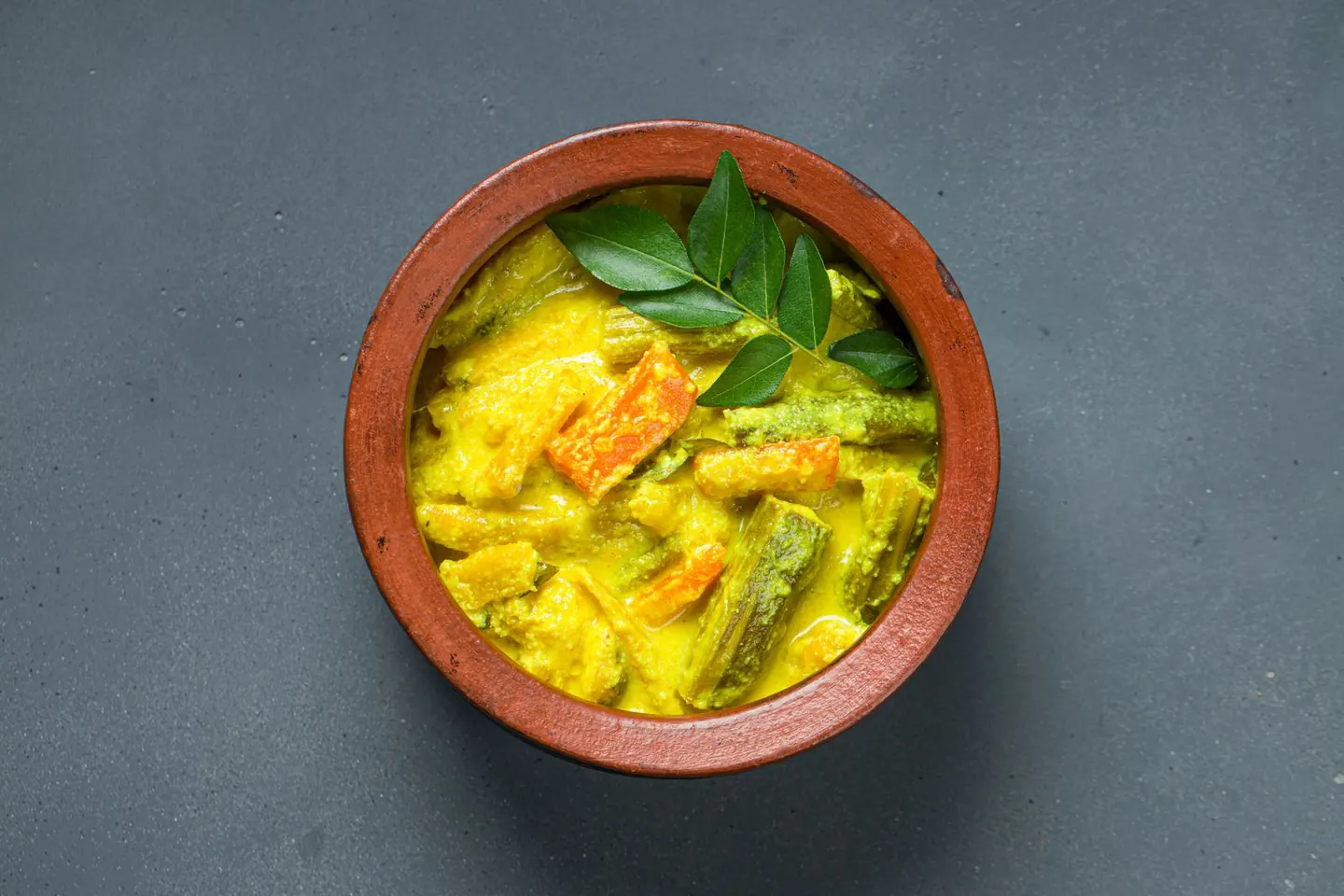
R069Mixed vegetables in coarse coconut-cumin paste, finished with raw coconut oil
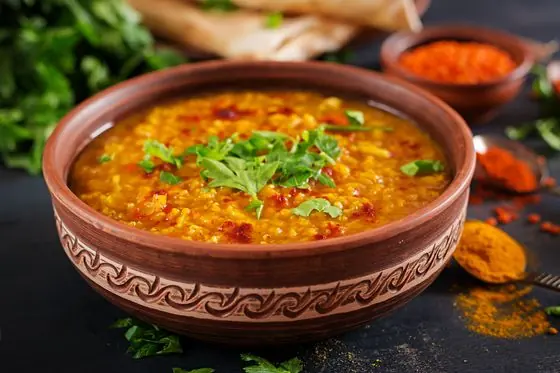 R023
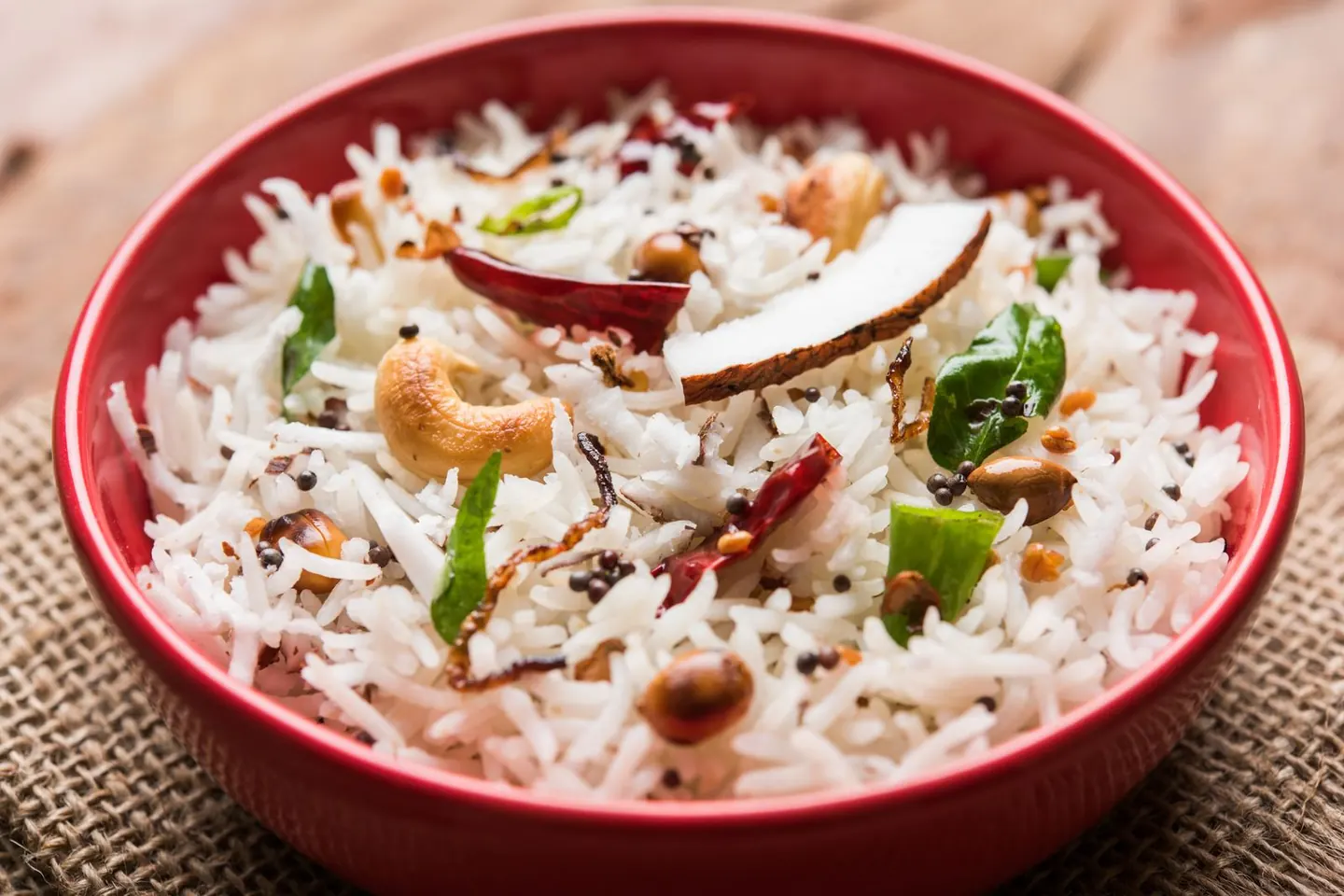
R023Matta rice and moong dal in one pot, with coconut and curry leaf
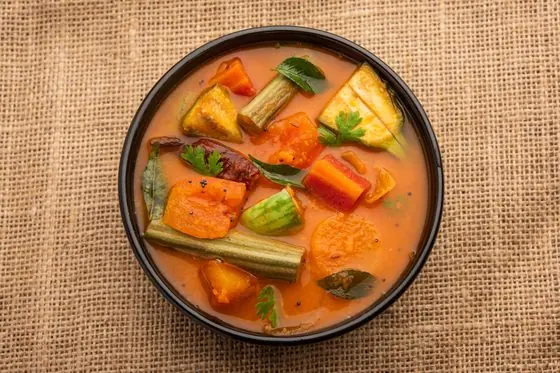
R086Tamarind and pepper broth, the third rice course
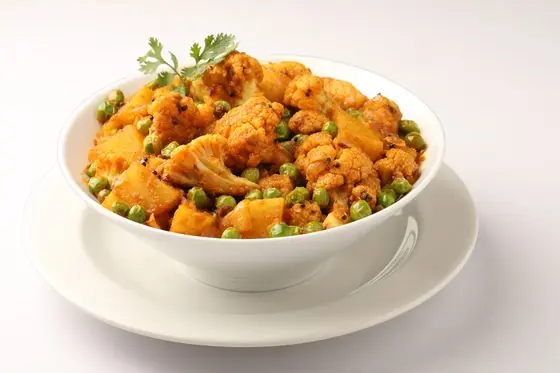 R081
R081Tempered buttermilk curry with ground coconut
R011Whole green gram with ground coconut, light and quick
Most glycaemic index tables test foods nobody in Kerala eats. These were measured on the real thing.
| Preparation | Malayalam | Reported GI | Band |
|---|---|---|---|
| Red rice puttu | puttu | 38 | Low |
| Rose Matta rice, cooked | matta | 38 | Low |
| Broken-wheat upma | — | 41 | Low |
| Whole-wheat puttu | puttu | 45 | Low |
| Whole-wheat roti | — | 45 | Low |
| Oats puttu | puttu | 51–52 | Low |
Values reported by Pavithran et al. (2020) on Kerala preparations. Glycaemic index is a property of a food as tested, in the people tested — read it as a direction, not a dose. The full caveat is here.
No email required and nothing to sign up for. The full seven-day menu, the Sunday preparation block and the shopping list are on this site, open to everyone — the same programme that opens the book.
The whole thing, free
All 25 chapters and 351,617 words — the argument, the pantry, every technique, all 137 recipes, the programme, the reference tables, the glossary and the bibliography.
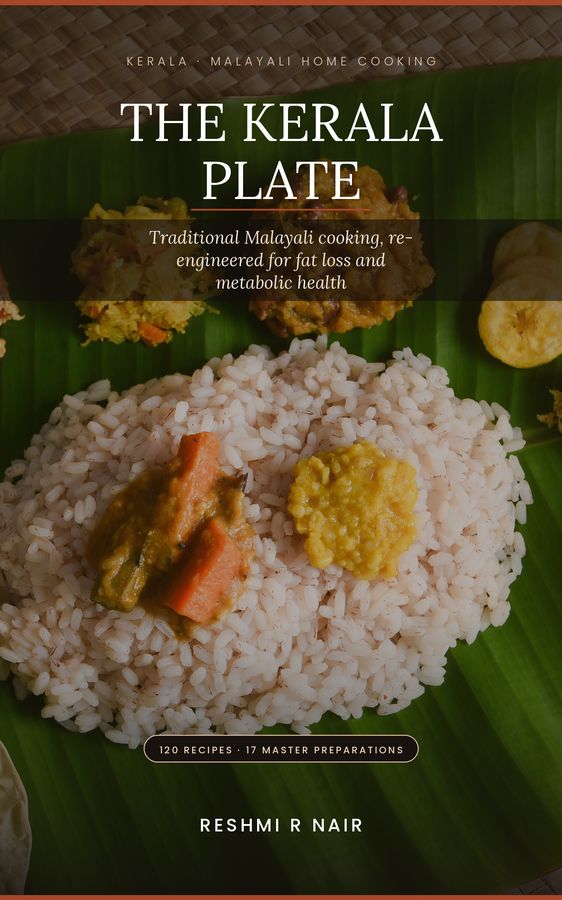
The book
The complete work runs to over a thousand pages: the mother preparations, the technique chapters, swap tables, per-100 g composition for every ingredient, the sodium and potassium arithmetic, a full Onam sadya, a 28-day plan and a sourced bibliography.
The Kindle edition is on its way. Until it lands, the complete book — all 25 chapters and 137 recipes — is free to read here, and it stays free after.
The collection, in numbers
Every dish counted, every property measured — so you can see the shape of the book before you cook a single thing.