 M01
M01Kerala Garam Masala
The southern register — aromatic, not earthy
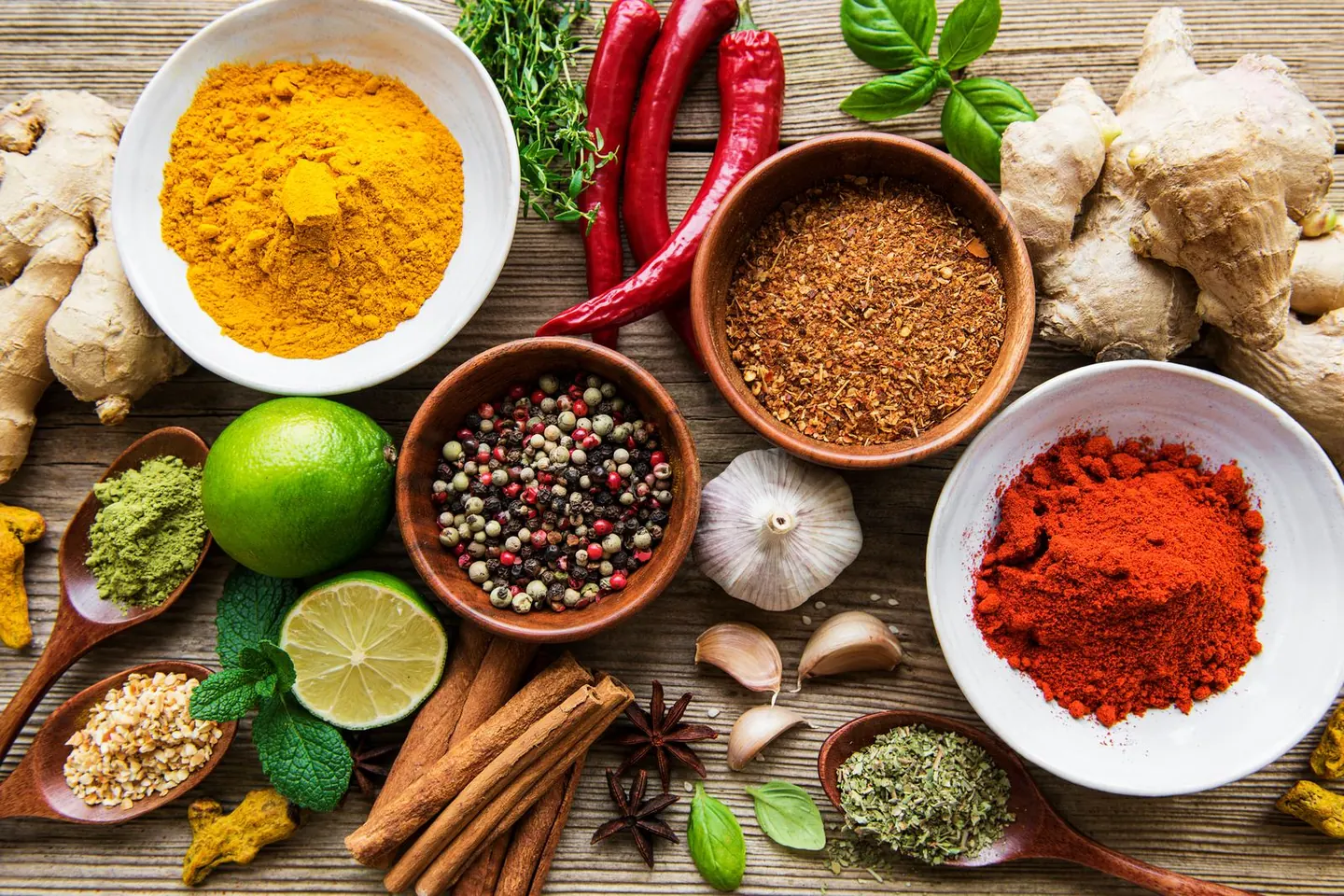
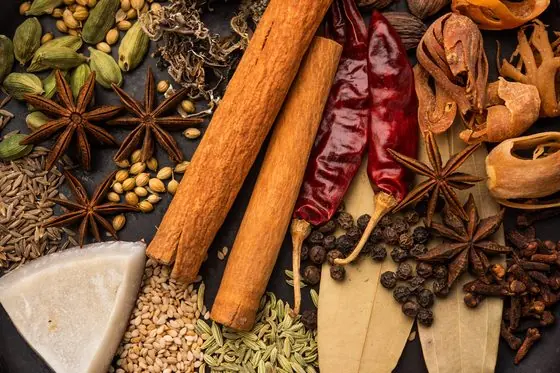
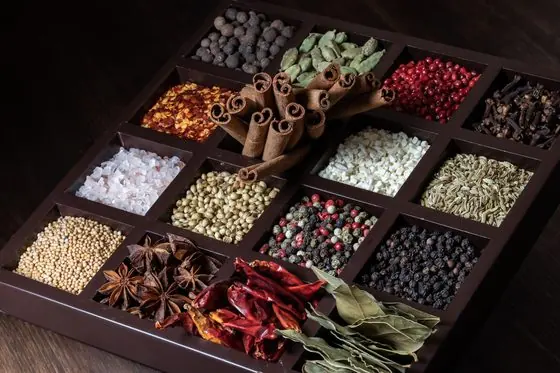
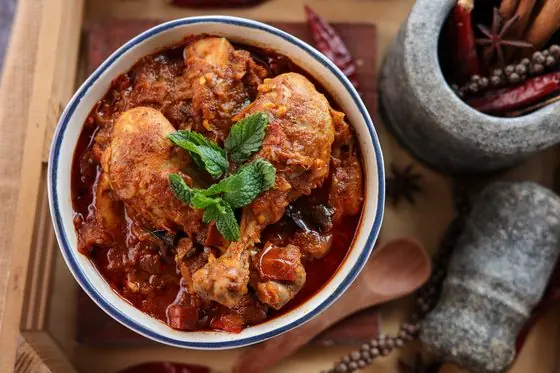
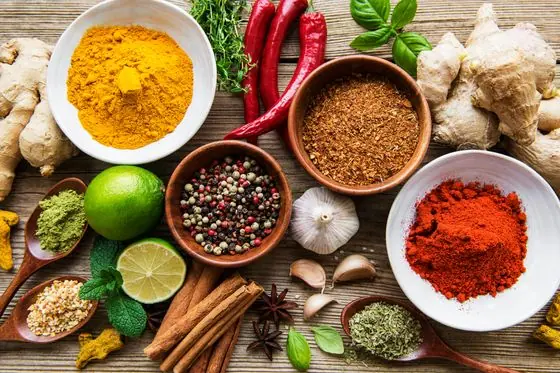
Photograph: Adobe Stock · representative of the dish
Roasted coconut paste, in freezer portions [LOW SODIUM] [VEGAN]
Roasting coconut before grinding produces a third grammar, neither thenga aracha nor thenga chertha, and it is what makes a varutharacha meen curry taste like nothing else in India. The work is fifteen minutes of continuous stirring, which is exactly why nobody does it on a weeknight and exactly why it should be made eight portions at a time.
Before you start: Weigh the spices out first. Once the coconut reaches pale gold you have about four minutes of decisions and no time to measure.
Allergens: None of the major allergens.
Equipment: Heavy dry pan, 24 cm or wider; flat wooden turner; mixie. A cast-iron pan is ideal; a thin pan will scorch the coconut before it dries.
Frozen grated coconut roasts well but must be thawed and patted dry, or the first five minutes go on boiling off water. Desiccated coconut can be used at 120 g plus 60 ml water to rehydrate, giving a paler, less complex paste.
Cholesterol: a 30 g portion is 9 g of saturated fat, so this is not a free ingredient — but it replaces about 150 ml of thick coconut milk at roughly 32 g of saturated fat, and it brings 4 g of fibre the milk does not. One portion between two people is 4.6 g of saturated fat each across a whole curry.
No shallots → 40 g sliced onion. Slightly sweeter, slightly less complex.
Add 10 g garlic at step 1 → rounder and more savoury, for meat curries. Garlic is the one aromatic in this book whose evidence overlaps cooking quantities; Chapter 9 has the figures.
Half the coconut, made up with 40 g roasted chana dal → about 40% less fat and much the same thickening, at some cost in aroma. Genuinely useful if you are watching saturated fat closely.
Roast 400 g in two batches; one large batch steams rather than roasts and will not reach the third stage.
Fridge 4 days sealed. Freeze 3 months in 30 g portions — the intended storage, and the paste loses very little. Use from frozen, dropped straight into a simmering gravy, where it disperses in 2–3 minutes.
Frozen 30 g portions are the point of making this in quantity, and a thawed portion that was not used should be cooked out the same day rather than refrozen. A spoonful left in the grinder loosened with warm water makes an instant chammanthi for rice. Do not keep the paste in the fridge beyond two days; roasted coconut oxidises and turns bitter faster than raw.
Bitter, ashy paste: the coconut went past dark toast into burnt. No jaggery or acid will bury it. Start again.
Pale paste, curry tastes of raw coconut: the roast stopped at stage two. Return it to a dry pan for 4–5 minutes and you will recover some of it.
Gritty: ground cold, or too briefly. Add 20 ml water and grind another 2 minutes.
Serve with
R084 Ulli Theeyal · R032 Chemmeen Theeyal · R010 Kadala Curry · R057 Muthira Curry · R049 Beef Curry with Coconut Slivers — and, more broadly, varutharacha fish and prawn curries, erissery, and mixed-vegetable curries in the Kottayam manner.
Tap a star to rate this recipe
The Kindle edition is on its way. Until it lands, the complete book — all 25 chapters and 137 recipes — is free to read here, and it stays free after.