 R107
R107Sambharam
Spiced buttermilk, Kerala's summer drink
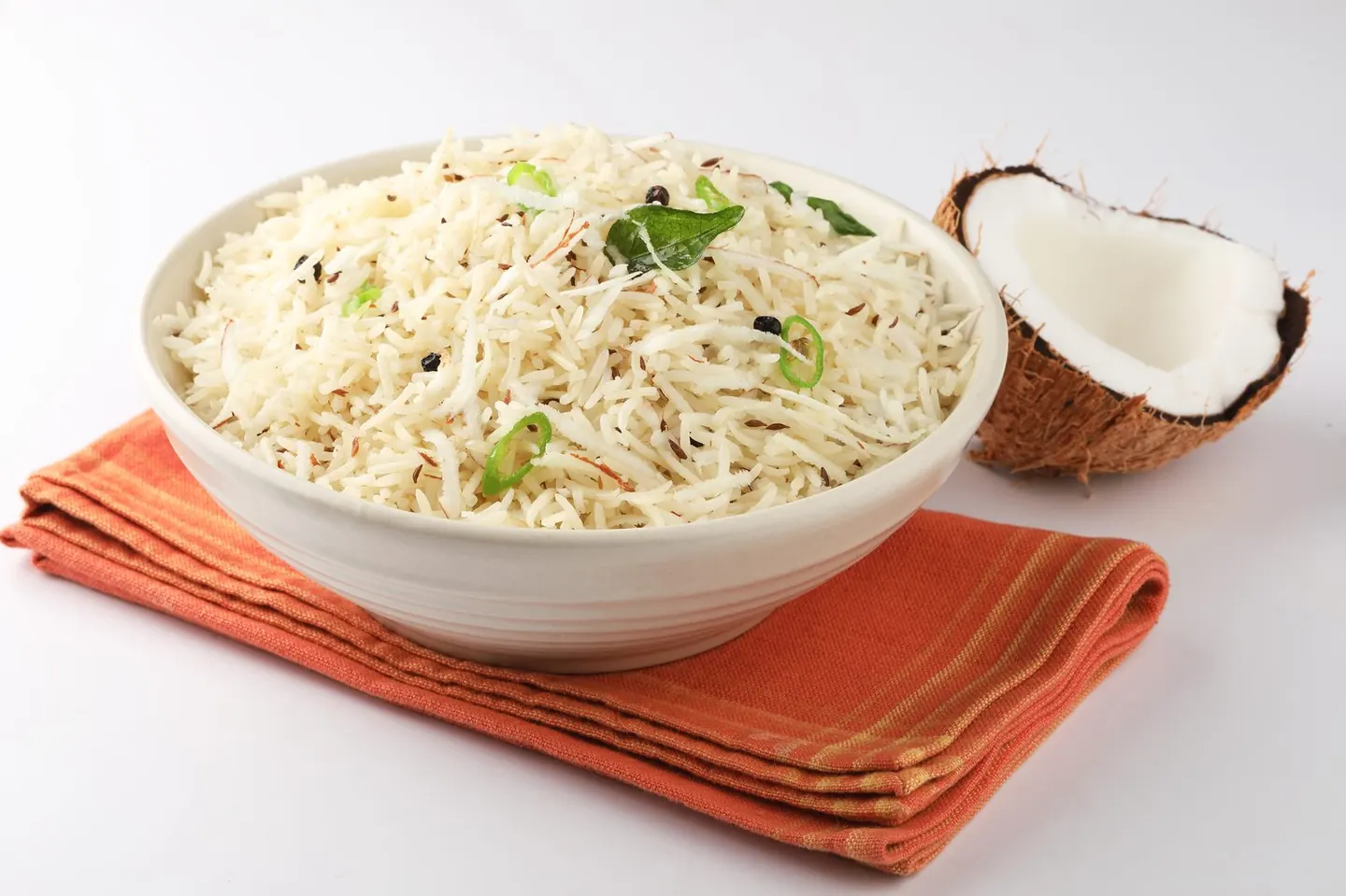
Photograph: Adobe Stock · representative of the dish
Plan ahead: plus 30 minutes soaking.
Karkidakam is the last month of the Malayalam year, the peak of the southwest monsoon, and the lean month — also called Ramayana Masam, when the Adhyatma Ramayanam Kilippattu is recited nightly before a lamp. In this tradition digestion is held to be at its weakest then and the body at its most receptive, so Karkidakam is the month of karkidaka chikitsa, and this gruel is taken warm at night for 7 to 21 consecutive days. Njavara rice, fenugreek, cumin, dry ginger, pepper, garden cress seed, turmeric, coconut milk and a herbal decoction. It is one of the best-smelling things a Kerala kitchen produces.
> ### WHAT THIS RECIPE DOES NOT CLAIM > Karkidaka kanji is almost always sold to readers with a list of medical promises attached: that it cleanses the body, rebuilds immunity, resets the metabolism, prevents the diseases of the coming year. This book makes none of those claims, and the omission is deliberate rather than cautious. No trial of karkidaka kanji or of any comparable medicated gruel appears in the evidence base behind this book, and the individual ingredients do not add up to one either — the fenugreek here is about 2.5 g per portion against the 10–25 g per day at which fenugreek's glycaemic effects have been found, and cumin, dry ginger at this dose, garden cress and turmeric at culinary quantities have no metabolic evidence worth reporting (see R109, and Chapter 9 in full). What is true is that this is a warm, high-fibre, pulse-bearing rice dish eaten in a season when people want one, inside a tradition with a long textual history and a living institutional presence in Kerala. The tradition is worth keeping. The claims are worth declining. A cookbook that tells you a gruel prevents disease has told you something it cannot know, and you should trust the rest of its pages less for it.
Before you start: The decoction goes on before anything else, because it needs 15–20 minutes of simmering and the rice cooks in it. Soak the fenugreek and the garden cress seed in cold water at the same time.
Allergens: None of the major allergens.
Equipment: Heavy 3-litre pan or a small uruli; a small muslin square or a tea infuser for the decoction; a fine sieve. Substitute: a pressure cooker takes the rice down in 12–14 minutes at pressure, at the cost of the loose, separate grain a slow simmer gives; add the coconut milk after the pressure has dropped, never under it.
| Energy | 278 kcal |
| Protein | 7 g |
| Fibre | 5 g |
| Net carbohydrate | 36 g |
| Total carbohydrate | 41 g |
| Sugars | 7 g |
| Fat | 11 g |
| Saturated fat | 9 g |
| Sodium | 220 mg |
From ICMR-NIN IFCT 2017 and USDA FoodData Central. Per-serving figures stay the same when you scale.
Njavara is sold as "Navara rice" through Ayurvedic pharmacies and online; buy 500 g at a time and use within three or four months, since it stales faster than matta. Matta rice is an entirely acceptable substitute — the gruel is longer to cook and firmer in the grain, and nobody at the table will object. Garden cress seed is sold as halim or aliv in South Asian groceries and as "cress seed" in Middle Eastern shops; it is the one item worth ordering ahead. Ready-mixed "karkidaka kanji podi" or "marunnu kanji kit" sachets are widely sold in Kerala and by Kerala grocers abroad and are a legitimate shortcut — 25 g of a kit replaces every spice above, and you lose the ability to know what is in it.
Blood sugar: 36 g of net carbohydrate per bowl, of which 5 g is jaggery. This is a meal, not a drink, and it should displace a dinner rather than sit alongside one. If you take it for the traditional 7 to 21 nights, take it instead of the evening rice.
Blood pressure: 220 mg sodium per bowl, and the tempering shallots add nothing to that. Comfortable.
Cholesterol: 9 g of saturated fat per bowl, almost all of it coconut milk. Using only second milk and skipping the first takes it to about 4 g, and the gruel is thinner but still good.
Njavara → matta rice. Longer cooking, firmer grain, less natural thickening; add 5 minutes and expect to mash a little with the spoon.
Green gram dal → red gram dal (toor) or split black gram. Toor gives a heavier, sweeter body; black gram makes it noticeably slippery. Both are traditional in some households.
Palm jaggery → cane jaggery, 1:1. You lose the smoke and the mineral bitterness; the sweetness is more direct and slightly cloying.
No coconut milk → 200 ml whole cow's milk plus 20 g cashews blended smooth. Saturated fat drops by more than half; the gruel is milder and loses the specific coconut sweetness the dish is built on. It also stops being vegan. (Allergen: this swap introduces milk, tree nuts (cashew).)
Leave the jaggery out entirely → the gruel is savoury, spiced and genuinely pleasant, and this is how several households make it. Net carbohydrate falls to about 31 g.
The decoction can be made a day ahead and kept in the fridge. The finished gruel keeps fridge 2 days and thickens considerably; let it down with hot water on reheating. Freeze 1 month — freeze it before the first coconut milk goes in, and add that fresh on reheating, or the emulsion breaks. Reheat gently, stirring, never at a boil.
Cold, thick karkidaka kanji sets almost firm. Spoon it into a bowl and eat it with a chopped shallot and a piece of lime pickle, which is how children in Kerala have always dealt with yesterday's kanji, or thin it with buttermilk into something closer to a savoury drink.
Split, oily, grainy surface: the first coconut milk boiled. There is no repair. Next time, off the heat and swirl rather than stir.
Bitter: the fenugreek was not soaked, or the cumin scorched at step 1. Soaking the seeds for 30 minutes removes most of the bitter fraction; scorched cumin cannot be rescued.
Too thick to pour by the time it reaches the table: normal, and it will keep thickening. Hold back 100 ml of the decoction and add it at the last moment.
Gluey rather than porridge-like: over-stirred. Njavara's starch mobilises easily; stir to stop it catching, not to agitate it.
Serve with
Nothing. This is a complete evening meal and the tradition serves it alone. If you want something on the side, R065 Cheera Thoran or a pathila-style greens thoran is what the season suggests · M08 coconut milk
Tap a star to rate this recipe
The Kindle edition is on its way. Until it lands, the complete book — all 25 chapters and 137 recipes — is free to read here, and it stays free after.