 R107
R107Sambharam
Spiced buttermilk, Kerala's summer drink
R110
Sarsaparilla root and lime, without the syrup
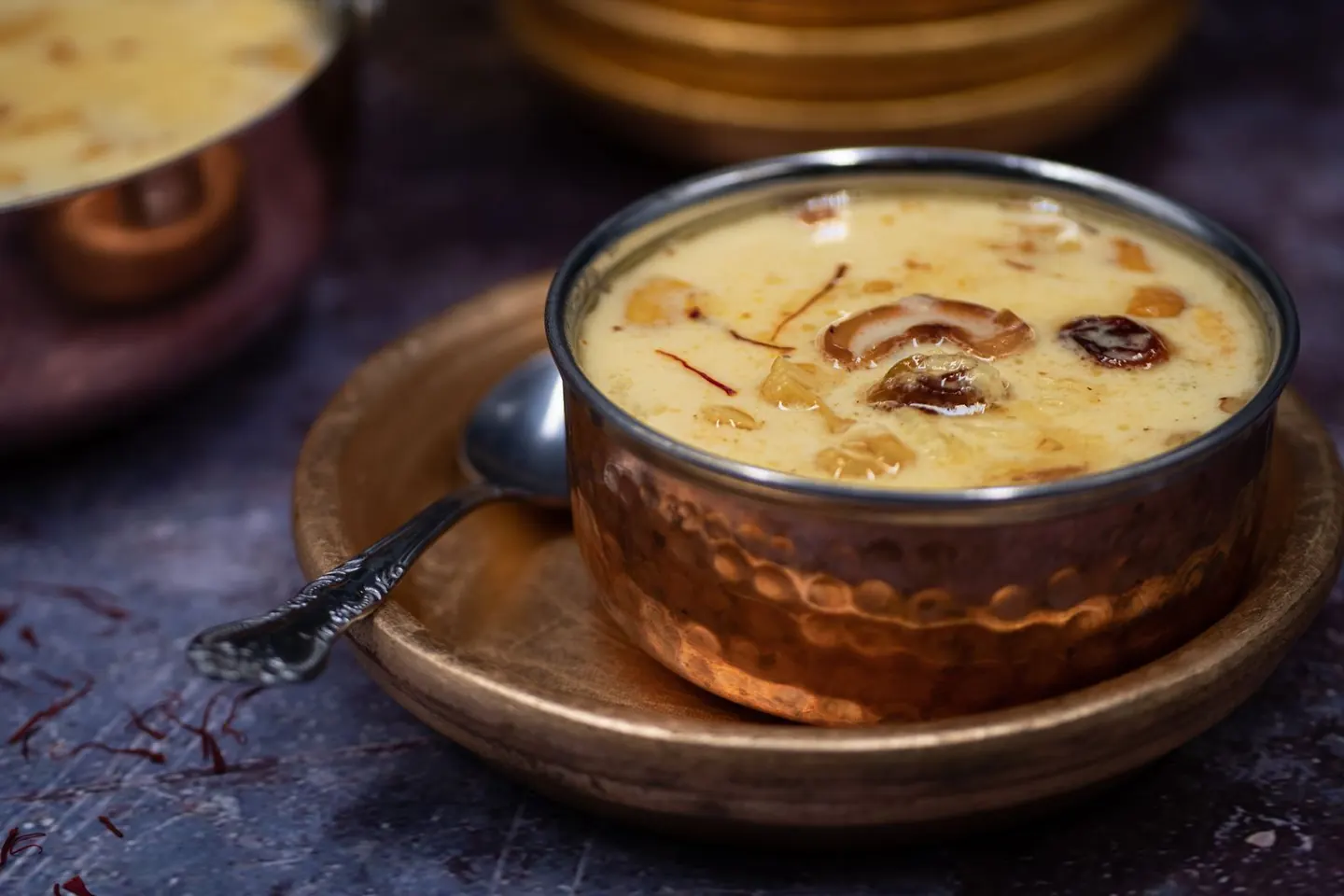
Photograph: Adobe Stock · representative of the dish
Plan ahead: plus 2 hours chilling — recommended.
Nannari root gives a drink that tastes like nothing else — faintly vanilla, faintly medicinal, cooling in a way that is hard to describe and immediately recognisable to anyone who grew up with the roadside bottle. In the summer months, across Kerala and Tamil Nadu, it is sold as a thick dark syrup let down with water and lime. The syrup is where the sugar hides, at proportions that make a glass closer to a soft drink than to a herbal infusion. Make the decoction yourself and you get the whole flavour and none of the load.
Before you start: Rinse the dried root twice. It is a root, it was in the ground, and the first rinse water will be brown with soil rather than with flavour.
Allergens: None of the major allergens.
Equipment: Small pan; fine sieve; a 1.5-litre jug. Substitute: nothing needed beyond a pan. If you have a muslin square, use it for the second straining — the root sheds fine fibres.
| Energy | 6 kcal |
| Protein | 0 g |
| Fibre | 0 g |
| Net carbohydrate | 1 g |
| Total carbohydrate | 1 g |
| Sugars | 1 g |
| Fat | 0 g |
| Saturated fat | 0 g |
| Sodium | 100 mg |
From ICMR-NIN IFCT 2017 and USDA FoodData Central. Per-serving figures stay the same when you scale.
Nannari — also called nannari veru, Indian sarsaparilla, or anantamool in the north — is sold as dried root pieces in Kerala and Tamil Nadu groceries, in Ayurvedic pharmacies, and reliably online; a 100 g bag lasts a whole summer and keeps a year in a sealed jar. Outside South Asia it is genuinely hard to find fresh, and here is the honest position: most Western "sarsaparilla" is a different plant entirely (Smilax species, or in root-beer flavourings, sassafras and wintergreen), and it will not taste like this. Do not substitute it and expect nannari. What you can do instead is order the dried Indian root online — it ships well, being dry root — or accept that this drink will be a trip-home drink and make R111 Sulaimani meanwhile. Nannari syrup is also sold in bottles by Kerala and Tamil brands; if you buy it, read the label, because sugar is almost always the first ingredient, and this recipe is specifically the version that avoids it.
Blood sugar: one gram of carbohydrate a glass. This is the drink to hand people at a summer gathering instead of the bottled thing, and nobody will notice they have been managed.
Blood pressure: 100 mg sodium a glass from a quarter-teaspoon of salt across a litre. Leave the salt out if you are working hard on sodium — the drink needs more lime to compensate and is still good.
Cholesterol: nothing here to matter either way.
No nannari → a strong infusion of 6 g dried hibiscus with a 2 cm strip of ginger. Completely different: tart, red, floral, no vanilla note at all. Good drink, not this drink.
Lime → lemon, at about three-quarters the volume for the same acidity. Rounder and less floral.
The 4 g jaggery → leave it out. Most people cannot detect 4 g of sweetness across a litre anyway, which is a useful thing to learn by trying.
Want it sweeter for guests → 20 g jaggery across the litre takes each glass to about 26 kcal and 6 g of sugar, still a fraction of the commercial version. Above that you are making the bottled drink again.
The decoction keeps 5 days in the fridge and is the part worth making in advance — make a strong 500 ml batch and build glasses from it through the week. The finished, limed drink is best within 24 hours; the lime dulls after that. Freeze the decoction 3 months in an ice-cube tray, which is the neatest way to keep it, and drop two cubes into a glass of soda water.
Spent nannari root has given up its flavour and belongs in the bin. Leftover finished sharbat is excellent as the liquid in a fruit granita, or frozen into lollies for children, which is a considerably better use of a freezer than shop-bought ones.
Pale, thin, tasteless decoction: old root, or too short a simmer. Give it another 10 minutes and check the colour against weak coffee.
Muddy or gritty: the root was not rinsed, or you skipped the second straining. Both are fixable next time; a coffee filter rescues this batch.
Tastes like sour water: under-seasoned. Add salt in 0.25 g increments before you reach for sweetness. The improvement is startling.
Bitter rather than vanilla-sweet: boiled too hard rather than simmered. Nannari wants a lazy simmer, not a rolling boil.
Serve with
R100 Baked Ethakka Appam · R105 Roasted Kadala Mix · anything fried, where its job is to cut fat rather than to add sugar · M07 the 70:30 salt
Tap a star to rate this recipe
The Kindle edition is on its way. Until it lands, the complete book — all 25 chapters and 137 recipes — is free to read here, and it stays free after.