 R113
R113Ada Pradhaman, with the Arithmetic Shown
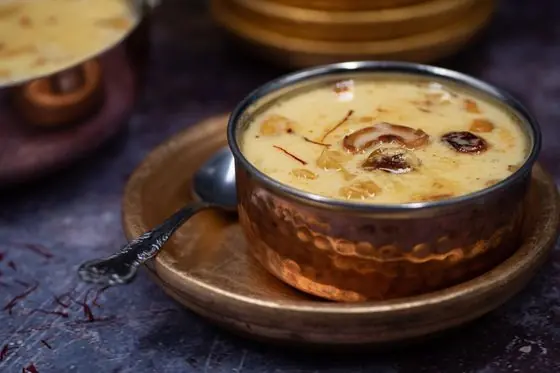
Rice ada, jaggery and coconut milk — the sadya's other payasam, costed in full
Recipes › Sweets and Payasam, Honestly
R112
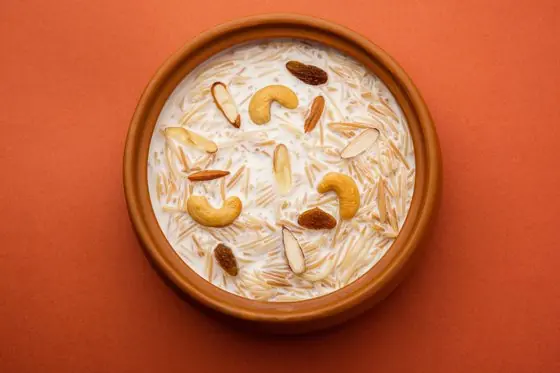
Rice ada in reduced milk, at a measured 100 millilitres
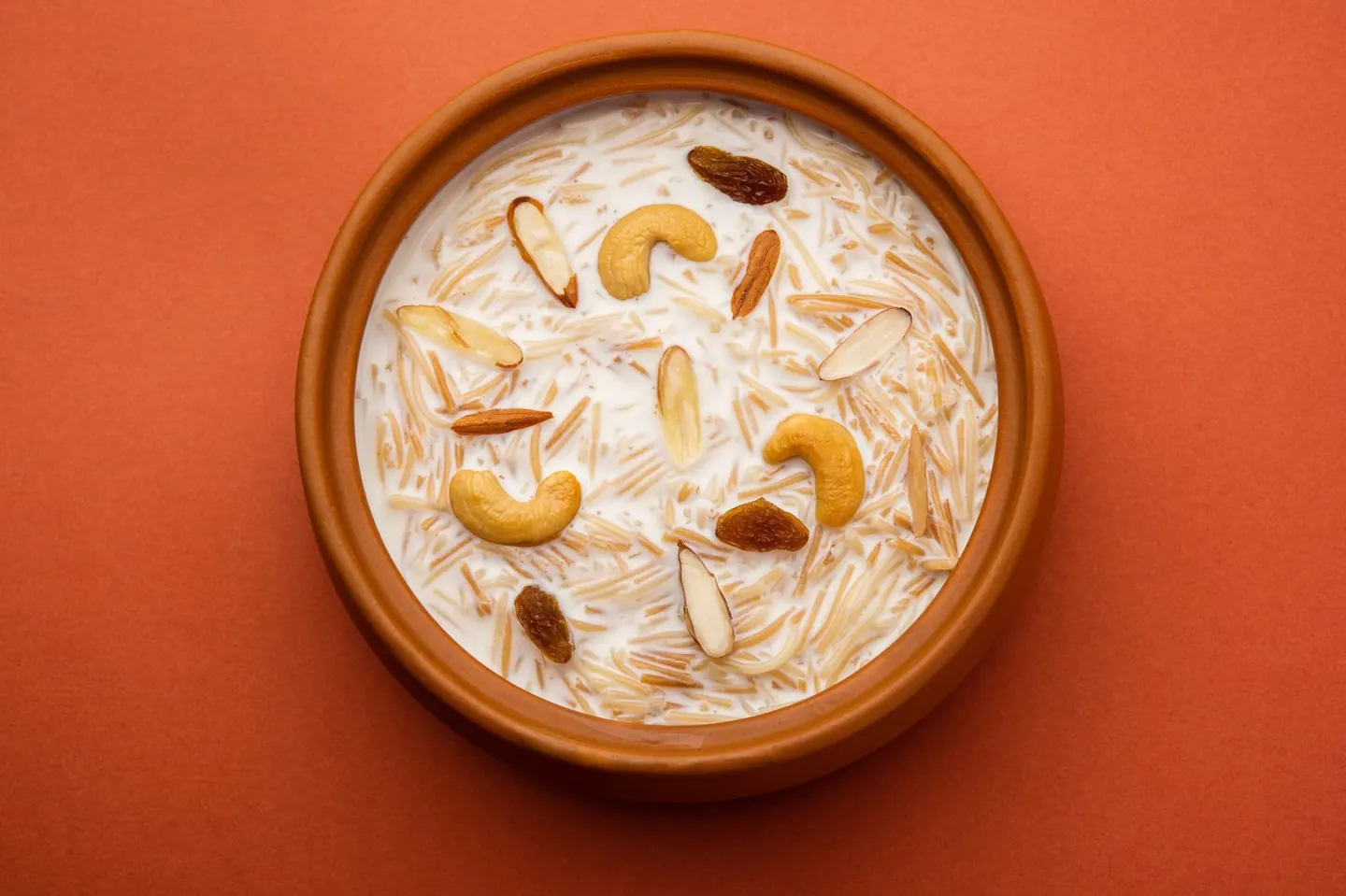
Photograph: Adobe Stock · representative of the dish
Palada is the aristocrat of the payasam family and it is made of almost nothing: rice ada, milk, sugar, cardamom, and patience. There is no coconut in it, which surprises people. Its whole character comes from milk reduced slowly until the lactose caramelises faintly and the liquid goes the colour of old ivory, and from ada soft enough to collapse on the tongue. Condensed milk, which now appears in most versions, is a shortcut that buys you thirty minutes and costs you the flavour of reduced milk, which is the flavour of the dish.
Before you start: Read the last two steps before you begin. Milk reduction fails in the final ten minutes, not the first fifty, and the failure is a scorched base you cannot taste your way out of.
Allergens: Milk.
Equipment: Wide heavy pan of at least 3 litres, or a bell-metal uruli; a 100 ml ladle or measuring cup; a flat-ended wooden spoon that reaches the corners. Substitute: any wide pan with a thick base. Depth is the enemy here — a tall narrow pan gives you a small evaporating surface and doubles the reduction time. A non-stick wok is a better substitute than a tall saucepan.
Rice ada is sold dried in packets by every Kerala grocer and by Indian groceries abroad, labelled "ada" or "palada"; it keeps a year in the cupboard and is worth stocking. If you cannot find it, the closest working substitute is broken rice or rice sev, which gives a similar collapse but a less silky mouthfeel; small pasta shapes do not work, because wheat gluten holds its shape and ada is meant to give way. Fresh homemade ada — rice batter spread on a banana leaf, steamed and cut — is better than any packet and takes an afternoon; it belongs in a household that has one to spare. Whole milk matters: skimmed milk will not reduce to the right body, and no amount of extra time fixes it.
Blood sugar: 24 g of net carbohydrate in a bowl, of which roughly 9 g is added sugar and the rest is ada starch and lactose. Eat it after a meal rather than between meals, and eat it after a meal that had a pulse in it. The protein and fat in the milk slow it considerably compared with the same sugar in a drink.
Blood pressure: 90 mg sodium a bowl. Not a concern here.
Cholesterol: 4 g of saturated fat a bowl, from milk fat rather than coconut. Made with semi-skimmed milk it drops to about 2 g and the payasam is noticeably thinner; this is the one substitution in the chapter that genuinely costs the dish something, and you should make it knowingly.
Sugar → pale cane jaggery, 1:1. The colour goes amber and the flavour gains caramel; palada purists object, and they have a point, because the clean milk flavour is the dish. Sugar is correct here and jaggery is correct in R113.
Whole milk → half whole, half semi-skimmed. Saturated fat down to about 3 g; reduction takes 5–10 minutes longer and the body is slightly thinner.
Rice ada → broken rice or rice sev, 60 g dry. Cooks faster, 6–8 minutes; less silky, more porridge-like.
Cardamom → a scrape of nutmeg and a strip of dried ginger. Aromatic rather than floral, and a good variation for a cold evening. Never use nutmeg by the teaspoon in anything.
Best made the same day and served warm or at room temperature. Fridge 3 days in a covered non-metal container; it sets almost solid and needs 60–80 ml of hot milk per portion stirred in to bring it back. Freeze 1 month — the texture suffers, the ada goes slightly grainy, and it is drinkable rather than spoonable on thawing. Reheat gently and never at a boil, or the milk protein catches.
Cold palada set firm can be spread in a shallow tray, chilled until solid, and cut into squares — this is close to what some households do deliberately. Or thin it with milk into a drink and serve it in small glasses, which is a fair use of 60 ml of leftovers and no use at all of 600.
Scorched, with brown flecks through it: the base caught in the last ten minutes. Do not stir it in — that distributes the burnt flavour through the whole pot. Pour the payasam off into a clean pan without scraping the base, and taste before you continue.
Chalky bits in the finished dish: the ada was undercooked at step 1. It will not soften further once the milk has thickened. Boil it longer next time and test with a fingernail rather than a timer.
Grainy, slightly separated: the milk boiled hard rather than trembled, and the protein coagulated. It still tastes right; the texture cannot be recovered.
Too thin after cooling: under-reduced. Return it to the heat for 8–10 minutes. Judge by the spoon-coating test, not by the level in the pan.
Serve with
As the milk payasam at a sadya alongside R113 Ada Pradhaman, at 100 ml each rather than 200 · R119 the sadya pickle set, which the tradition brings back specifically to cut this · R107 Sambharam to close · M08 coconut milk, for the pradhaman it is served beside
Tap a star to rate this recipe
The Kindle edition is on its way. Until it lands, the complete book — all 25 chapters and 137 recipes — is free to read here, and it stays free after.