 R117
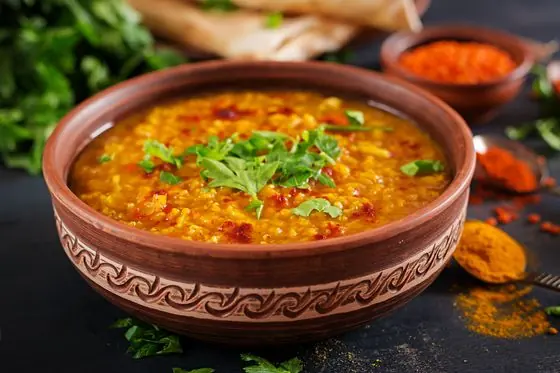
R117Sadya Parippu with Ghee
Green gram dal for the first rice course, with the ghee measured
Recipes › The Sadya, Re-engineered
R120
Paal payasam for twenty-five leaves, at a measured ninety millilitres
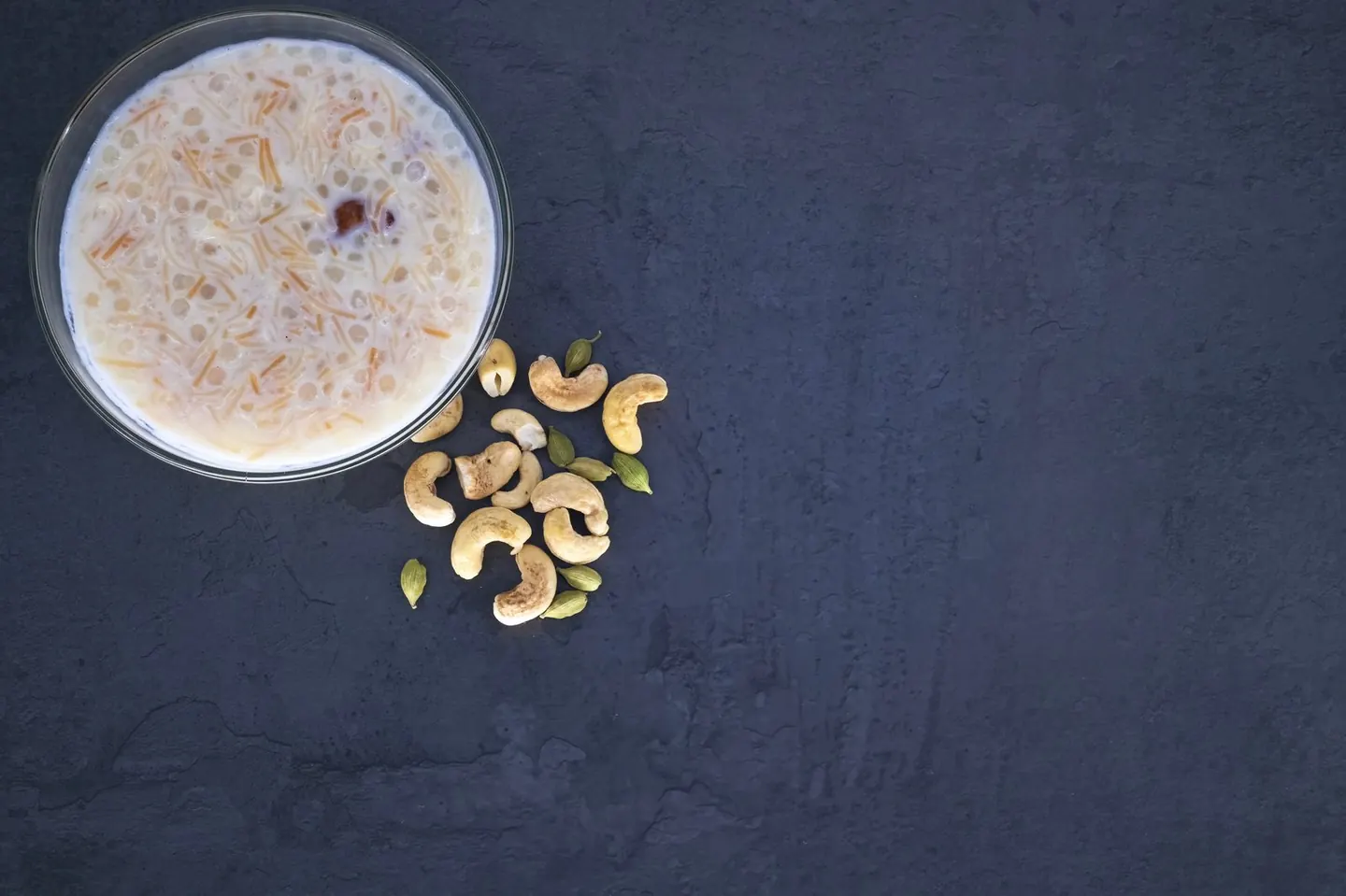
Photograph: Adobe Stock · representative of the dish
Paal payasam is the temple payasam — short-grain rice, milk, sugar, a scrape of cardamom, and nothing else. It is one of the two payasams a sadya closes with, alongside a jaggery-and-coconut pradhaman, and the ripe banana from the tip of the leaf is mashed into it, which is the instruction non-Malayali readers always get wrong. Its simplicity is why the portioning method belongs here: there is no ingredient to argue about, so the only lever left is the ladle, and the ladle is the lever that works.
Before you start: Set out the twenty-five vessels before you begin cooking, on a tray, counted. This sounds trivial and it is the difference between the method working and not working. A cook who has to find and wash twenty-five tumblers while a hot pot of payasam sits on the stove will serve from the pot.
Allergens: Milk.
Equipment: A genuinely wide heavy pot of at least 8 litres, or two 5-litre pans, or a bell-metal uruli; a 90 ml ladle or a 90 ml measure; twenty-five small steel tumblers, glasses or paper cups; a flat-ended wooden spoon that reaches the corners. Substitute for the 90 ml ladle: a standard 60 ml serving ladle plus a half — count "one and a half" for every portion and it works. What does not substitute is the ladle-by-eye, which is how 90 ml becomes 200.
Short-grain raw rice is the correct grain — unakkalari, or any short round rice such as pudding rice, arborio or Egyptian rice, all of which release starch readily and give the right body. Do not use matta or parboiled rice here, because a parboiled grain holds its structure and will not break down into the payasam. Basmati is wrong for the opposite reason: it is too aromatic and too separate. Whole milk is not negotiable; skimmed milk cannot reduce to the right consistency and no amount of extra time will make it. If you are cooking for 25 and can find it, full-cream milk sold for sweets in Indian dairies is ideal.
Blood sugar: 23 g of net carbohydrate a vessel, of which about 10 g is added sugar, plus roughly 12 g more if you mash in half a nendran. Take it at the end of the meal, which is where the sequence puts it anyway, and take the inji puli afterwards, which is also where the sequence puts it.
Blood pressure: 70 mg sodium. The lowest-sodium item on the leaf apart from the rice.
Cholesterol: 4 g of saturated fat, from milk fat rather than coconut — which makes this the lower-saturated-fat of the two payasams a sadya serves, at 4 g against R113's 11 g. If you are choosing one, this is the one, and the coconut pradhaman is the one to take at 100 ml rather than 200.
Sugar → pale jaggery, 1:1. The colour turns amber and the clean milk flavour is lost, which in paal payasam is the whole dish. Sugar is correct here; jaggery is correct in R113.
Short-grain rice → rice ada, 250 g, boiled and rinsed first, which makes R112 Palada Payasam. Silkier, more work, and arguably better.
Short-grain rice → semiya (vermicelli), 200 g, roasted in the ghee first and added at step 5 rather than step 4. Cooks in 10 minutes; a thinner, quicker payasam that will not hold as well.
Whole milk → half whole, half semi-skimmed. Saturated fat to about 3 g; add 15 minutes to the reduction and accept a thinner body.
Whole milk → coconut milk, and you have made a pradhaman rather than a paal payasam. That is R113 or R116, and both are good, and neither is this.
Above 25 leaves, split the milk across two wide pans. A single 7-litre pot of milk has too little evaporating surface for its volume, takes nearly three hours to reduce, and scorches at the base while you wait. Two pans of 3.5 litres each reduce in the stated time. This is the same geometry lesson the uruli teaches: width, not depth.
Reduce the milk and rice to the end of step 5 the day before and keep it fridge 2 days; add the sugar and cardamom on the day, which takes 15 minutes and is how large sadyas manage it. Fridge 3 days finished; it sets almost solid and needs 40–60 ml of hot milk per portion stirred back in. Freeze 1 month — the rice goes slightly grainy and it is better drunk than spooned afterwards. Reheat gently, stirring, never at a boil.
There should not be many, which is the point of counting twenty-five vessels. What there is sets firm and can be spread in a tray, chilled and cut into squares. Or thin it with milk into small glasses, which is a good end to the following evening.
Scorched, with brown flecks: the base caught. Pour the payasam off into a clean pot without scraping the base, and taste before continuing. Scraping distributes the burn through the whole pot and 2.25 litres is 25 leaves.
Grainy and slightly separated: the milk boiled rather than trembled and the protein coagulated. It tastes right; the texture cannot be recovered.
Rice still hard after an hour: parboiled or long-grain rice was used. It will not break down. Start again with a short round grain.
Thin after cooling: under-reduced. Back on the heat 10–15 minutes, judged by the spoon-coating test.
You served from the pot anyway: everybody does it once. Next time, take the pot out of the room at step 9.
Serve with
R113 Ada Pradhaman as the second payasam, both portioned · a ripe nendran from the tip of the leaf, mashed in · R119 the pickle set immediately afterwards · R107 Sambharam to close, which the tradition treats as essential to a feast's end · M08 coconut milk, for the pradhaman beside it
Tap a star to rate this recipe
The Kindle edition is on its way. Until it lands, the complete book — all 25 chapters and 137 recipes — is free to read here, and it stays free after.