 M01
M01Kerala Garam Masala
The southern register — aromatic, not earthy
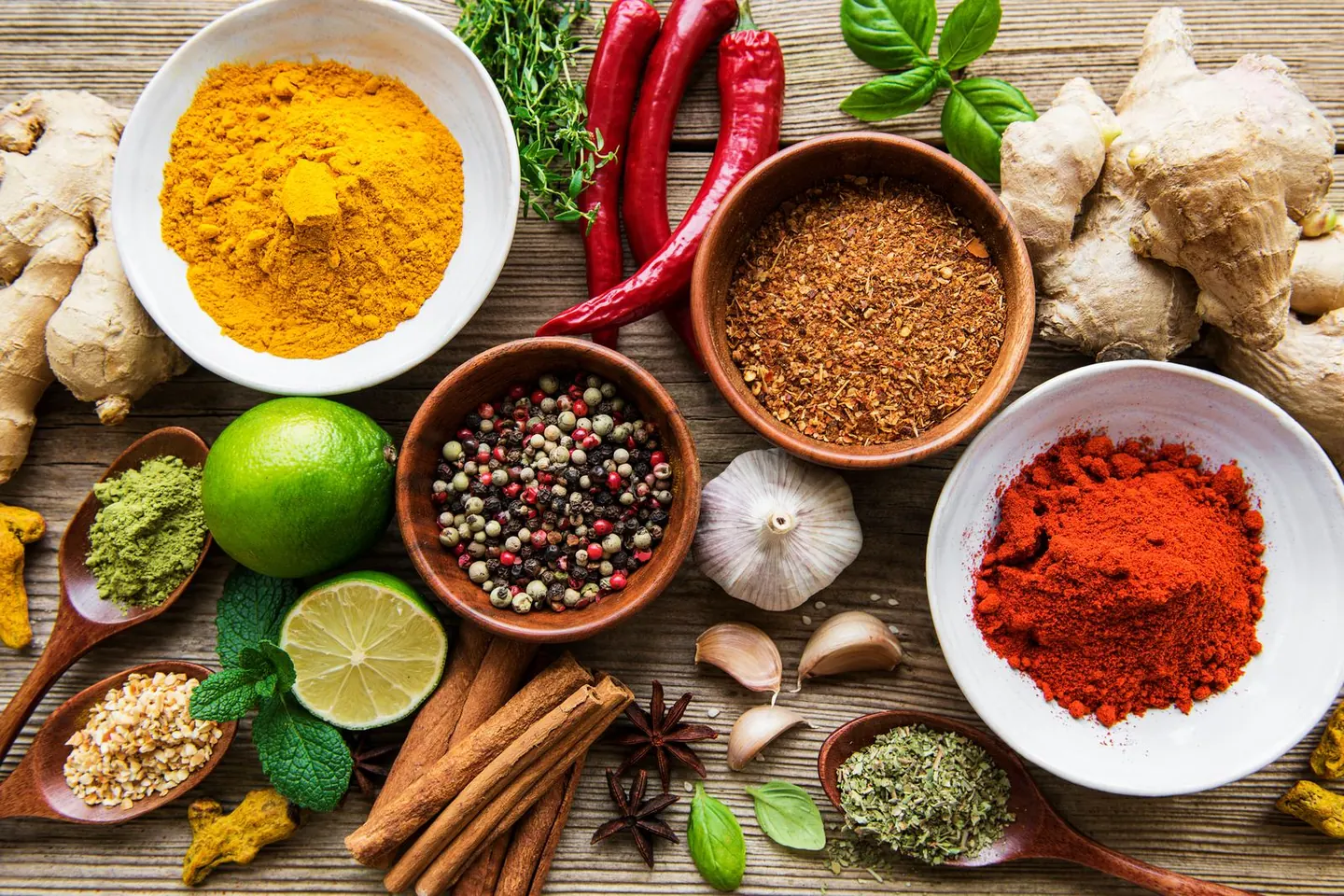
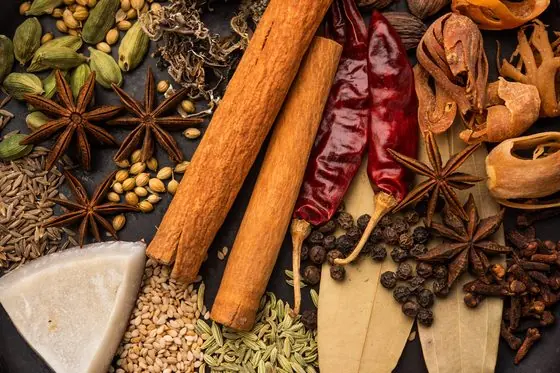
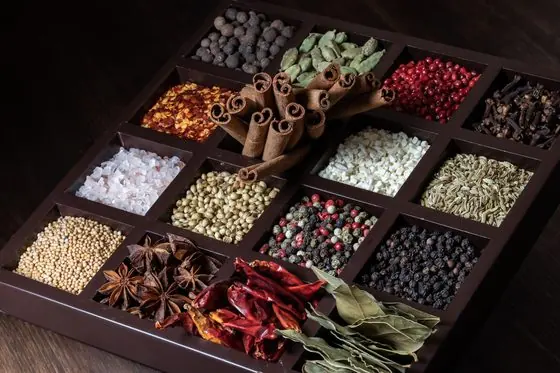
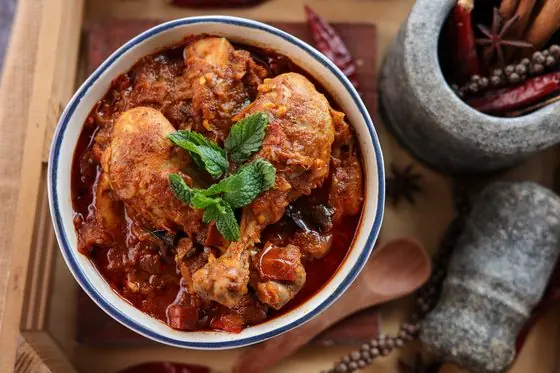
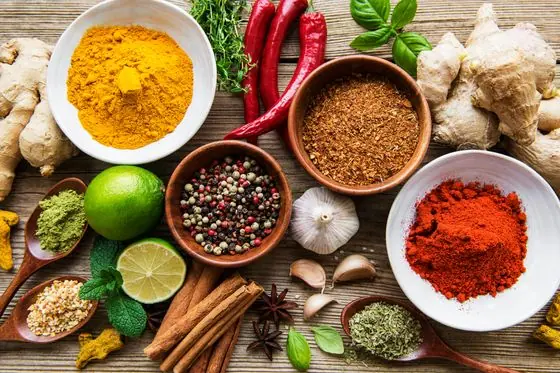
Photograph: Adobe Stock · representative of the dish
Plan ahead: plus 30 minutes cooling before freezing.
The weeknight engine of this book [LOW SODIUM] [VEGAN]
Almost every Kerala curry starts the same way: shallots cooked down, ginger and garlic, green chilli, powdered spice, tomato if the household uses it. That is twenty-five minutes of the forty a weeknight curry takes, and it is why people buy jars of sauce. Make it on a Sunday, freeze it in an ice-cube tray, and a fish curry becomes a fifteen-minute dish. There is no salt in it, so every downstream recipe still controls its own sodium.
Before you start: Slice all the shallots before you light the flame. Six hundred grams takes fifteen minutes to slice and the pan will not wait.
Allergens: None of the major allergens.
Equipment: Wide heavy-bottomed 28 cm pan with a lid; silicone ice-cube tray with 50 ml wells, or a muffin tray. Substitute: freeze in a flat bag and score it into fourteen squares before it sets hard.
Shallots — cheriya ulli — are not interchangeable with onions here. They are sweeter, lower in water and higher in the sulphur compounds that build depth, and an onion base is noticeably flatter. Where shallots are expensive use 450 g shallots and 250 g red onion rather than going all-onion. Frozen pre-peeled shallots are a legitimate shortcut and save half the active time.
No tomato → omit and add 15 g tamarind pulp at step 6. This is the older Kerala base and suits sadya-register dishes better; tomato in a "traditional" Kerala recipe is a reliable dating marker.
Groundnut or sesame oil for the coconut oil → saturated fat per cube drops from about 1.2 g to about 0.3 g, with a slight loss of Kerala character where the base is prominent. (Allergen: this swap introduces peanuts, sesame.)
Add 25 g of M04 or M05 at step 5 → a base pre-committed to chicken or fish. Convenient, less flexible, and label it.
At 1.2 kg of shallots use two pans, or add 10 minutes to steps 2 and 3. Oil does not scale linearly; a wider pan needs proportionally less.
Fridge 5 days sealed, with a film of oil on the surface. Freeze 3 months as 50 g cubes — the intended storage. Use from frozen, dropped into a hot pan with a splash of water, where the cubes break down in 3–4 minutes.
This preparation exists to be a leftover. Freeze it in 60 g portions, and a portion straight from the freezer into a hot pan is the ten-minute start to a weeknight curry. A thawed portion should be cooked the same day. If a batch has been in the freezer beyond three months, use it in a dish with a strong masala rather than in a stew, where the shallots' sweetness is the flavour.
Sharp and oniony: step 2 was rushed on too high a flame. Nothing fixes it afterwards but longer cooking.
Burnt, bitter edge: the powders caught at step 5. Add a splash of water with them next time.
Cubes will not release: freeze 30 minutes longer, then dip the tray base in warm water for 10–15 seconds.
Tastes flat in the finished curry: it has no salt in it, by design. Season the dish, not the base.
Serve with
R010 Kadala Curry · R014 Egg Roast, Rebuilt · R040 Nadan Kozhi Curry · R055 Kadala Ularthiyathu · R080 Mixed Vegetable Stew — and, more broadly, fish and prawn curries, beef curries and roasts, pulse curries and dal.
Tap a star to rate this recipe
The Kindle edition is on its way. Until it lands, the complete book — all 25 chapters and 137 recipes — is free to read here, and it stays free after.