 M01
M01Kerala Garam Masala
The southern register — aromatic, not earthy
M16
Three aromatics, one jar, honest limits
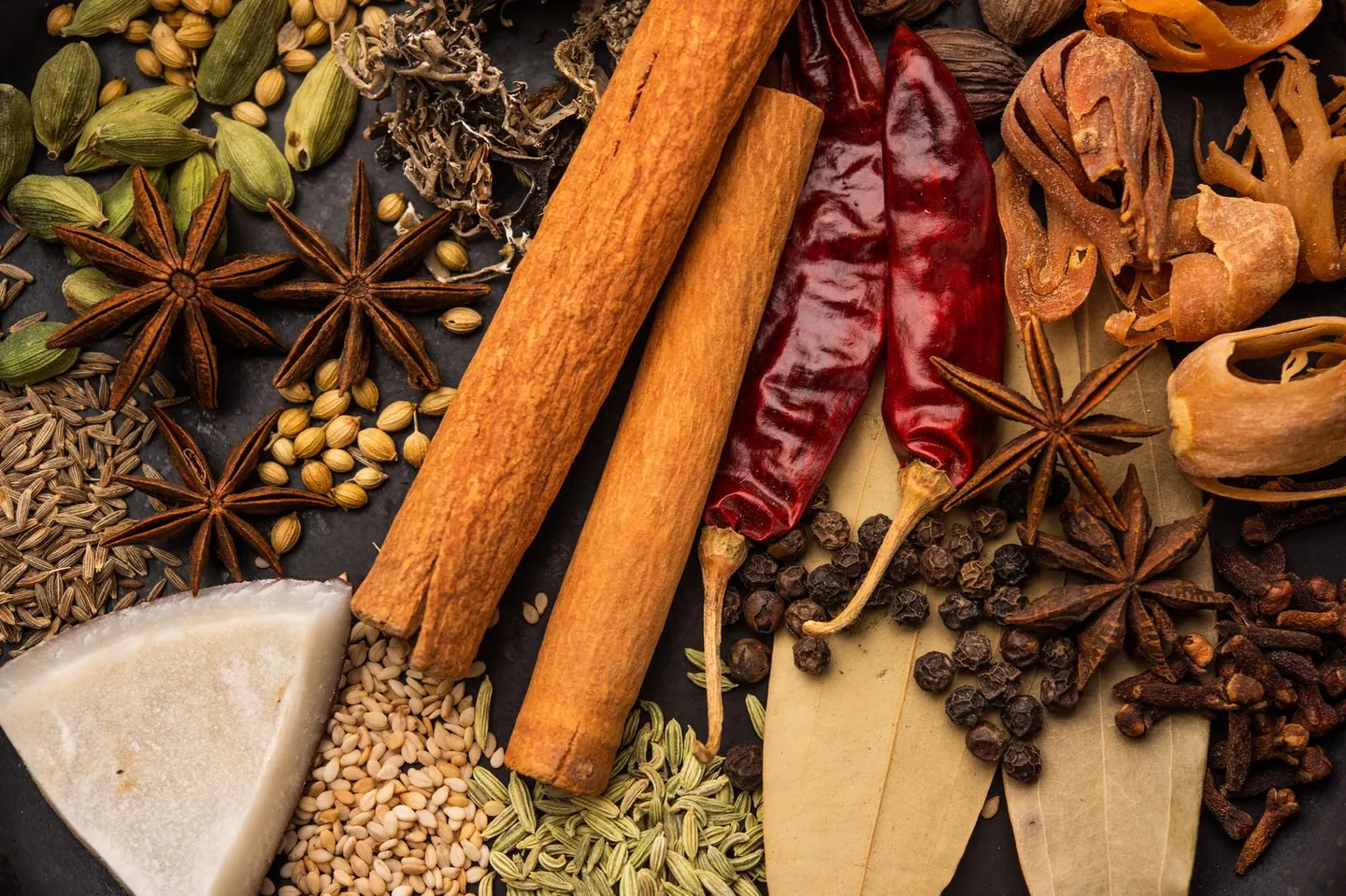
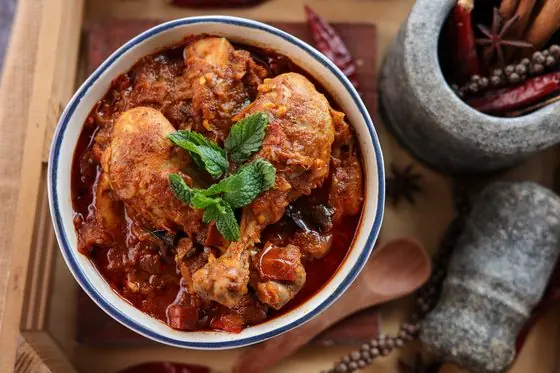
Photograph: Adobe Stock · representative of the dish
Three aromatics, one jar, honest limits [LOW SODIUM] [VEGAN]
Every second Kerala recipe begins with ginger, garlic and green chilli, and grinding them fresh each time is the small friction that pushes people towards a jar of something else. The green chilli, rather than the two-ingredient northern paste, is what makes this Kerala's version: the chilli goes in from the start and its heat becomes part of the base rather than a later decision.
Allergens: None of the major allergens as the recipe is written. Sesame or peanuts — whichever of the two oils you use.
Equipment: Mixie or small blender jar; ammikkallu if you have one. A stone-ground paste is coarser, glossier and does not warm in the jar; with a mixie, grind in short bursts and stop before the jar feels warm.
Young ginger with thin skin grinds smoother and tastes less fibrous than old ginger, whose woody core should be cut out. Peeled garlic in tubs is a reasonable shortcut and about 20% less pungent. Use the chilli your household tolerates: Kerala's pacha mulaku is moderate, a Thai bird chilli four or five times hotter, a jalapeño about half as hot.
Blood pressure and cholesterol: garlic is the one aromatic in this book whose effective dose overlaps ordinary cooking. Pooled across 108 trials and 7,137 participants, garlic gave −3.7/−2.0 mmHg on blood pressure, LDL cholesterol −5.9 mg/dL and total cholesterol −10.2 mg/dL (Behrouz et al., 2026). A tablespoon of this paste carries about 6.5 g of garlic, and two tablespoons a day across a household's cooking is a plausible route to the lower end of trial intakes. Chapter 9 sets out exactly what that evidence does and does not support.
Anticoagulants: garlic and ginger in quantity can add to the effect of warfarin and similar medicines. If you take one, mention to your doctor that you cook with garlic regularly. Do not change any medicine.
Add 6 g salt → keeps about twice as long in the fridge and adds roughly 100 mg of sodium per tablespoon. In a book about blood pressure, freeze it instead.
Add 15 ml coconut vinegar → keeps 2–3 weeks refrigerated, at the cost of a sour edge that shows in delicate dishes.
Garlic only → for dishes where ginger's brightness is wrong, as in some Mappila preparations; keeps rather less well. Ginger only → for temple-register and formal sadya cooking, where onion and garlic are excluded.
Grind 300 g batches in two goes; a full jar heats before it grinds smooth.
Fridge 7 days with an oil film on the surface — a real limit, not a cautious one; by day ten an unsalted paste tastes stale. Freeze 3 months in 15 g portions. Use from frozen, straight into the pan.
Freeze in a flat sheet and snap off what you need; a paste that has been thawed should not go back. In the fridge, a jar with a film of oil on the surface keeps a fortnight and a jar without one keeps a week. If the paste has gone grey and smells of sulphur rather than of garlic, discard it — that is the garlic breaking down, and no amount of cooking recovers it.
Bitter: the jar warmed during grinding. Grind in bursts and let it cool between.
Stringy: the ginger was ground with the garlic, or was old and woody.
Turned bluish-green: a harmless reaction between garlic's sulphur compounds and trace acids and metals. Safe to eat, though it usually means the paste is past its best.
Sharp and stale: it is over a week old. Freeze the next batch.
Serve with
R040 Nadan Kozhi Curry · R043 Kozhi Porichathu, Rebuilt · R048 Beef Ularthiyathu, Traditional and Rebuilt · R061 Kerala Chana Masala · R052 Liver Fry — and, more broadly, fish marinades, biryani and neychoru, egg preparations, and the base of M15 if you would rather not chop.
Tap a star to rate this recipe
The Kindle edition is on its way. Until it lands, the complete book — all 25 chapters and 137 recipes — is free to read here, and it stays free after.