 R040
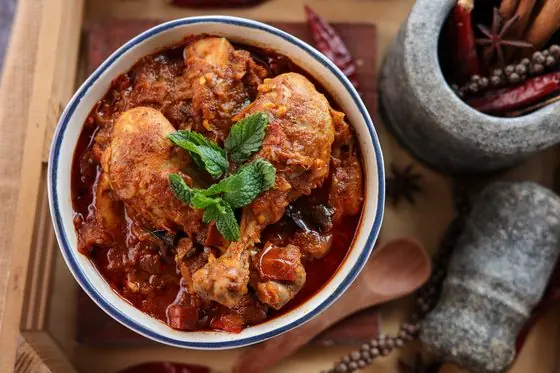
R040Nadan Kozhi Curry
The everyday country chicken curry
Recipes › Chicken, Egg and Meat
R043
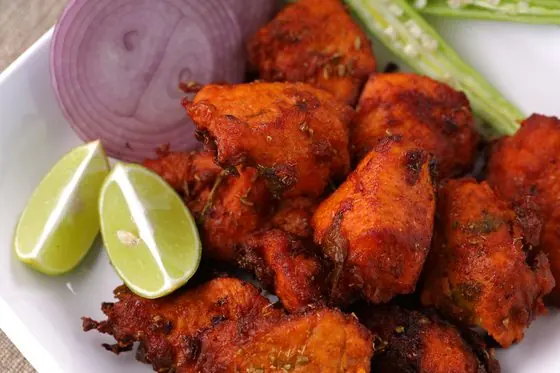
Fried chicken, taken out of the oil and put in the oven
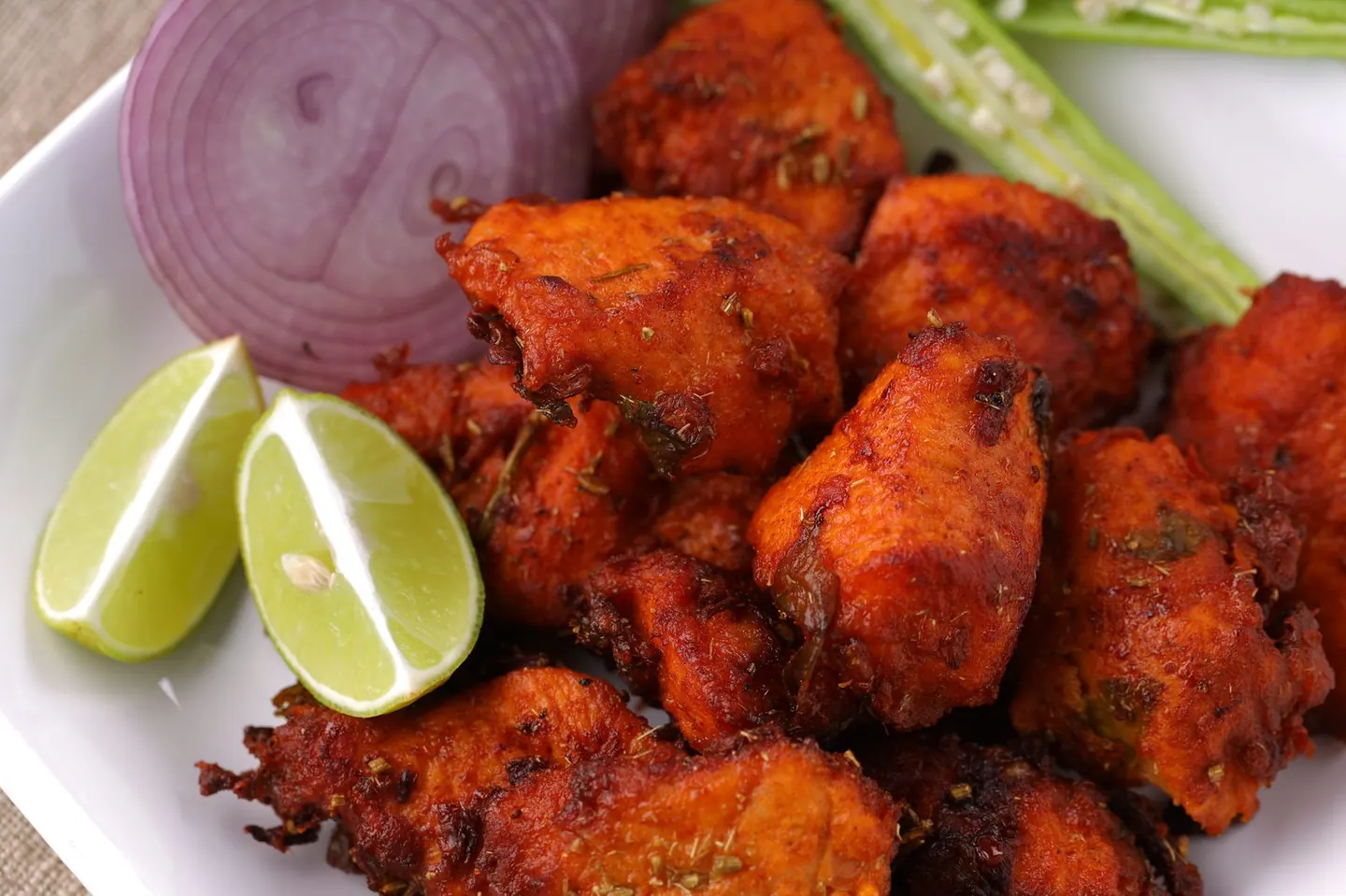
Photograph: Adobe Stock · representative of the dish
Plan ahead: plus 2 hours marinating — required; overnight is better.
Here is the honest account of what you lose. Deep-frying does three things at once: it dehydrates the surface violently, it browns it through Maillard reactions at 170–180°C (340–355°F), and it deposits a thin layer of fat that carries aroma and gives the shattering texture nobody has ever fully reproduced. An oven does the first two and not the third. This version is very good and it is not fried chicken. If you want fried chicken, fry it, eat it, and note that a 130 g portion deep-fried carries roughly 12–15 g more fat than this one.
Before you start: Dry the chicken thoroughly with kitchen paper before it goes into the marinade, and again as it comes out. Surface water is the single reason oven-cooked chicken steams instead of browning.
Allergens: Milk. Sesame or peanuts — whichever of the two oils you use.
Equipment: Oven with a wire rack set over a tray, or an air fryer. Substitute: a grill pan on the hob gets you two browned faces and pale sides; turn the pieces four times and accept less crust.
| Energy | 325 kcal |
| Protein | 27 g |
| Fibre | 2 g |
| Net carbohydrate | 10 g |
| Total carbohydrate | 12 g |
| Sugars | 1 g |
| Fat | 20 g |
| Saturated fat | 5 g |
| Sodium | 270 mg |
From ICMR-NIN IFCT 2017 and USDA FoodData Central. Per-serving figures stay the same when you scale.
Bone-in thighs and drumsticks are essential — breast has neither the fat nor the connective tissue to survive 30 minutes of dry heat. Rice flour is what gives Kerala fried chicken its particular sandy crust; the fine white flour sold for puttu and idiyappam is exactly right. Corn flour is optional and adds brittleness rather than flavour.
Blood sugar: 10 g of net carbohydrate, most of it the flour coating. Negligible in the context of the meal.
Blood pressure: 270 mg. Fried chicken from a thattukada is a different order of magnitude, largely from the salt in the marinade and the salt added at the counter.
Cholesterol: 5 g of saturated fat, the lowest of the chicken dishes, because there is no coconut and the added fat is sesame at about 15% saturated. This is the single clearest illustration in the chapter of the oil decision tree from Chapter 8: coconut oil where it is the flavour, seed oil where it is only a medium.
Deep-fried, honestly → 500 ml of groundnut or rice bran oil at 170°C (340°F), 8–10 minutes a batch. Expect about 12–15 g more fat per serving and do not reuse the oil; ICMR-NIN's 2024 guidance advises against reheating and reusing frying oil.
No yoghurt → 60 g of thick coconut milk plus 5 g extra lime juice. Works, browns less, and adds about 3 g of saturated fat per serving.
Boneless → 500 g of thigh fillet, 12 minutes at 220°C (425°F), turning once. Faster, drier, and it loses the bone's contribution to flavour.
No rice flour → 25 g of gram flour (besan). Nuttier, darker, and it browns faster, so drop the oven to 210°C (410°F).
Marinate up to 24 hours ahead — this is a dish that rewards the wait. Fridge 3 days cooked. Freeze 2 months cooked; the crust softens and comes back in a hot oven. Reheat at 200°C (390°F) for 6–8 minutes on a rack, never in a microwave, which turns the shell to paste.
Pale and steamed rather than roasted: the tray was cold, the pieces were touching, or the chicken went in wet. All three are fixable and all three matter.
Crust fell off in sheets: too much flour, or the marinade was thin. Dust lightly and let the excess fall away.
Dry inside: breast meat, or 10 minutes too long. Take it out when the juices run clear, not later.
Serve with
R107 Sambharam · R089 Kerala-Idiom Salad · R098 Inji Puli · R015 Matta Rice
Tap a star to rate this recipe
The Kindle edition is on its way. Until it lands, the complete book — all 25 chapters and 137 recipes — is free to read here, and it stays free after.