 R053
R053Vanpayar Thoran
Brown cowpea with grated coconut
R062
Cherupayar mulapichathu — sprouted green gram, raw, with coconut and lime
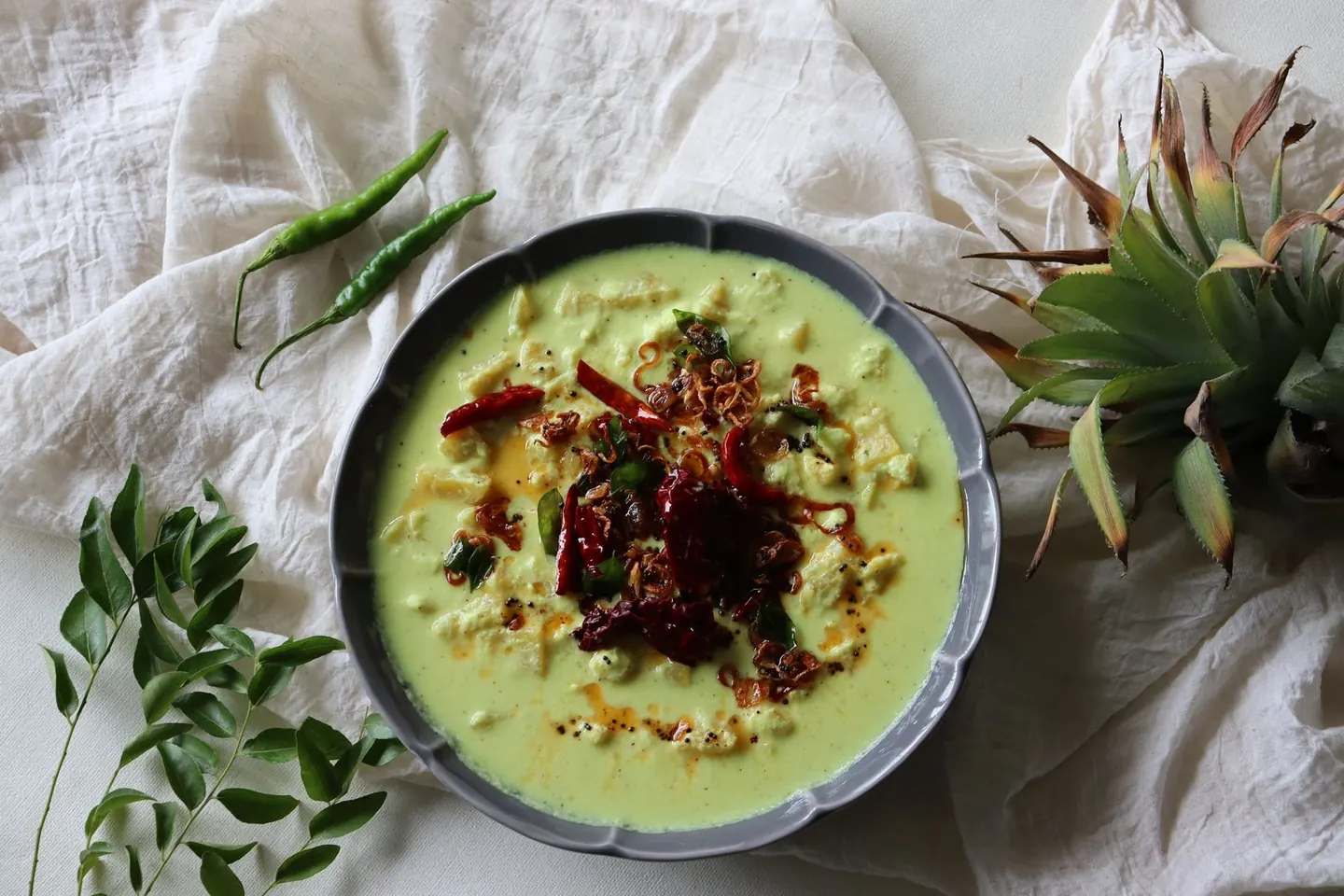
Photograph: Adobe Stock · representative of the dish
Plan ahead: plus 8 hours soaking and 24–48 hours sprouting — required.
Sprouted whole green gram is eaten across India and in Kerala usually appears steamed, with coconut, as a breakfast dish beside kanji. This version is raw and dressed, which is closer to a pachadi in spirit than to a Western salad. Sprouting is nearly free and takes two days of no attention, and it changes the pulse: the seed's own enzymes begin breaking down starch and the oligosaccharides that cause wind, and the bean sweetens and softens enough to eat without cooking. Read the food-safety box before you start, because raw sprouts are the one item in this book that carries a genuine microbiological caution.
> Sprouting safely, and who should not eat these raw at all. The US Food and Drug Administration explains the hazard in one sentence: sprouts are grown from seed in warm, humid conditions, and "these conditions are ideal for the growth of bacteria, including Salmonella, Listeria, and E. coli." The seed itself is where the contamination begins, which is why the FDA's advice does not depend on how clean your kitchen is. > > The instruction that matters most, and it is the FDA's, not this book's. "Vulnerable populations should avoid eating raw or lightly cooked sprouts of any kind (including onion, alfalfa, clover, radish, and mung bean sprouts)." The FDA's guidance for pregnancy is more direct still: "avoid eating raw sprouts of any kind (including alfalfa, clover, radish, and mung bean)", and "cook sprouts thoroughly. This significantly reduces the risk of illness." Health Canada names the same groups and adds the older reader: "children, the elderly and those with weakened immune systems are particularly vulnerable to these bacteria and should not eat any raw sprouts at all", and should "avoid eating cooked sprouts unless they can be sure the sprouts have been thoroughly cooked." So: if you are pregnant, elderly, very young, or your immune system is suppressed for any reason, do not eat these raw — steam them for 4–5 minutes instead, which this recipe accommodates in the swap list. The same applies to sprouts in a restaurant sandwich or salad, which the FDA suggests asking to have left out. > > The home-sprouting method below is this book's own practice, not an authority's, because no food-safety authority publishes a home-sprouting temperature, a rinse frequency or a refrigerated shelf life. It is sensible kitchen craft and it is labelled as such. One, use whole pulses sold for eating, not seed sold for planting, which may be treated with fungicide. Two, wash your hands, the jar, the cloth and the colander in hot soapy water first. Three, rinse the sprouting beans in clean running water twice a day, every day, and drain them completely each time; standing water is the problem. Four, sprout at cool room temperature, not in a warm cupboard, and never above 25°C (77°F). Five, smell and look at them: sprouts that smell sour, musty or sweetish, or feel slimy, or show any discolouration at the root, go in the bin — no rinsing rescues them. Six, refrigerate as soon as they are ready and use within two days. None of this changes the FDA's position for the groups named above, and none of it makes a raw sprout safe for them.
Before you start: Start three days before you want to eat. Soak on the evening of day one, drain on the morning of day two, and the sprouts will be ready some time on day three depending on your kitchen's temperature.
Allergens: None of the major allergens as the recipe is written. Sesame or peanuts — whichever of the two oils you use.
Equipment: Wide-mouthed glass jar or a colander with a clean cloth; a bowl. Substitute: a purpose-made sprouting jar with a mesh lid makes the twice-daily rinse easier and nothing else.
| Energy | 188 kcal |
| Protein | 10 g |
| Fibre | 9 g |
| Net carbohydrate | 22 g |
| Total carbohydrate | 31 g |
| Sugars | 6 g |
| Fat | 7 g |
| Saturated fat | 4 g |
| Sodium | 160 mg |
From ICMR-NIN IFCT 2017 and USDA FoodData Central. Per-serving figures stay the same when you scale.
Whole green gram is sold as cherupayar, whole moong, mung bean or green gram whole. Buy a bag with a visible date and use it within the year; old pulses sprout poorly and unevenly, and an unsprouted bean in a raw salad is unpleasant to eat. Pre-sprouted moong is sold refrigerated by some supermarkets — check the date, rinse it thoroughly, and use it the day you buy it.
Blood sugar: 22 g of net carbohydrate at a pulse glycaemic index and 9 g of fibre, with lime juice in the dressing. As a mid-afternoon dish instead of a bakery item, this is one of the highest-value swaps in the book.
Blood pressure: 160 mg per serving, from 2 g of salt across four. The lime is carrying the seasoning, which is the technique Chapter 10 is about.
Cholesterol: 4 g of saturated fat, almost all of it the 10 g of coconut per serving. Sesame oil rather than coconut oil is why the number is not higher.
Steamed rather than raw → steam the sprouts 4–5 minutes and cool them before dressing. Required for anyone in the groups the FDA and Health Canada name in the box above — pregnancy, older adults, young children, and anyone immunocompromised — and a better dish in cold weather.
Sprouted muthira or kadala → both sprout well and both take 48–72 hours. Kadala sprouts need cooking; they are too hard to eat raw.
Add 100 g of diced raw mango or 80 g of pomegranate → sharper, and it is what a Kerala household would actually do in season.
Add 2 chopped boiled eggs or 100 g of flaked cooked fish → protein to about 15–17 g per serving and a complete lunch. (Allergen: this swap introduces fish, egg.)
The sprouts are the make-ahead: fridge 2 days once sprouted, rinsed and drained, and no longer. The dressed salad does not keep at all — assemble within 20 minutes of eating. Freeze: no, for the salad. Raw sprouts can be blanched 2 minutes and frozen for 1 month, after which they are a cooking ingredient rather than a salad. Reheat: not applicable.
Beans did not sprout: old pulses, split beans, or the jar was too cold. Split moong will never sprout; use whole.
Sour or slimy smell: bacterial growth from standing water or too warm a spot. Discard the batch, wash everything, start again with twice-daily draining.
Bitter sprouts: the tails grew past 2 cm. Stop earlier.
Watery salad: dressed too far ahead, or the tomato was not deseeded.
Serve with
R041 Kerala Chicken Stew · R027 Ayala Varuthathu · R020 Kanji · R107 Sambharam
Tap a star to rate this recipe
The Kindle edition is on its way. Until it lands, the complete book — all 25 chapters and 137 recipes — is free to read here, and it stays free after.