 R063
R063Cabbage Thoran
The master thoran: shredded cabbage, crushed coconut, turmeric
Recipes › Vegetables: The Half of the Plate
R070
Yam and green plantain in thick soured curd with coconut and a great deal of pepper
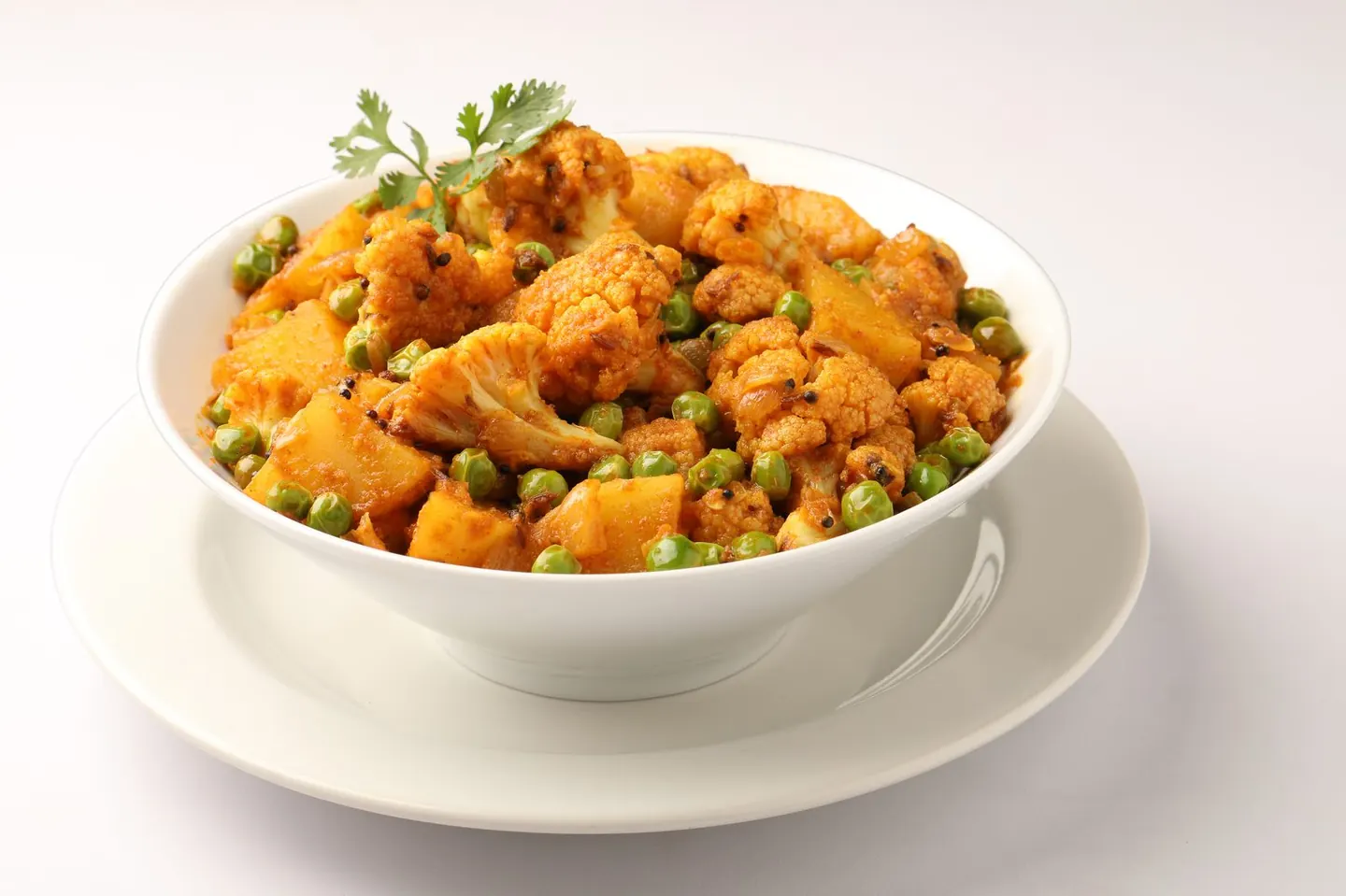
Photograph: Adobe Stock · representative of the dish
Kalan is the sour one of the sadya's four ceremonial curries, and the one designed to keep: cooked down until it is thick enough to hold the mark of a spoon, it will sit for days without a fridge, which is why it was made in quantity before a feast. It carries more black pepper than any other vegetable dish in Kerala. The rule that governs it is the same one that governs olan, with a different protein: curd splits at a lower temperature than coconut milk does, and it must never boil.
Before you start: Whisk the curd smooth and leave it out of the fridge while you cook. Cold curd added to a hot pan is the commonest way a kalan splits.
Allergens: Milk, mustard.
Equipment: Kalchatti (soft-stone pot) or heavy non-reactive pan, 24 cm; mixie. Substitute: any heavy stainless or enamelled pan. Do not use aluminium or bare cast iron — kalan is acidic enough to pick up a metallic edge from both.
| Energy | 186 kcal |
| Protein | 4.5 g |
| Fibre | 5.7 g |
| Net carbohydrate | 20.2 g |
| Total carbohydrate | 25.9 g |
| Sugars | 4.1 g |
| Fat | 9.6 g |
| Saturated fat | 7.7 g |
| Sodium | 230 mg |
From ICMR-NIN IFCT 2017 and USDA FoodData Central. Per-serving figures stay the same when you scale.
Chena is sold in Indian groceries as elephant foot yam or suran, fresh in large brown pieces or frozen in cubes, and the frozen is perfectly good here. Where there is none, taro (chembu) is the closest at 17.9 g available carbohydrate per 100 g, and a waxy potato is the honest last resort — it will break down more and the dish will be softer. Green plantain is stocked by every Caribbean, African and Latin American grocer as plátano verde. Handle chena with a little oil on your hands or wear gloves: the raw tuber contains calcium oxalate crystals that irritate skin, and the itch lasts an hour. Cooking destroys them completely.
Blood sugar: 20.2 g net carbohydrate per serving. Kalan is a starch dish, not a vegetable dish, and it should be counted against the quarter of the plate that holds the grain and not against the half that holds vegetables. Serve it with 100 g of cooked rice rather than 200 g, and put a cabbage or okra thoran beside it.
Blood pressure: 230 mg sodium, or about 175 mg with M07. Kalan needs little salt because the pepper and the acid are carrying the seasoning.
Cholesterol: 7.7 g saturated fat per serving, from the coconut paste and the curd.
Chena → taro or waxy potato. Softer, and the dish holds together less well.
Green plantain → all chena, 550 g. Slightly higher in protein, less sweet, and the traditional Namboothiri version in many households.
Sour curd → plain whole-milk yoghurt with a teaspoon of lime juice, whisked in off the heat. Acceptable, and slightly less rounded.
Curd → 300 ml second coconut milk plus 20 g tamarind pulp. This is no longer a kalan; it is a passable vegan approximation, and it must be reduced longer to reach the same thickness.
Kalan is the make-ahead dish of the sadya and is better on day two. Fridge 5 days in a covered non-metal container, which is longer than anything else in this chapter and is the entire reason the dish exists. Freeze 1 month — the curd goes grainy on thawing and stirs back only partly. Reheat on the lowest flame to just steaming, with a tablespoon of water if it has set too stiff.
Thin cold kalan with 100 ml of water and it becomes a pulissery-adjacent curry for rice. It is also very good spooned over puttu, which is not traditional and is worth trying.
Split, with visible whey: the curd boiled, or went in cold, or was stirred too little. Blending the finished dish smooth will disguise it, and it will taste fine.
Thin and pourable: under-reduced at step 5. Keep going on the lowest flame; it will thicken.
Harsh and raw-tasting: the coconut paste was not cooked long enough at step 3, or the pepper was added at the start rather than in two stages.
Serve with
R015 Matta Rice · R064 Beans Thoran · R071 Chena Erissery · R079 Cabbage and Carrot Upperi
Tap a star to rate this recipe
The Kindle edition is on its way. Until it lands, the complete book — all 25 chapters and 137 recipes — is free to read here, and it stays free after.