 R063
R063Cabbage Thoran
The master thoran: shredded cabbage, crushed coconut, turmeric
Recipes › Vegetables: The Half of the Plate
R066
Moringa leaves, stripped from the stalk, with coconut
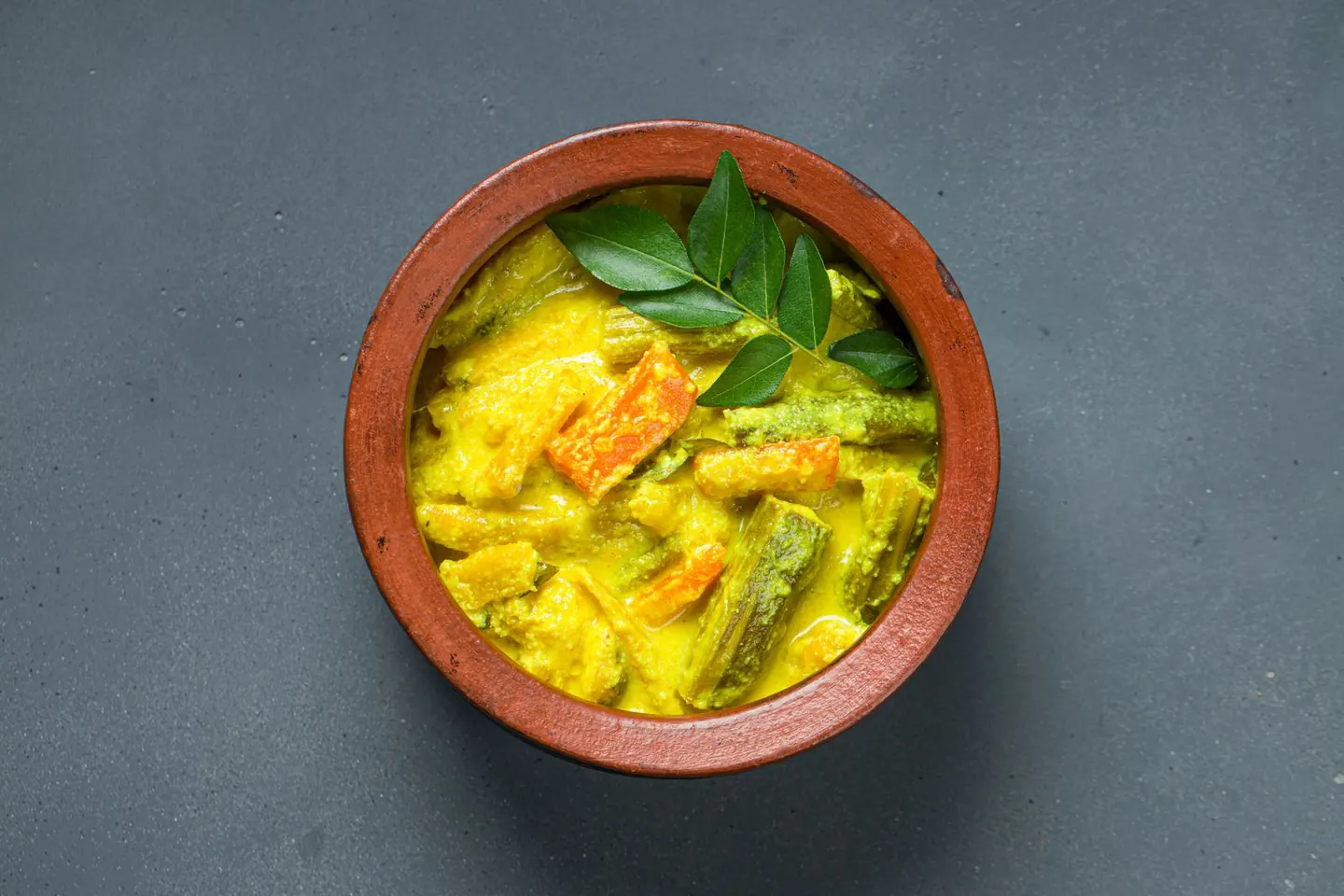
Photograph: Adobe Stock · representative of the dish
Moringa leaves are the most nutrient-dense green in the Kerala repertoire on a per-100 g basis: 6.4 g of protein, 8.2 g of fibre and 5.6 g of available carbohydrate at 67 kcal (ICMR-NIN, 2017), which makes them the highest-protein green in the tables. That is a compositional fact and this book makes no health claim of any kind for them; the meta-analysis of moringa supplementation found no consistent cardiometabolic effect at very low certainty (Crișan et al., 2025). Eat them because they are excellent and because stripping them is a quiet job worth doing.
Before you start: Strip the leaves from the stalks before you do anything else, and do it sitting down with a bowl in your lap, which is how it is done at home. Three hundred grams of stripped leaf takes about twenty minutes and is roughly two large bunches with the stalks on.
Allergens: Mustard.
Equipment: Wide pan, 26 cm, with a lid; chattuvam; a large bowl for stripping. Substitute: none needed. This dish requires nothing you do not own.
| Energy | 126 kcal |
| Protein | 5.7 g |
| Fibre | 7.9 g |
| Net carbohydrate | 6.5 g |
| Total carbohydrate | 14.4 g |
| Sugars | 2.3 g |
| Fat | 8.6 g |
| Saturated fat | 6.5 g |
| Sodium | 210 mg |
From ICMR-NIN IFCT 2017 and USDA FoodData Central. Per-serving figures stay the same when you scale.
Fresh moringa leaves are the hard one for a diaspora reader. Indian and Sri Lankan groceries in the UK, Gulf and Singapore stock them in bunches seasonally; in North America they are rarer and are most often found frozen, in 340 g bags, which work well here and need no thawing beyond breaking the block up in the pan. Do not use moringa powder, which is a different product entirely and tastes of hay in a cooked dish. Where there is nothing: 300 g of watercress gives a comparable faint bitterness and cooks in the same time; 400 g of spinach is blander but structurally right. Say which you used, if you are the kind of cook who writes in the margins.
Blood sugar: 6.5 g net carbohydrate and 7.9 g fibre. Moringa leaves are a genuinely useful food for a plate that has to be low in carbohydrate and high in volume, and no claim beyond that is supportable.
Blood pressure: 210 mg sodium, or about 160 mg with M07.
Cholesterol: 6.5 g saturated fat, from the coconut. This dish tolerates a coconut reduction well because the leaf has its own body: at 25 g of coconut it is still recognisable.
Fresh leaves → frozen, 340 g, straight from the freezer. Add 2 minutes at step 5. The only loss is a little of the fresh green aroma.
Moringa → drumstick pods (muringakka), 400 g cut into 5 cm lengths. A completely different dish, cooked 10–12 minutes, and the pods are eaten by drawing the flesh out with your teeth.
Add 2 g crushed garlic to the crush → rounder and less bitter.
Add 100 g cooked vanpayar → protein to about 8 g per serving, which is unusual for a vegetable dish and makes this a plate-completing side.
Strip the leaves up to 2 days ahead and keep them in a bag in the fridge; this is the make-ahead that matters. Fridge 3 days cooked, and it holds better than cheera. Freeze 1 month, acceptably. Reheat dry, 2–3 minutes.
Stir into a kanji in the last two minutes, or into an omelette. Moringa thoran and a boiled egg is a breakfast this book endorses.
Stalky and unpleasant to eat: petioles got in. Strip more carefully; there is no fix in the pan.
Very bitter: older leaves, or leaves from a tree in dry season. Add 5 g of grated coconut more and 1 g of jaggery, which will round it without sweetening the dish.
Dry and dusty: overcooked, or too little coconut for the volume of leaf. Moringa needs slightly more coconut per gram than cabbage does.
Serve with
R015 Matta Rice · R058 Parippu Curry · R073 Chena Mezhukkupuratti · R107 Sambharam
Tap a star to rate this recipe
The Kindle edition is on its way. Until it lands, the complete book — all 25 chapters and 137 recipes — is free to read here, and it stays free after.