 R063
R063Cabbage Thoran
The master thoran: shredded cabbage, crushed coconut, turmeric
Recipes › Vegetables: The Half of the Plate
R073
Elephant foot yam, parboiled then smeared with oil until it catches
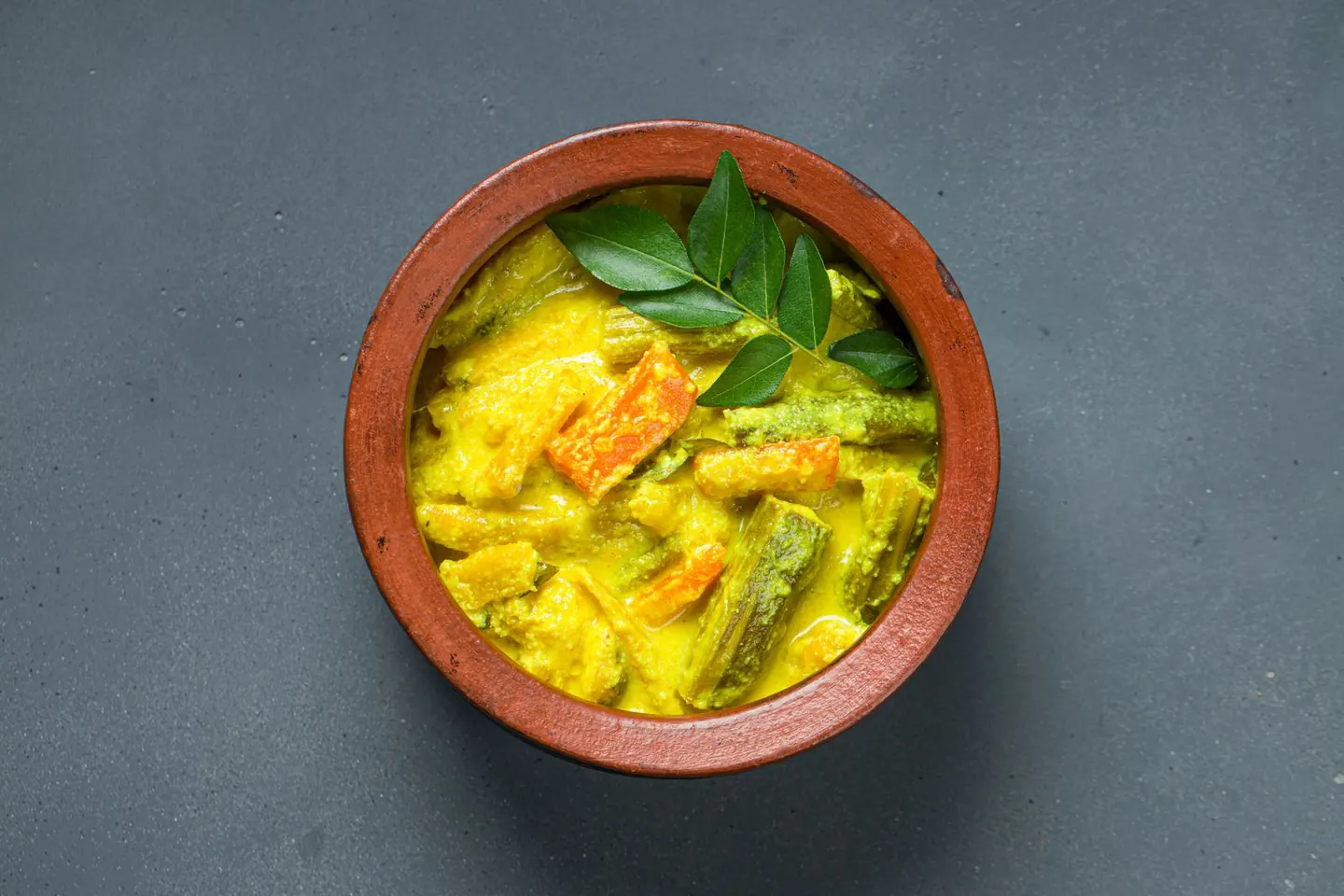
Photograph: Adobe Stock · representative of the dish
Mezhukku means oil or wax; puratti means smeared. The name is the recipe, and it is the best example in Malayalam of a dish named for its technique rather than its contents. That makes it the most exposed dish in this book: there is nowhere for a heavy hand with the oil to hide, and nowhere for a light hand either. Fifteen grams across four servings is under a teaspoon each, and the way you spend it is the whole craft.
Before you start: Rub a little oil on your hands or wear gloves before peeling chena. The raw tuber carries calcium oxalate crystals that irritate skin for an hour; cooking destroys them entirely.
Allergens: None of the major allergens.
Equipment: Saucepan for parboiling; the widest heavy pan you own, 28 cm if possible. Substitute: a non-stick pan is legitimate here and saves 5 g of oil. This is one of the few places in the book where non-stick earns its keep.
| Energy | 160 kcal |
| Protein | 4.1 g |
| Fibre | 6.8 g |
| Net carbohydrate | 26.6 g |
| Total carbohydrate | 33.4 g |
| Sugars | 2.0 g |
| Fat | 4.1 g |
| Saturated fat | 3.2 g |
| Sodium | 270 mg |
From ICMR-NIN IFCT 2017 and USDA FoodData Central. Per-serving figures stay the same when you scale.
Chena is stocked by Indian groceries as elephant foot yam or suran, and by many Asian groceries simply as yam; frozen cubes are convenient and need no thawing, though they arrive softer, so cut the parboil to 4 minutes. In a Western supermarket with none of this, the substitution ladder runs: taro, then celeriac, then a waxy potato. Celeriac is the underrated answer — it holds its shape, browns well and is drier than potato, and nobody expects it to work. Sweet potato does not work: it is too sweet and too soft, and it will not glaze.
Blood sugar: 26.6 g net carbohydrate per serving, which is the highest figure in this chapter and the most important thing to notice about this dish. Chena is a starch. A 130 g serving of this is roughly the carbohydrate of 100 g of cooked rice, so it belongs in the quarter of the plate that holds the grain — and if you serve it, serve less rice. It is not a vegetable side, whatever it looks like.
Blood pressure: 270 mg sodium, or about 200 mg with M07.
Cholesterol: 3.2 g saturated fat per serving, which is a third of what an olan carries and among the lowest in this chapter. Made with groundnut or sesame oil instead it falls to about 0.9 g, and it is still a good dish, because here the oil is a medium rather than a flavour.
Chena → taro, celeriac or waxy potato. See the sourcing note. Potato browns fastest and softens most.
Chena → 550 g raw green plantain, cut the same way. This is ethakka mezhukkupuratti, equally traditional, faster to cook by 3 minutes, and slightly lower in protein.
Coconut oil → groundnut, sesame or rice bran oil. Saturated fat falls to about 0.9 g per serving. Do make this swap here; the oil is not the flavour in a mezhukkupuratti the way it is in a thoran. (Allergen: this swap introduces peanuts, sesame.)
Add 3 g crushed garlic with the shallots → rounder and more savoury, and no longer sadya-appropriate.
Above four servings, use two pans. A crowded pan steams, and a steamed mezhukkupuratti is a boiled yam with pepper on it.
Parboil up to 1 day ahead and refrigerate; the drier the yam, the better it glazes, so this is an improvement rather than a compromise. Fridge 3 days. Freeze 1 month after parboiling but before frying, which works well; freezing the finished dish does not. Reheat in a dry pan, 3–4 minutes, not a microwave.
Crush cold chena mezhukkupuratti roughly with a fork, bind with 1 beaten egg and 15 g of rice flour, and shallow-fry as cakes. Or fold it into a kappa puzhukku.
Pieces broke into mash: parboiled too long. Six minutes, then test every minute.
No colour after 12 minutes: the pan was too crowded or too cool, or the yam was still wet. Raise the flame and work in two batches.
Itchy hands: raw chena oxalate. It passes within an hour; a rub with lime helps, and gloves next time help more.
Serve with
R024 Meen Vevichathu · R063 Cabbage Thoran · R081 Moru Curry · R107 Sambharam
Tap a star to rate this recipe
The Kindle edition is on its way. Until it lands, the complete book — all 25 chapters and 137 recipes — is free to read here, and it stays free after.