 R063
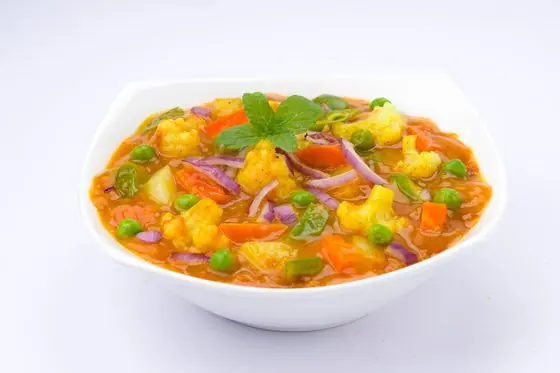
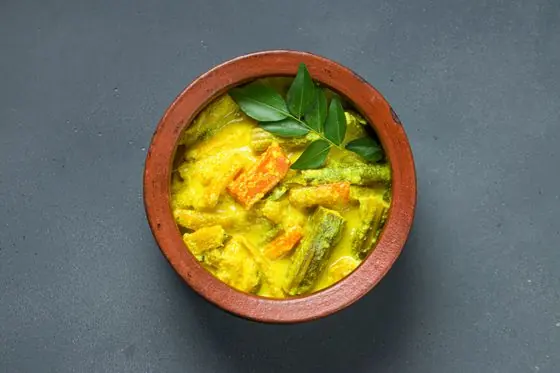
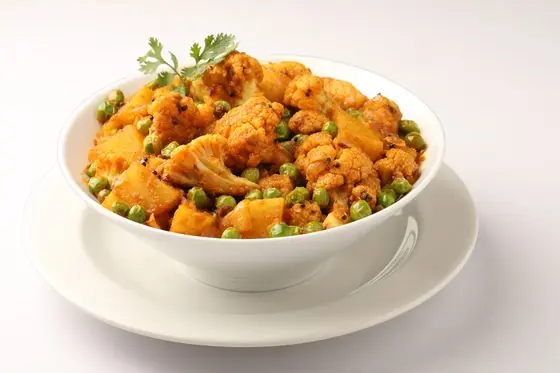
R063Cabbage Thoran
The master thoran: shredded cabbage, crushed coconut, turmeric
Recipes › Vegetables: The Half of the Plate
R072
Bitter gourd and shallots in dark roasted coconut, soured with tamarind
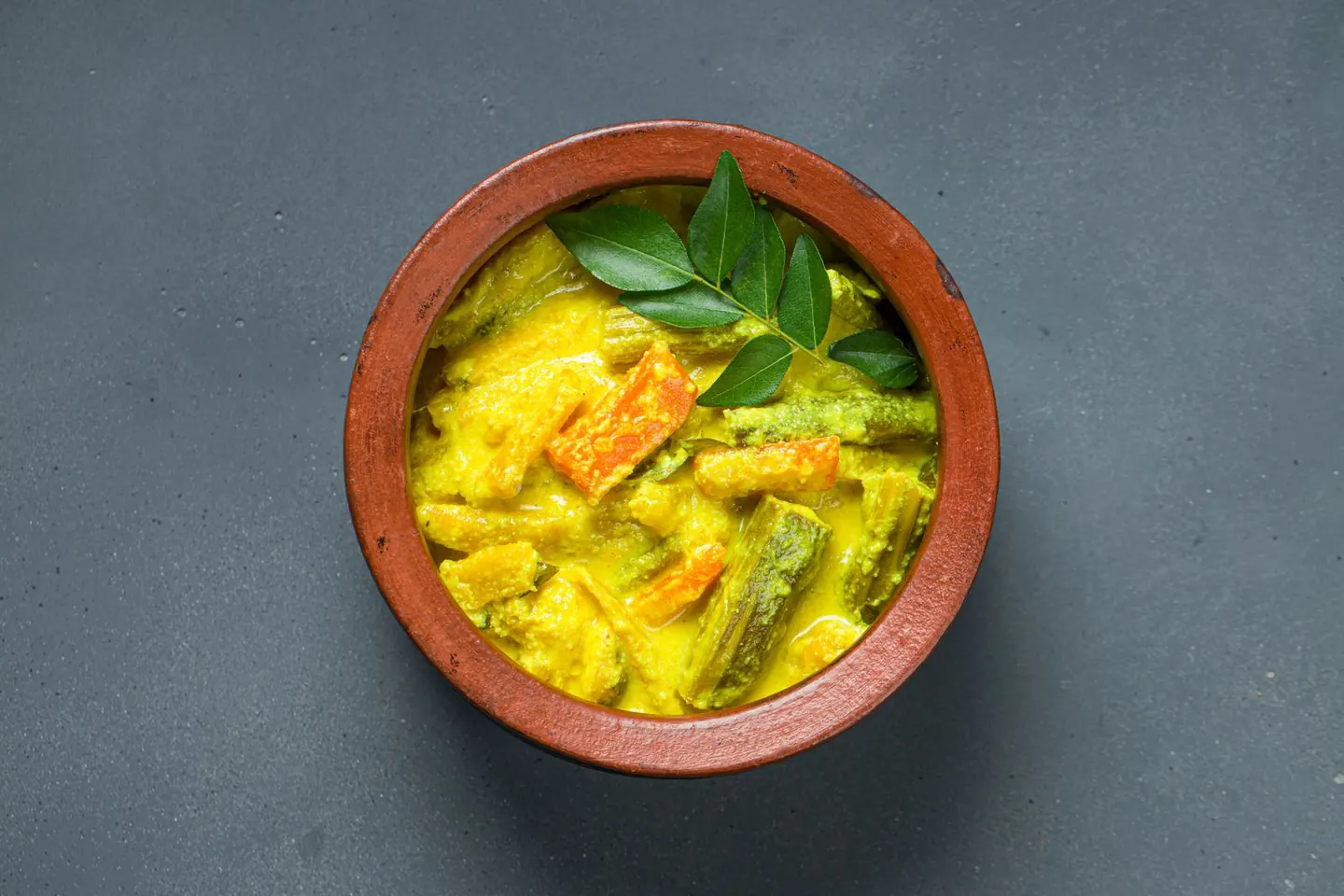
Photograph: Adobe Stock · representative of the dish
Plan ahead: plus 20 minutes salting the gourd — recommended.
One honest paragraph before the pleasure. Bitter gourd is widely believed to lower blood sugar, and the human trial evidence does not support it: the Cochrane review of four randomised trials in 479 participants found no statistically significant difference in glycaemic control against placebo, and a separate meta-analysis found HbA1c −0.13% with a confidence interval crossing zero. Chapter 9 sets this out in full. What is true is better. Pavakka is 21 kcal and 2.8 g of available carbohydrate per 100 g with 3.8 g of fibre, and in a varutharacha gravy it is one of the most delicious things in this book.
Before you start: Weigh the whole spices before the coconut goes in the pan. The roast moves from correct to ruined in ninety seconds, and you cannot be measuring coriander seed while it does.
Allergens: Mustard.
Equipment: Heavy pan, 24 cm; separate heavy pan for the roast; mixie. Substitute: a cast-iron pan for the roast. Thin pans scorch coconut.
| Energy | 165 kcal |
| Protein | 3.5 g |
| Fibre | 8.0 g |
| Net carbohydrate | 11.5 g |
| Total carbohydrate | 19.5 g |
| Sugars | 6.9 g |
| Fat | 11.7 g |
| Saturated fat | 9.5 g |
| Sodium | 260 mg |
From ICMR-NIN IFCT 2017 and USDA FoodData Central. Per-serving figures stay the same when you scale.
Bitter gourd is sold as bitter melon, karela, ampalaya or ku gua in Indian, Filipino, Chinese and Caribbean groceries, and the long pale Chinese type is milder than the short knobbly Indian type — start with the pale one if bitterness worries you. Frozen sliced bitter gourd is widely available and works, though it holds more water, so skip the salting and add 2 minutes uncovered. If there is genuinely none: this recipe works beautifully with 400 g of aubergine or 350 g of shallots alone, and the shallot version, ulli theeyal, is R084 and is arguably the better dish. Tamarind: buy the block, not the concentrate, and soak and strain 30 g of block to get about 15 g of usable pulp.
Blood sugar: 11.5 g net carbohydrate per serving, most of it from the shallots and the tamarind rather than the gourd. The metabolic value of this dish is displacement and volume, not a herbal effect, and that is worth more than the folklore claims for it: a 160 g serving at 165 kcal alongside a smaller rice portion is doing real work. Chapter 9 has the trial data.
Blood pressure: 260 mg sodium, or about 195 mg with M07. Note that 2 g of salt is used on the gourd and then discarded with the squeezed liquid; the panel counts only the 2.5 g that stays.
Cholesterol: 9.5 g saturated fat per serving, the second highest in this chapter. Using 60 g of coconut instead of 80 g brings it to about 7.4 g and the dish is still convincingly dark.
Bitter gourd → shallots alone, 350 g. This is ulli theeyal (R084), sweeter and rounder, and it is the version most Kerala households make more often.
Bitter gourd → aubergine, 400 g cut into 3 cm pieces. Softer and sweeter; add it at step 6 and cook 4 minutes only.
Tamarind → 3 pieces kudampuli, soaked. Smokier and deeper, and it breaks a convention: kudampuli belongs to fish curries and is not traditional in a sadya vegetable dish. It tastes very good, and you should know you are doing it.
Jaggery → nothing. The dish becomes sharper and more austere, which some households prefer. Sugars fall about 1 g per serving.
Roast the coconut in two batches above 100 g.
Genuinely better on day two, like all roasted-coconut dishes. Fridge 4 days. Freeze 2 months with almost no loss, which makes this the best freezer dish in the chapter. Reheat on a low flame with a splash of water; it thickens in the fridge.
Cold theeyal is excellent with kanji. Reduced further in a dry pan it becomes a thick relish that keeps a week and goes on anything.
Harsh, ashy bitterness through the whole dish: the coconut burnt. Nothing buries it. Start the paste again.
Aggressively bitter: the gourd was not salted and squeezed, or the seeds and white pith were left in. Both matter.
Thin, pale gravy: the roast stopped at stage two. Return the paste to a dry pan for 4–5 minutes and you will recover some of it.
Gritty: the paste was ground cold. Add 20 ml water and grind 2 minutes more.
Serve with
R015 Matta Rice · R058 Parippu Curry · R063 Cabbage Thoran · R107 Sambharam
Tap a star to rate this recipe
The Kindle edition is on its way. Until it lands, the complete book — all 25 chapters and 137 recipes — is free to read here, and it stays free after.