 R090
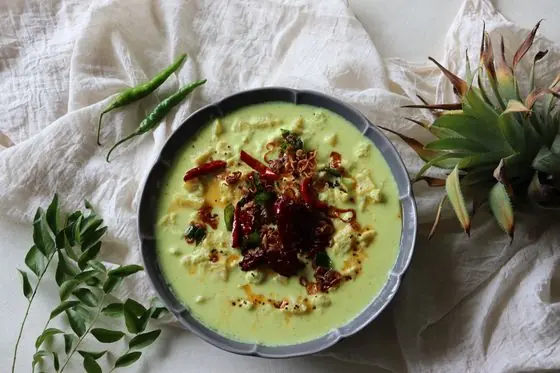
R090Beetroot Pachadi
Beetroot in curd with ground mustard and coconut
Recipes › Salads, Pachadis, Chutneys, Podis and Pickles
R089
Raw vegetables the way a Kerala kitchen cuts them
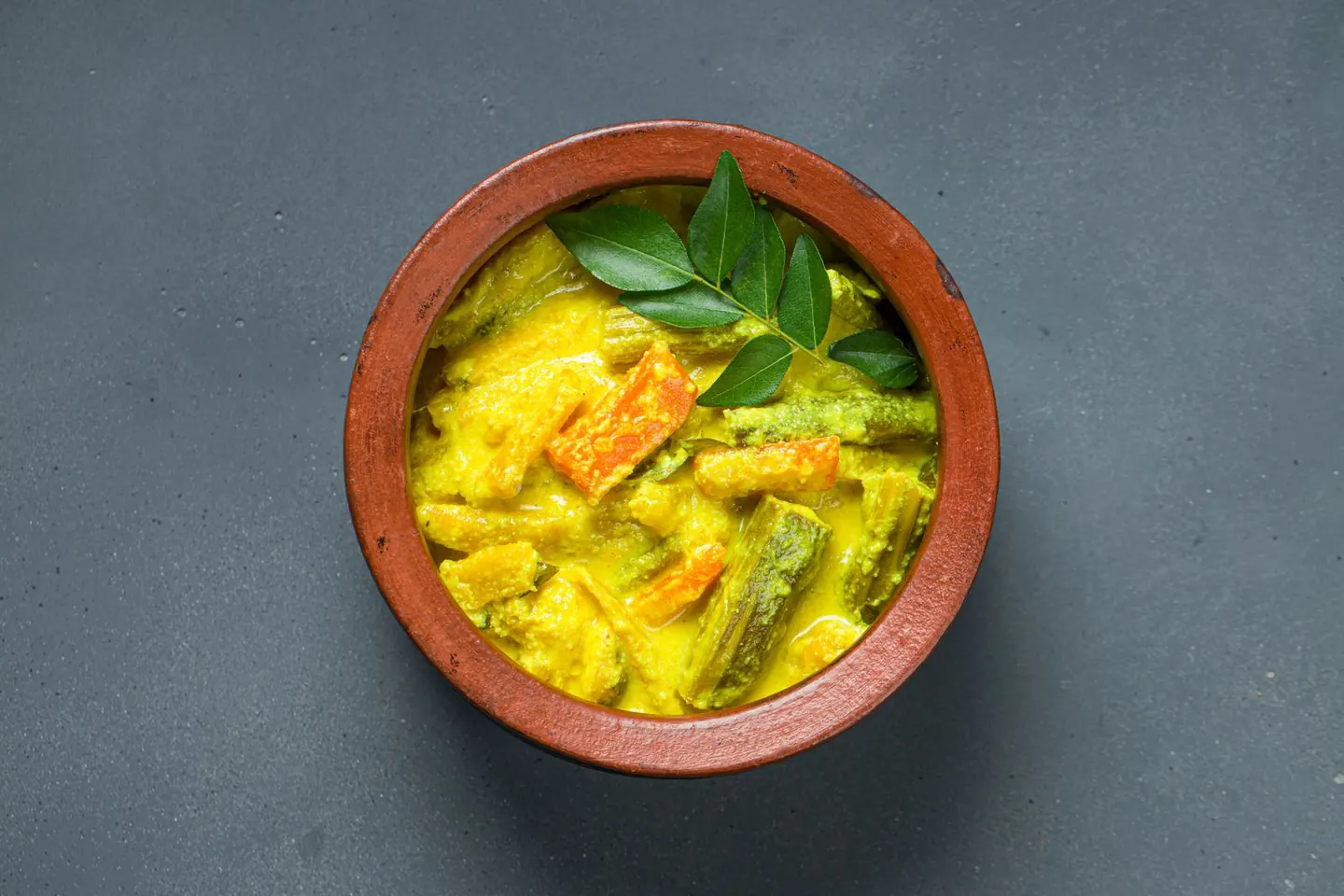
Photograph: Adobe Stock · representative of the dish
Kerala has always eaten raw vegetables; what it has never had is a salad course. The cut vegetables came to the leaf beside the rice, dressed with nothing but lime, chilli, coconut and crushed curry leaf, and they were eaten in the same mouthfuls as everything else. That is a better idea than a starter salad, because it means the raw volume arrives when the rice does. Cut everything small, season at the last moment, and eat it within twenty minutes.
Before you start: Do not salt anything until the moment you serve. Salt pulls water out of cucumber within 8–10 minutes and the dish goes from crisp to slack with nothing to be done about it.
Allergens: None of the major allergens.
Equipment: A sharp knife and a wide bowl. Substitute: a mandoline or the coarse side of a box grater for the carrot, which saves five minutes and gives a softer texture.
| Energy | 78 kcal |
| Protein | 1 g |
| Fibre | 4 g |
| Net carbohydrate | 8 g |
| Total carbohydrate | 12 g |
| Sugars | 5 g |
| Fat | 5 g |
| Saturated fat | 4 g |
| Sodium | 150 mg |
From ICMR-NIN IFCT 2017 and USDA FoodData Central. Per-serving figures stay the same when you scale.
The one ingredient with no honest substitute is the curry leaf; jarred dried leaves have almost no aroma and coriander tastes of something else entirely. Fresh leaves freeze well on the stalk for six months. Where shallots are expensive, use 40 g of red onion plus 20 g of shallot rather than going all-onion: the shallot's sulphur compounds are what make the dish smell like Kerala. Frozen grated coconut, fully thawed, is fine.
Blood pressure: 150 mg per serving against a 2,000 mg daily target, and it can go to under 40 mg by leaving the salt out altogether and adding a further 10 ml of lime — most people do not notice.
Blood sugar: 7 g of net carbohydrate per portion. Eaten alongside rice this is one of the cheapest ways to raise the volume of a meal without raising its glycaemic load, and the vinegar and acid literature supports a sour dressing beside a rice meal.
Cholesterol: 4 g of saturated fat per serving, almost all of it from the coconut and the teaspoon of coconut oil. Leave the oil out and it falls to about 3 g.
No cucumber → 200 g of ash gourd, peeled and diced raw. Consequence: milder and slightly softer; the dish loses its snap and needs 10 ml more lime.
No coconut → 20 g of chopped roasted peanuts. Consequence: more protein and a better crunch, but a distinctly non-Kerala flavour and about 15 kcal more per serving. (Allergen: this swap introduces peanuts.)
No lime → 60 g of grated raw green mango in season. Consequence: sharper and fruitier, and the salad now keeps 2 hours rather than 20 minutes because the acid is in the flesh rather than free in the bowl.
Salt replaced with the 70:30 potassium blend (M07) → sodium falls to about 100 mg. Consequence: a faint metallic note in a raw dish, where there is no fat or heat to mask it, so this is one of the poorer places to use it. Potassium-enriched salt is not for readers with chronic kidney disease, or on a RAAS inhibitor (ACE inhibitor or ARB) or a potassium-sparing diuretic, without a doctor's approval.
At eight servings the coconut and lime do not scale linearly; a larger bowl needs proportionally less of both.
Cut the vegetables up to 6 hours ahead and keep them undressed and covered in the fridge 6 hours. Dressed, it is finished. Fridge 1 day dressed, at real cost to texture. Do not freeze — the cell walls rupture and it thaws to slush.
Drain off the liquid, chop the remains finer, and fold them through a curd raita, or press them into a dosa as it cooks. The drained liquid, with a little more lime, is a serviceable dressing for tomorrow's salad.
Watery in the bowl: the seeds were left in, or it was salted early. Drain, and next time do neither.
Tastes of nothing: under-acidified rather than under-salted. Add 10 ml of lime and taste again before you reach for the salt.
Harsh and oniony: the shallots were sliced thickly. Slice them thin enough to be translucent, or soak the slices in cold water for 5 minutes and drain.
Serve with
R015 Perfect Matta Rice · R058 Parippu Curry · R024 Meen Vevichathu · R107 Sambharam
Tap a star to rate this recipe
The Kindle edition is on its way. Until it lands, the complete book — all 25 chapters and 137 recipes — is free to read here, and it stays free after.