 R112
R112Palada Payasam, Rebuilt
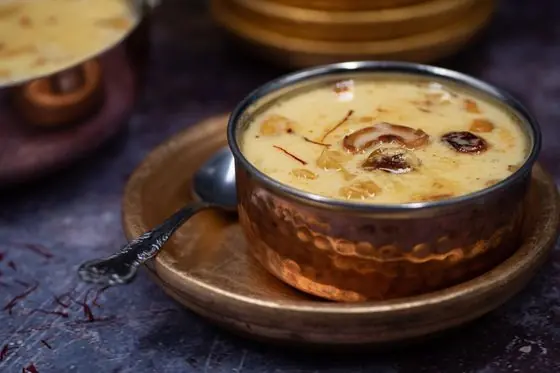
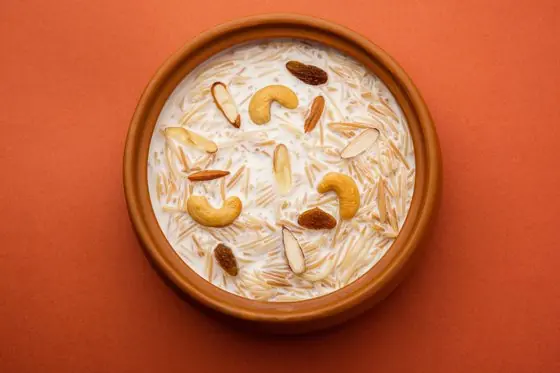
Rice ada in reduced milk, at a measured 100 millilitres
Recipes › Sweets and Payasam, Honestly
R113
Rice ada, jaggery and coconut milk — the sadya's other payasam, costed in full
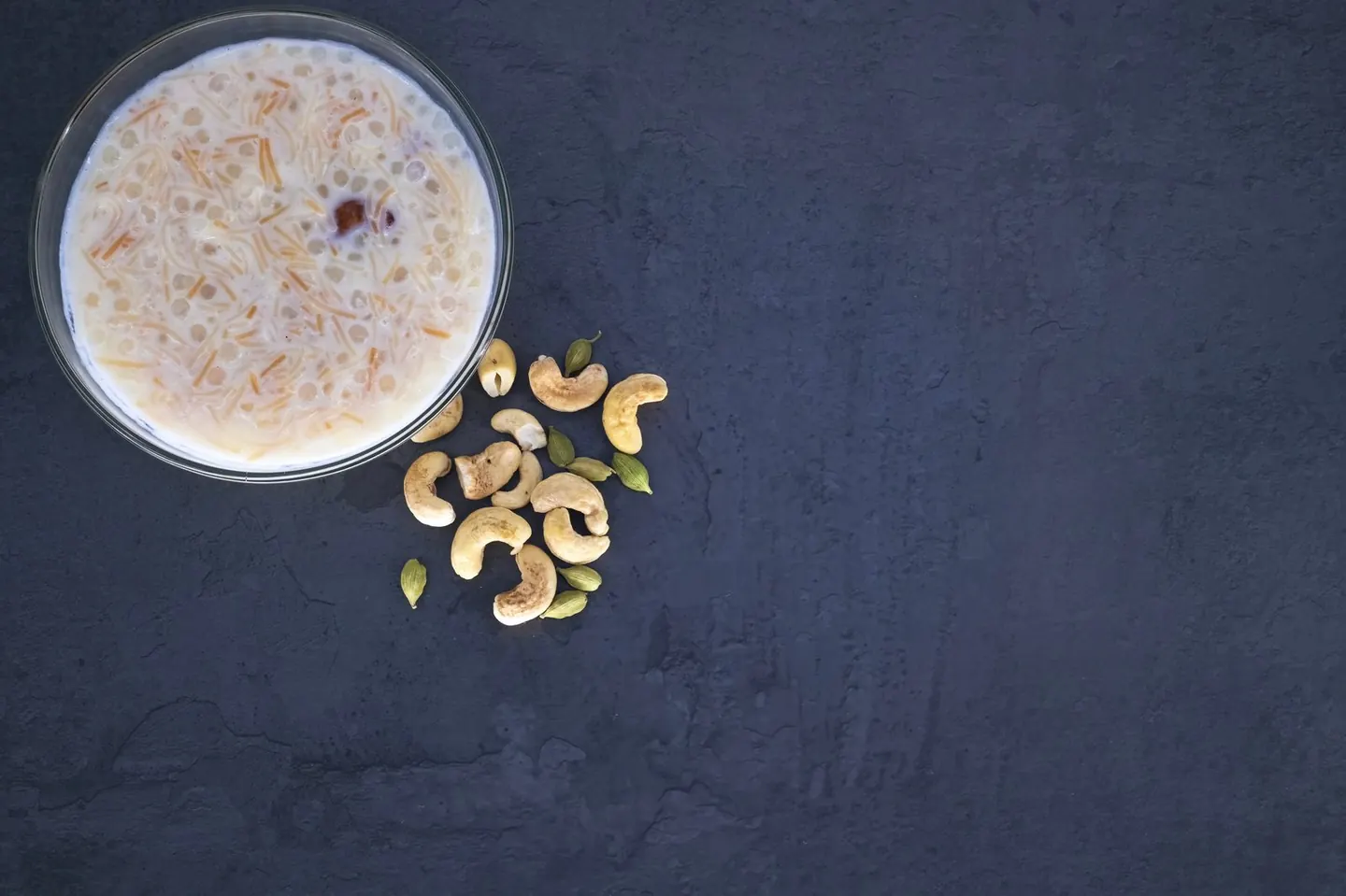
Photograph: Adobe Stock · representative of the dish
This is the centrepiece of the chapter, and the reason is that ada pradhaman is where a health cookbook usually starts lying. It is the richest thing on the Onam leaf, it is the item people go back for, and every claim you have read about making it lighter has been about substituting something. This recipe does not substitute anything. It reduces the jaggery to the point where the coconut can still be tasted through it, changes how the milk enters the pot, and then shows you the whole bill.
Before you start: Melt and strain the jaggery before anything else. Jaggery blocks carry grit, cane fibre and occasionally sand, and there is no way to remove it once the pradhaman is built. Have the three coconut milks measured into three separate jugs, labelled, in order.
Allergens: Milk.
Equipment: Wide heavy pan of at least 4 litres, or a bell-metal uruli; a 100 ml ladle; a flat-ended wooden spoon. Substitute: any wide heavy pan. The uruli is not romanticism — its heat inertia is why you can stir a jaggery reduction for an hour without it catching, and a thin pan will scorch this dish while you answer the door.
For jaggery, buy the darkest palm jaggery you can find — karuppatti from Kerala or Tamil Nadu, or Marayoor cane jaggery if palm is unavailable — and buy it dry-firm so it breaks cleanly rather than sticky-wet, which indicates high moisture and short life. Abroad, Latin American panela or piloncillo is essentially the same product and is often easier to find than Indian jaggery; dark muscovado works at 1:1 and reads more molasses-forward. Rice ada as in R112. For the coconut milk, three extractions from one large coconut (M08) is the whole technique; if you must use tins, use one 400 ml tin undiluted as the first milk, one diluted 1:1.5 with water as the second, and 400 ml of water with a spoonful of tinned milk as the third — the dish will be flatter and slightly cooked-tasting, and you will lose the spent gratings that belong in a thoran.
Blood sugar: 27 g of net carbohydrate a bowl, of which about 18 g is jaggery. Have it at the end of a meal, not alone, and specifically at the end of a meal containing a pulse — 50 g of legumes eaten with brown rice cut glycaemic response 22.9% below white rice in the one direct Indian trial, against 19.8% for the grain change alone, which is the closest thing this book has to a lever you can pull on the same day. If you take insulin or a sulfonylurea, a sadya is a day to monitor more closely than usual, and your clinician is the person to plan that with.
Blood pressure: 40 mg sodium a bowl. Irrelevant here, unlike almost everything else on the leaf.
Cholesterol: 11 g of saturated fat a bowl, and this is the honest headline of the recipe. That is half a day's allowance in 100 ml, and it is why the frequency argument matters more here than the portion argument. There is no version of this dish that is low in saturated fat, because coconut milk is 21 g of saturated fat per 100 ml and coconut milk is the dish. Anyone who tells you otherwise is selling you a thin pradhaman.
Palm jaggery → cane jaggery, 1:1. You lose the smoke and the mineral edge; the sweetness is more direct and slightly flatter.
Jaggery → dark muscovado or panela, 1:1. Muscovado is more molasses-forward and slightly wetter, so reduce the melting water to 100 ml.
Fresh coconut milk → tinned, as in the sourcing note. Flavour flatter and faintly cooked; you also lose the thengaappu that belongs in a thoran.
Ghee → coconut oil, 1:1. Marginally higher saturated fat and a cleaner coconut note; the fried slices brown less evenly.
Rice ada → aval (rice flakes), 80 g, added at step 5 without pre-boiling. This becomes a different and slightly quicker dish; it is thicker, less silky, and it will not hold overnight nearly as well.
Want it genuinely lower in saturated fat → build it on whole cow's milk instead of coconut milk and you have made R112 or R120. That is not a lighter ada pradhaman. It is another dish, and a good one.
At 25 servings you will need the milk of about three large coconuts through M08, and a pan of at least 8 litres. Above 25, split it across two pans — a single deep pot has too little evaporating surface and the jaggery stage takes twice as long and scorches.
Make it to the end of step 7 up to a day ahead and add the first milk on the day, which is genuinely better and is how large sadyas manage it. Fridge 3 days in a covered non-metal container; it thickens to a paste and needs 40–50 ml of warm second milk or water per portion stirred in. Freeze 2 months — freeze it before the first milk goes in, then thaw, warm gently and finish. Reheat to warm, never to a simmer, and stop as soon as it is hot to a fingertip.
Thick leftover pradhaman is very good spread thinly inside R115 Elayada in place of the coconut filling, or spooned over R102 steamed pazham nirachathu. Cold, it can be folded through thick curd at about one part pradhaman to three parts curd, which is a decent small dessert and stretches 100 ml across four people.
Split, with clear oil on top and grainy curds below: the first milk boiled, or went in while the pan was still on the heat. There is no repair. Off the heat, 30 seconds' wait, swirl not stir.
Bitter or burnt-caramel taste: the jaggery reduction at step 6 went too far or the base caught. Pour off without scraping and taste; if the bitterness is through the whole pot, it is not salvageable.
Grit between the teeth: the jaggery was not melted and strained. Step 2 is not optional.
Thin and pale, tasting mostly of sugar: the jaggery stage was cut short. Those 12–15 minutes are where the colour, the caramel and the coconut-and-jaggery marriage happen, and there is no shortcut.
Chalky ada: undercooked at step 4, and it will not soften afterwards.
Serve with
R112 Palada Payasam, at 100 ml each · R119 the sadya pickle set, which the tradition brings back after the payasam specifically to break the sweetness · R107 Sambharam or R111 Sulaimani to close, both of which do more for a heavy mouth than a sweet coffee · M08 coconut milk, three extractions
Tap a star to rate this recipe
The Kindle edition is on its way. Until it lands, the complete book — all 25 chapters and 137 recipes — is free to read here, and it stays free after.