 R112
R112Palada Payasam, Rebuilt
Rice ada in reduced milk, at a measured 100 millilitres
Recipes › Sweets and Payasam, Honestly
R116
Ripe jackfruit pradhaman, sweetened mostly by the fruit
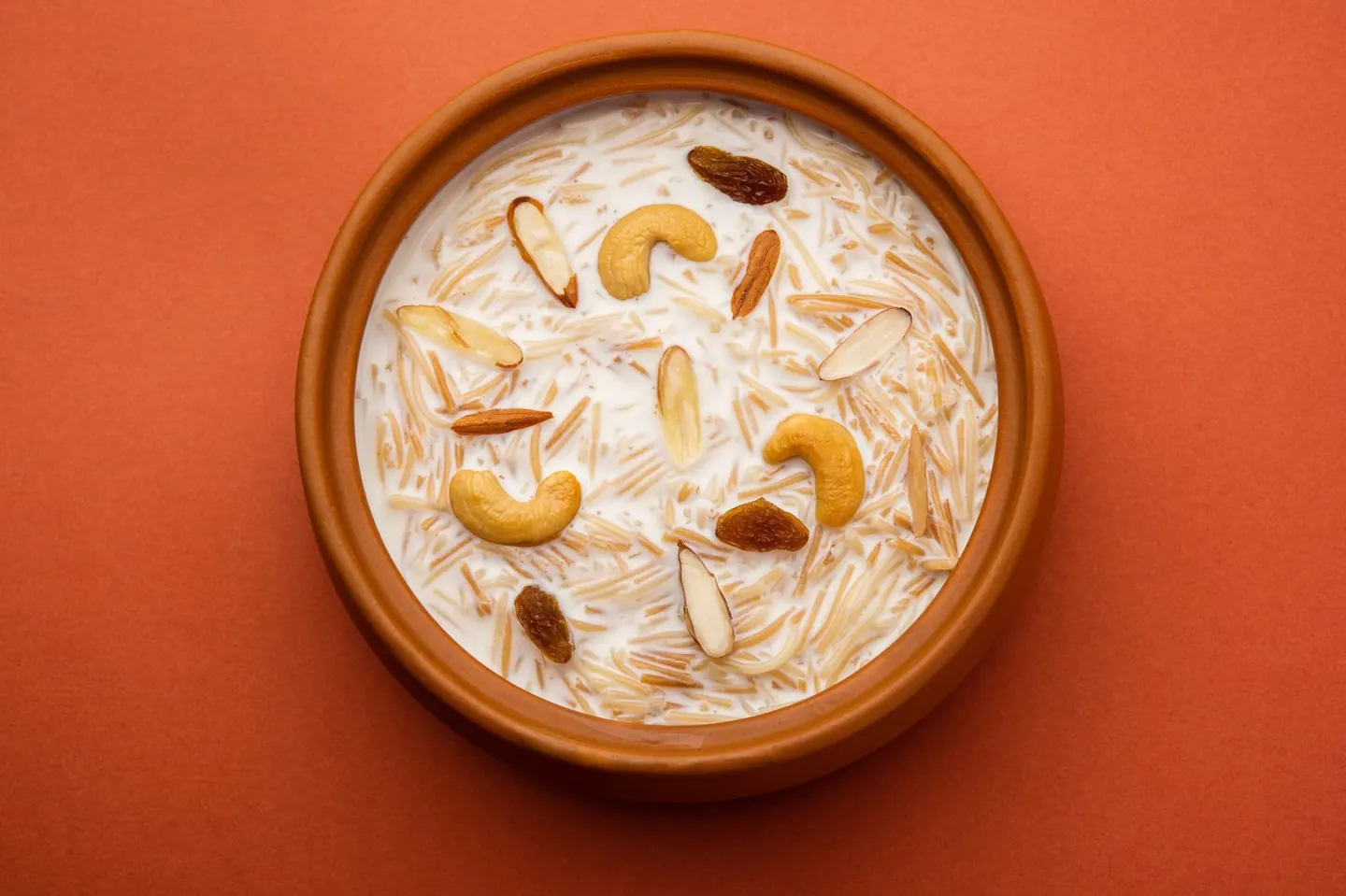
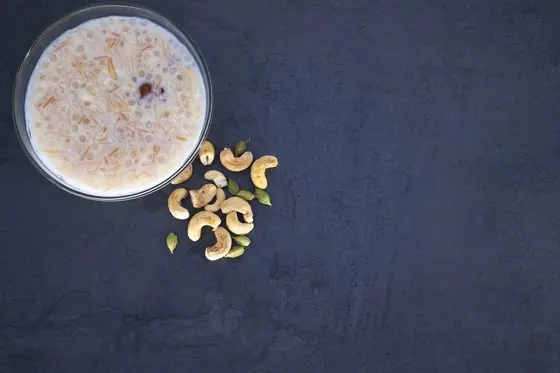
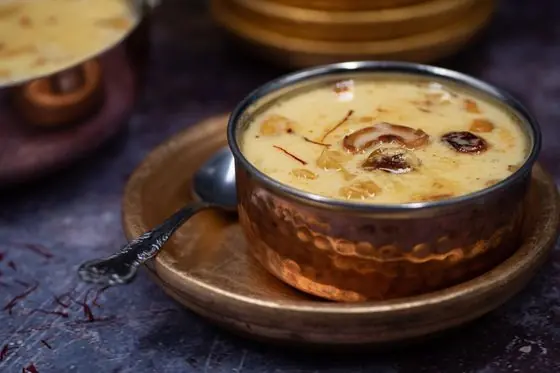
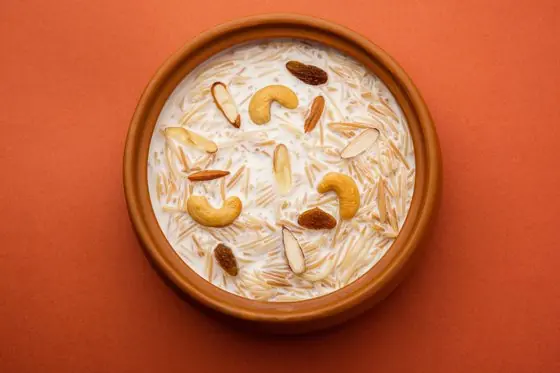
Photograph: Adobe Stock · representative of the dish
Ripe jackfruit is Kerala's most extravagant fruit and its most seasonal — for six weeks a year it is everywhere and free, and for the rest of the year it exists as chakka varatti, the dark jaggery-set preserve that lets you make this dish in December. Cooked down with coconut milk it turns almost meaty in flavour, a deep resinous sweetness that no other fruit does. This is the pradhaman to make if you are going to make one, because the fruit does most of the work and you can taste it doing it.
Before you start: Oil your hands and your knife before you go near a jackfruit. The latex is genuinely difficult to remove and it will glue your fingers to the handle. Coconut oil takes it off; soap does not.
Allergens: Milk.
Equipment: Heavy pan of at least 4 litres, or an uruli; a mixie or blender; a fine sieve for the jaggery; a 100 ml ladle. Substitute: mash the cooked jackfruit with a potato masher instead of blending, which gives a coarser, more fibrous pradhaman that several households prefer and which keeps more of the fruit's structure.
Ripe jackfruit is sold whole in season and, far more practically, as ready-cleaned bulbs in trays or frozen packets in Asian groceries year-round — frozen ripe jackfruit works completely and is what most readers should use, thawed and drained. Read the label on tins with real care. Tinned jackfruit in syrup is ripe fruit packed in added sugar, and if you use it you must drop the jaggery to about 30 g and rinse the fruit. Tinned jackfruit in brine is tender green jackfruit and it is a vegetable — it will not sweeten anything and it does not belong in this recipe. Chakka varatti, the jaggery-set jackfruit preserve, is the traditional out-of-season route: use 300 g of varatti in place of the fruit and all the jaggery, since the preserve already contains it. Jackfruit seeds are the best part of the fruit nutritionally and are almost always thrown away — 5.79 g protein and 8.63 g fibre per 100 g. Boil them, peel them, and put them in a thoran.
Blood sugar: 17 g of net carbohydrate a bowl, of which about 8 g is added jaggery and the rest is fruit sugar arriving with 3 g of fibre. That is the best profile of any sweet in this chapter, and it is still 17 g of net carbohydrate.
Blood pressure: 30 mg sodium. Note that jackfruit is a genuinely potassium-rich food, which for most readers is useful — but if you have chronic kidney disease, or take an ACE inhibitor, an angiotensin receptor blocker, a potassium-sparing diuretic or a potassium supplement, raising potassium intake is a conversation for your clinician rather than a general recommendation, and the same carve-out applies here as to M07.
Cholesterol: 7 g of saturated fat a bowl, all coconut milk. Skipping the first milk and using 400 ml of second takes it to about 4 g, and this dish carries that reduction better than R113 does because the fruit purée supplies body.
Fresh ripe jackfruit → frozen ripe jackfruit, same weight, thawed and drained. Effectively no loss.
Fresh fruit → 300 g chakka varatti and no jaggery at all. Darker, denser, more concentrated; this is the correct out-of-season version.
Tinned in syrup → 600 g drained and rinsed, and cut the jaggery to 30 g. Sweeter and flatter, with less of the resinous note.
Jaggery → cane jaggery or panela, 1:1.
Ghee → coconut oil for a vegan version, 1:1.
Ripe jackfruit → very ripe nendran banana, 600 g, which makes pazham pradhaman. Sweeter and softer, with a shorter reduction, 10–12 minutes; ripe nendran carries 24.95 g of available carbohydrate per 100 g against jackfruit's 14.01, so drop the jaggery to 50 g.
At 25 servings and above, do the fruit reduction in two pans. A deep single pot of jackfruit purée spits, catches and takes nearly twice as long, because the evaporating surface is what limits it.
The reduced fruit-and-jaggery base (end of step 5) keeps fridge 5 days and freezes 6 months — it is essentially chakka varatti, and making a large batch in season is the traditional and correct thing to do. Finished pradhaman keeps fridge 3 days. Freeze 2 months before the first milk goes in. Reheat gently, never at a simmer.
Thick leftover chakka pradhaman is the filling for R115 Elayada, for a chakka ada, or spread thinly on a dosa. It also does something very good stirred at one part to four into thick curd with a pinch of salt.
Bitter, with a burnt edge: the purée caught at step 5. Pour off without scraping and taste. Jackfruit purée is thick and catches faster than a milk or dal base.
Sticky, stringy, glue-like: over-blended. Fifteen seconds, coarse. The fibre is meant to be visible.
Tastes of jaggery rather than of jackfruit: the fruit was underripe, or you used tinned fruit in syrup without cutting the jaggery. Underripe jackfruit brings little sweetness and no resin, and there is nothing to do but add fruit.
Split and oily: the first milk boiled.
Hands glued together: jackfruit latex. Rub with coconut oil, then wash. Oil the knife before the next fruit.
Serve with
As one of the two sadya payasams, alongside R112 or R120 · R119 the sadya pickle set afterwards · R111 Sulaimani · M08 coconut milk, three extractions
Tap a star to rate this recipe
The Kindle edition is on its way. Until it lands, the complete book — all 25 chapters and 137 recipes — is free to read here, and it stays free after.