 R015
R015Matta Rice, Properly Cooked
Kerala's parboiled red rice, by absorption and by draining
Recipes › Rice, Grains and the Grain Question in Practice
R019
One pot, 360 g of vegetables, and the aromatic rice of Wayanad
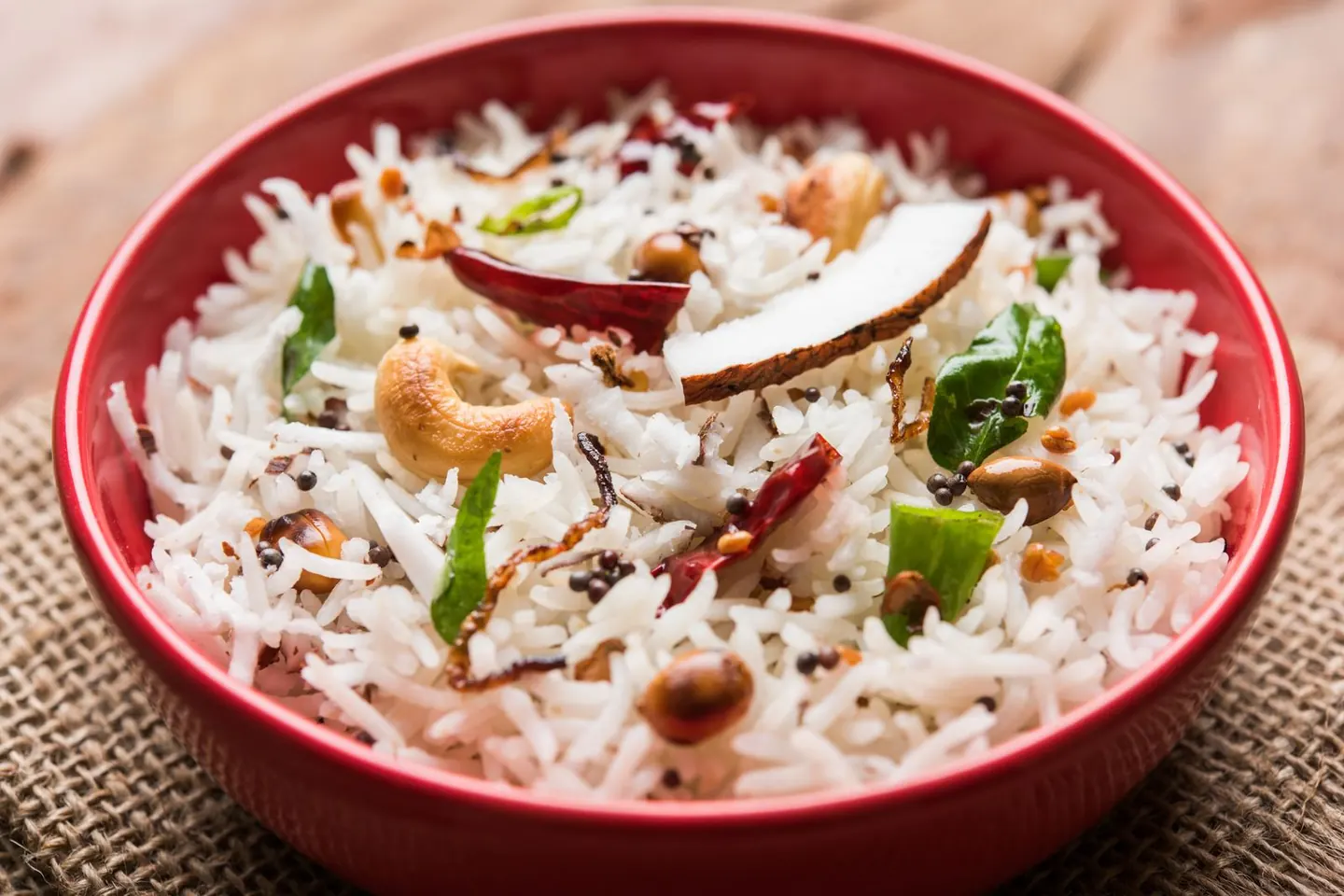
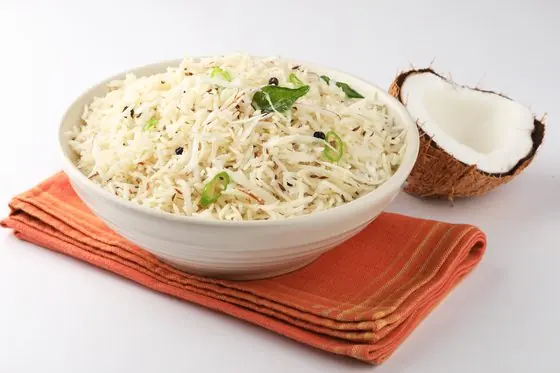
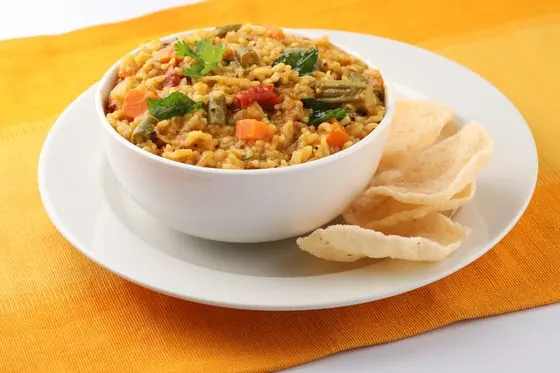
Photograph: Adobe Stock · representative of the dish
A pulao is the easiest dish in this chapter to turn into a plate rather than a pile, because the vegetables cook in the same pot and no one thinks it strange. The trick is to cut them so they survive: batons and thick coins rather than dice, going in at the same time as the rice, so they are cooked through and still distinct when the lid comes off. Green peas do double duty here as vegetable and as the pulse the book asks for on every rice plate, at 120 g cooked for four.
Before you start: Cut all the vegetables before you light the flame, and cut them the right size — carrots in 4 cm batons the thickness of a pencil, beans in 3 cm lengths. Diced vegetables disintegrate in a covered pot in 14 minutes.
Allergens: Milk, tree nuts (cashew).
Equipment: Heavy 3-litre pan with a tight lid. Substitute: a pressure cooker at 2 whistles then 3 minutes on the lowest flame; the vegetables come out softer than ideal.
| Energy | 313 kcal |
| Protein | 8.2 g |
| Fibre | 6.1 g |
| Net carbohydrate | 51.1 g |
| Total carbohydrate | 57.2 g |
| Sugars | 6.7 g |
| Fat | 6.7 g |
| Saturated fat | 3.7 g |
| Sodium | 240 mg |
From ICMR-NIN IFCT 2017 and USDA FoodData Central. Per-serving figures stay the same when you scale.
See R017 for jeerakasala. Frozen green peas are entirely fine here and often sweeter than fresh ones that have travelled; add them in the last 5 minutes rather than at the start. Where fresh green beans are poor, use 120 g of frozen French beans, or 150 g of cauliflower in small florets, which holds up better than either.
Blood sugar: 51.1 g of net carbohydrate for a one-pot main is moderate, and 6.1 g of fibre and 8.2 g of protein alongside it slow the whole thing down. The peas are doing real work here: 120 g of green peas is more than the 50 g of cooked pulse this book asks for on a rice plate.
Blood pressure: 240 mg per portion, and the carrots contribute a surprising 20 mg of it. Halve the M07 for about 170 mg.
Cholesterol: 3.7 g of saturated fat, most of it from 12 g of coconut oil across four people. Swap to gingelly oil for about 1.6 g and a nuttier, less sweet pot.
Jeerakasala → matta. Increase water to 500 ml and cooking time to 20–25 minutes; add the vegetables at the 10-minute mark instead of the start, or they overcook.
Green peas → 120 g cooked vanpayar or kadala, folded through at step 8. Fibre goes up by about 2 g a portion and the dish becomes noticeably more filling.
Coconut oil → gingelly (sesame) oil. Saturated fat halves; the aroma turns nutty and slightly darker, which suits this dish well. (Allergen: this swap introduces sesame.)
No cashews → 16 g roasted peanuts, or nothing at all. Without them the pulao is leaner and less festive. (Allergen: this swap introduces peanuts.)
The vegetables can be cut a day ahead and kept in a closed box in the fridge. Fridge 24 hours, chilled within 1 hour of cooking. Freeze 1 month; the carrots come back a little softer and the peas are unaffected. Reheat once, covered, with a tablespoon of water per portion, until steaming hot throughout.
Cold pulao with a spoonful of curd and a squeeze of lime is a decent packed lunch. Or thin it with 200 ml water and a pinch of pepper into a rough vegetable kanji.
Vegetables mushy, rice fine: they were diced rather than cut in batons, or the peas went in at the start. Batons, and peas at 9 minutes.
Rice cooked, vegetables still hard: the carrot was cut too thick. Pencil thickness is the target; anything above 1 cm needs a 5-minute head start in the pan.
Watery base: too much water for the vegetables' own moisture. Frozen vegetables release liquid, so cut the water to 340 ml when you use them.
Serve with
R081 Moru Curry · R087 Moru Kachiyathu · R083 Kumbalanga Pulissery · a pachadi from Chapter 23
Tap a star to rate this recipe
The Kindle edition is on its way. Until it lands, the complete book — all 25 chapters and 137 recipes — is free to read here, and it stays free after.