 R024
R024Meen Vevichathu
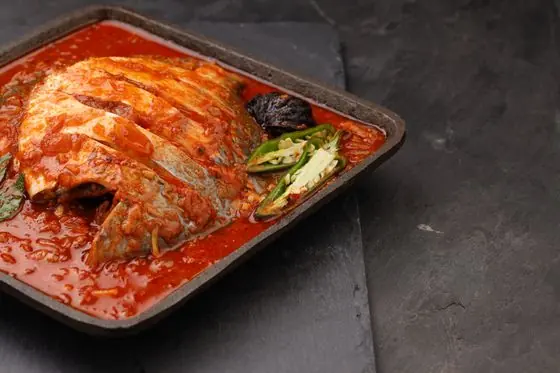
Kudampuli fish curry, the Kottayam Syrian Christian way
R028
The real Kerala fish fry, with the oil weighed
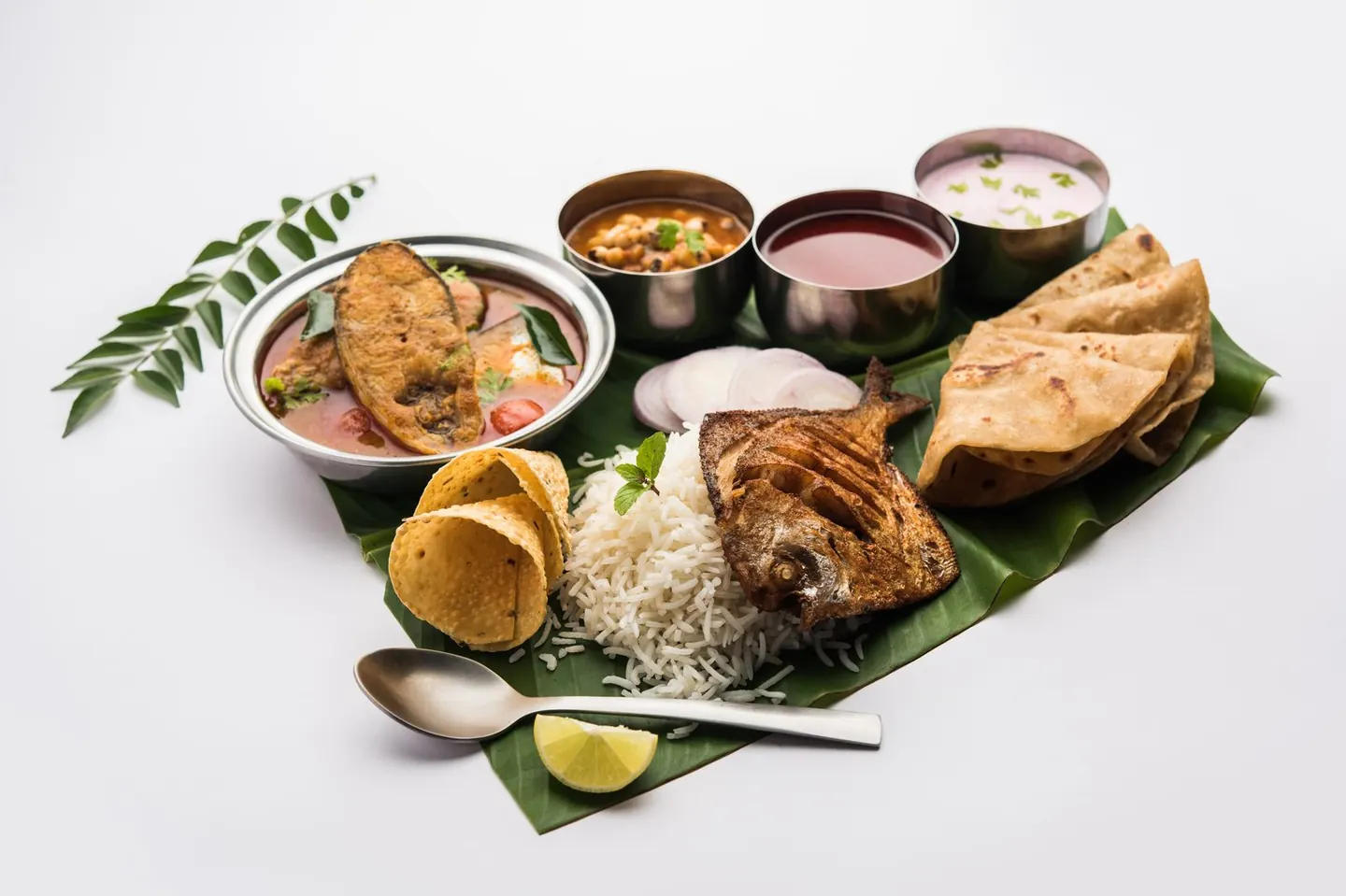
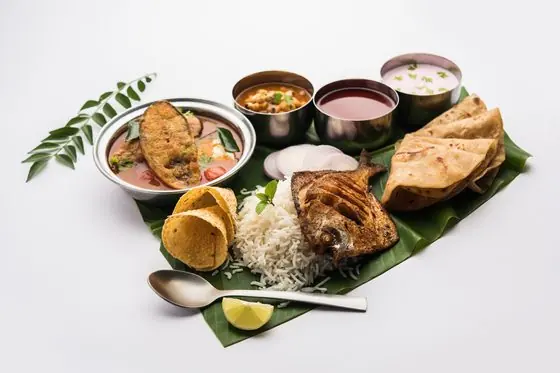
Photograph: Adobe Stock · representative of the dish
Plan ahead: including 20 minutes marinating — required.
A proper Kerala fish fry cannot be made without oil. The oil is the cooking medium — it is what sets the rub into a shell, and no oven and no air fryer reproduces it. Books in this genre usually solve that problem by leaving the dish out, or by printing a "healthy fish fry" that is a baked fish wearing a false name. This book gives you both versions, measured, and lets you decide. The honest figure is 235 kcal and 12 g of fat a portion, which is not a disaster; it is a Thursday.
Before you start: Weigh the empty pan. Weigh the oil into it. Write both numbers down. At the end you will pour the oil back out and weigh it again, and the difference is what went into the fish. This is the whole reason the recipe exists, and skipping it turns it back into a guess.
Allergens: Fish. Gluten (wheat) — only if your asafoetida is compounded with wheat flour, as most brands are (it arrives with M05).
Equipment: Heavy shallow pan, 26–28 cm — a cheena chatti is traditional but its curved base needs more oil, so a flat frying pan is the better choice for a measured fry. A digital scale is not optional in this recipe. Substitute: a cast-iron skillet is ideal; non-stick works and needs slightly less oil.
| Energy | 235 kcal |
| Protein | 30 g |
| Fibre | 1 g |
| Net carbohydrate | 2 g |
| Total carbohydrate | 3 g |
| Sugars | 0 g |
| Fat | 12 g |
| Saturated fat | 9 g |
| Sodium | 330 mg |
From ICMR-NIN IFCT 2017 and USDA FoodData Central. Per-serving figures stay the same when you scale.
As R027 for the fish. On the oil: coconut oil is used here because it is the flavour of a Kerala fish fry and nothing else tastes like it. If you would rather not, groundnut and rice bran oil both have the high smoke point this needs and run 19% and 24% saturated against coconut's 91% — the fry is excellent and it is no longer a Kerala fish fry. Whichever you choose, use it once. Do not top up old oil with fresh, and discard oil that has darkened, thickened, foams or smells acrid; ICMR-NIN's 2024 guidance advises against reheating and reusing frying oil.
Blood sugar: 2 g of net carbohydrate. Nothing here moves glucose.
Blood pressure: 330 mg. As R027 — 2 g of salt instead of 3 lands at about 260 mg.
Cholesterol: 9 g of saturated fat is the honest cost, and it is the highest single-item saturated-fat figure in this chapter after the coconut-milk curries. Frying in groundnut or rice bran oil instead takes it to about 3 g while keeping every calorie, which is the most useful single change available here if LDL-C is your concern. You lose the coconut aroma. That is the trade, stated plainly.
Groundnut or rice bran oil → saturated fat falls from 9 g to about 3 g per serving; total energy unchanged. Not a Kerala fish fry any more, and a very good fried fish. (Allergen: this swap introduces peanuts.)
Shallow-fry in 20 g of oil in a wide non-stick pan → about 5 g of oil per serving and roughly 190 kcal. Genuinely between the two versions; the crust is patchy and the skin does not crisp evenly.
Sardine instead of mackerel → oilier, cooks in 5–6 minutes total, takes up slightly less oil because there is less time in the pan.
Rice-flour dredge before frying → the classic Malabar move. Crisper, and it takes up roughly 5 g more oil across the four fish, plus about 3 g of carbohydrate a serving.
Note what the middle column does and does not do: doubling the fish does not double the oil in the pan, because the pan needs a depth rather than a volume. It does roughly double the oil taken up, which is the number that reaches your plate. Weigh it every time.
Fry to order. Fridge 2 days, and it will not be crisp again. Freeze 1 month rubbed and raw, never fried. Reheat on a rack in a 200°C (390°F) oven for 5–6 minutes, which recovers perhaps two-thirds of the crust.
Break the fried fish into a hot kudampuli gravy from R024 for ten minutes off the heat — a Kerala household trick that turns yesterday's fry into a curry, and better than either the fry or the curry alone.
Fish drank the oil and came out greasy: the pan was not hot enough, or the fish went in wet, or the pan was crowded and the temperature crashed. Two fish at a time, dry, and test the oil first.
Crust came off in the pan: the fish was moved before it released, or the rub was too wet.
Oil spat everywhere: water on the fish. Pat dry, and use a splatter screen rather than a lid, which traps steam and softens the crust.
Burnt outside, raw at the bone: flame too high. Medium-high, and turn once.
Serve with
R015 Matta Rice · R020 Kanji · R081 Moru Curry · R053 Vanpayar Thoran
Tap a star to rate this recipe
The Kindle edition is on its way. Until it lands, the complete book — all 25 chapters and 137 recipes — is free to read here, and it stays free after.