 R024
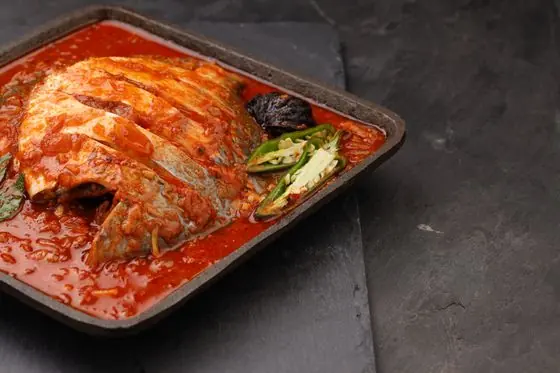
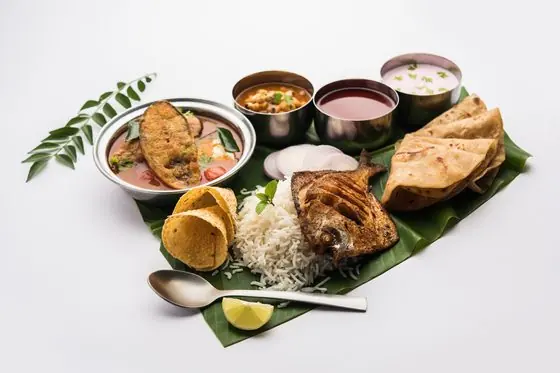
R024Meen Vevichathu
Kudampuli fish curry, the Kottayam Syrian Christian way
R034
Green mussels roasted dry with pepper, fennel and coconut
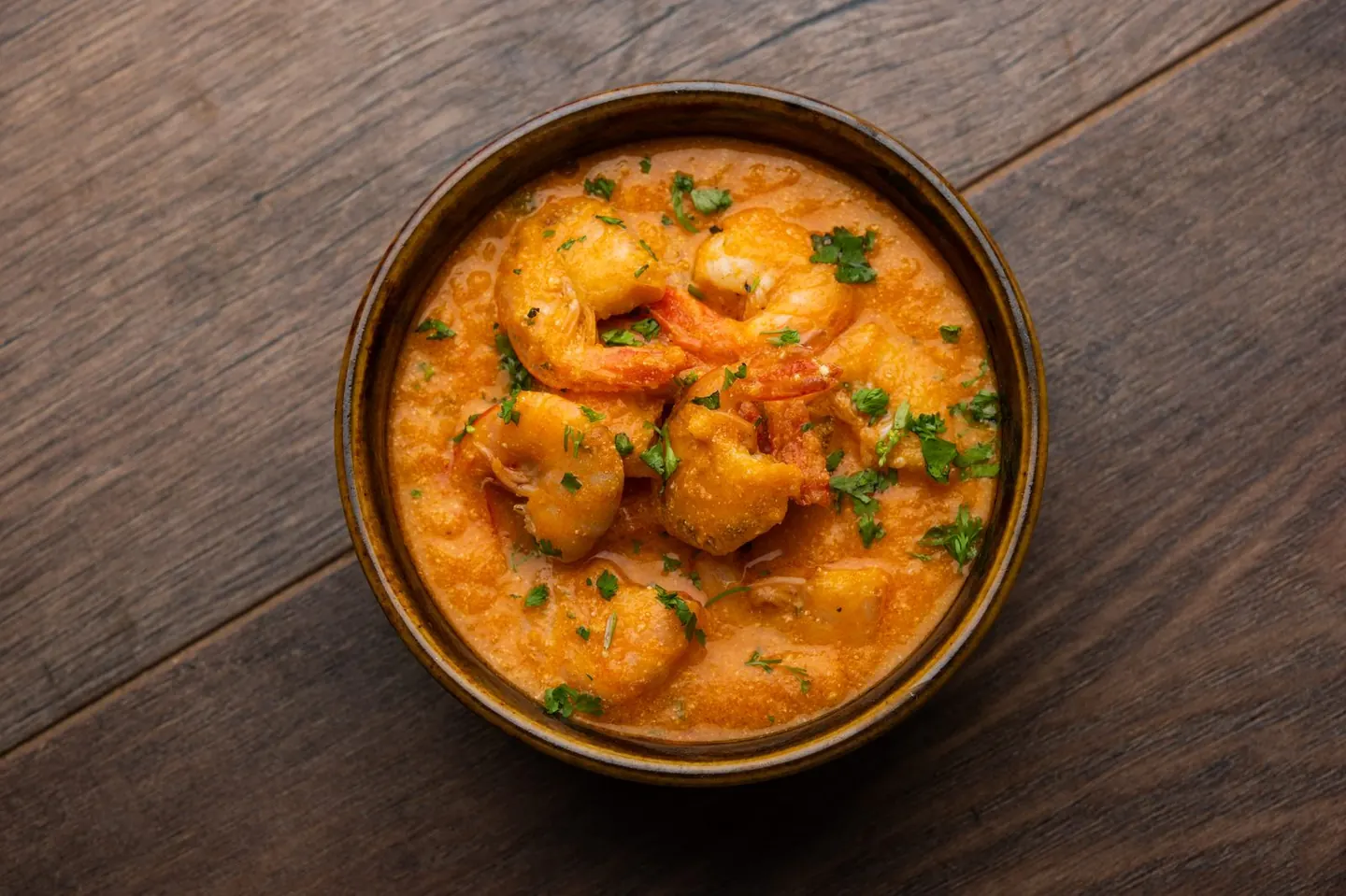
Photograph: Adobe Stock · representative of the dish
Kallummakkaya is a Malabar specialism, and Kozhikode and Kannur do more with the Asian green mussel than anywhere else in India: porichathu, ularthiyathu, and the extraordinary arikkadukka, stuffed with spiced rice batter and fried in the shell. This is the everyday one. Mussel meat is the leanest protein in this chapter at 12.14 g protein and 0.98 g fat per 100 g, and it takes pepper and fennel the way beef does.
Before you start: If you are starting from mussels in the shell, you need about 2 kg for 600 g of meat. Scrub them, pull the beards off, and discard any that stay open when tapped. Steam them in a covered pot with 100 ml water over a high flame for 4–6 minutes, until the shells have opened; discard any that have not. Pick the meat out and strain the liquor — a tablespoon of it goes into the roast at step 4 and is worth more than any stock.
Allergens: Molluscs. Gluten (wheat) — only if your asafoetida is compounded with wheat flour, as most brands are (it arrives with M05).
Equipment: Wide heavy pan, 26–28 cm; a large pot with a lid for steaming the mussels open. Substitute: none needed, but a wide pan is essential to the roast.
| Energy | 212 kcal |
| Protein | 21 g |
| Fibre | 4 g |
| Net carbohydrate | 10 g |
| Total carbohydrate | 14 g |
| Sugars | 5 g |
| Fat | 10 g |
| Saturated fat | 7 g |
| Sodium | 440 mg |
From ICMR-NIN IFCT 2017 and USDA FoodData Central. Per-serving figures stay the same when you scale.
Asian green mussel (Perna viridis) is the Kerala species and is sold frozen, shelled and cooked in most South and Southeast Asian groceries — which is convenient and works, though the meat is softer and needs 2 minutes less. In the US, UK and Australia: blue mussels (Mytilus edulis) are everywhere, cheap and excellent, and are the substitute this recipe expects; they are smaller, so allow 2.2 kg in the shell. New Zealand greenshell mussels are the closest relative and are widely sold frozen on the half-shell. In the Gulf: frozen green mussel from India and Thailand. Frozen shelled mussel meat is genuinely fine here because the roast rebuilds the texture; rinse it and pat it very dry, or it will steam.
Blood pressure: 440 mg is the highest figure in this chapter and none of it is added salt — it is the shellfish. That is worth knowing rather than hiding: mussels, oysters and clams are naturally saline foods. If you are working to a 2,000 mg day, this dish is 22% of it, and the answer is to pair it with genuinely low-sodium dishes rather than to try to season it down. Rinsing the picked meat in fresh water before step 1 removes a little, perhaps 40–60 mg a serving, at the cost of some flavour.
Blood sugar: 10 g of net carbohydrate, mostly shallot and tomato.
Cholesterol: 7 g of saturated fat, from the oil and the coconut slivers between them. Sesame oil for the 12 g takes it to about 5 g.
Blue mussels → as the sourcing note. Smaller, sweeter, slightly less mineral, and about 2 minutes faster.
Clams (elambakka) → 600 g picked meat, 3–4 minutes at step 5. Sweeter and sandier; rinse hard.
Prawns or squid → both work in this masala; see R033 and R037 for timings. (Allergen: this swap introduces crustaceans.)
No coconut slivers → 30 g dried coconut chips at step 6. Less crunch.
Steam and pick the mussels ahead: fridge 24 hours in their strained liquor. Finished dish: fridge 2 days. Freeze 1 month; the meat firms up considerably. Reheat dry in a hot pan, 2–3 minutes only.
Chop and fold through rice, or into an appam batter as a savoury filling, or pile onto toast. Cold mussel roast in a pathiri with raw onion is a Malabar snack and a very good one.
Tough and squeaky: the mussels were held at a simmer, or they were cooked twice — steamed open, then cooked again for 8 minutes. Dry pan, high flame, short time.
Watery and grey: the meat went in wet. Pat it dry on a cloth, not on paper.
Gritty: the mussels were not scrubbed, or the liquor was added unstrained. Strain through muslin.
Too salty: you added salt. This recipe told you not to.
Serve with
R015 Matta Rice · R001 Appam · R065 Cheera Thoran · R068 Kumbalanga Olan
Tap a star to rate this recipe
The Kindle edition is on its way. Until it lands, the complete book — all 25 chapters and 137 recipes — is free to read here, and it stays free after.