 R040
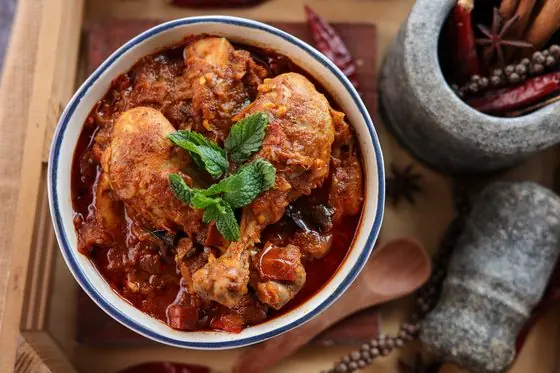
R040Nadan Kozhi Curry
The everyday country chicken curry
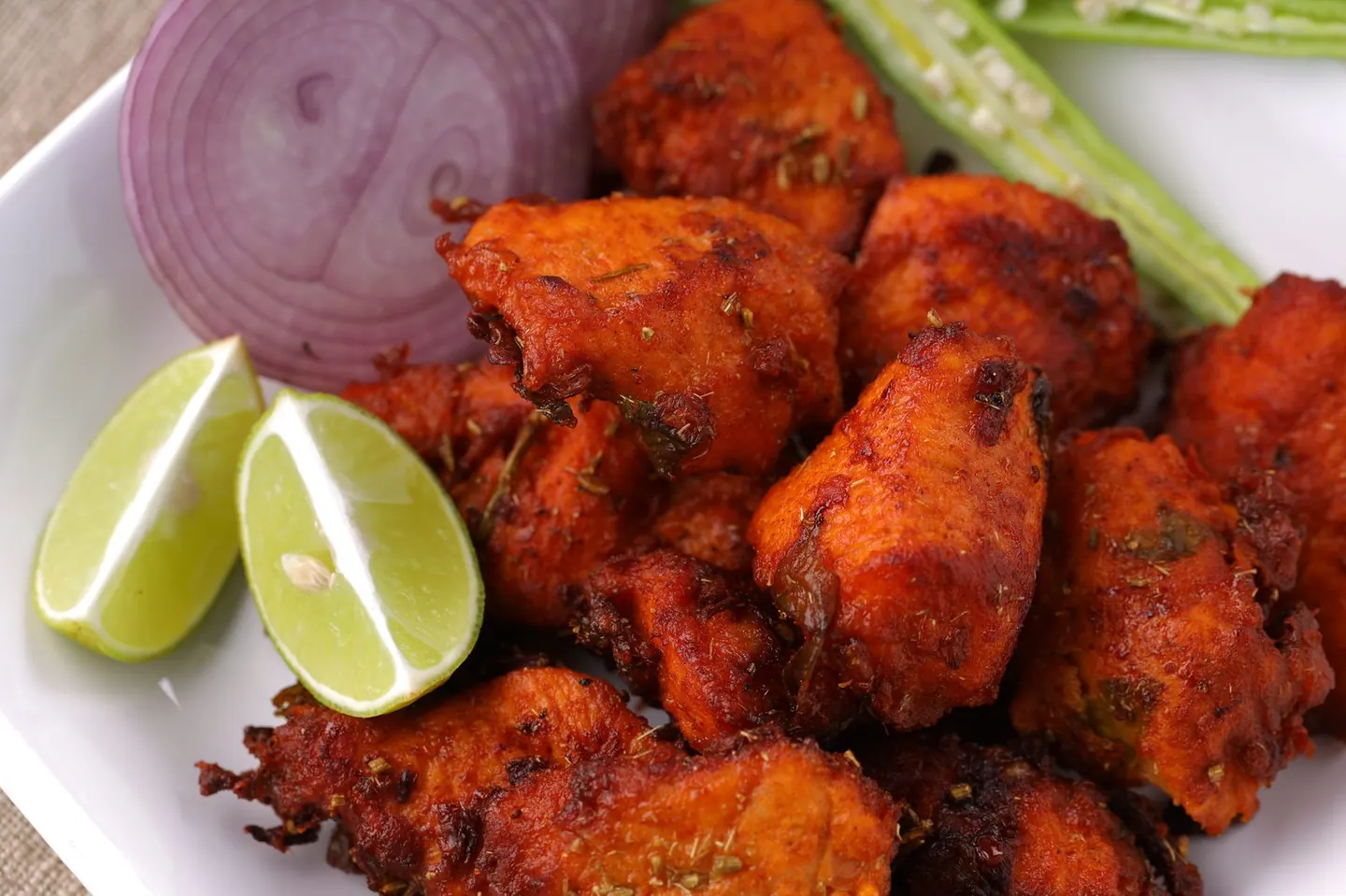
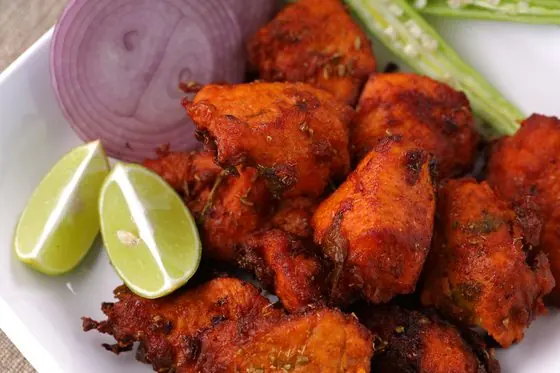
Photograph: Adobe Stock · representative of the dish
Ularthiyathu — "dry-fried, roasted down" — is a technique, not a recipe, and it is the best one Kerala has for making a small quantity of meat taste like a lot. The pieces darken, the masala clings, and the coconut slivers toast to something between a nut and a crisp. Chicken takes to it as well as beef does and cooks in a quarter of the time, which makes this the weeknight version of the chapter's centrepiece.
Before you start: Cut the coconut into thin slivers about 2 cm long — thenga kothu — rather than grating it. Grated coconut disappears into the masala; slivers stay as texture, which is the whole point.
Allergens: None of the major allergens as the recipe is written. Sesame or peanuts — whichever of the two oils you use (it reaches the dish through M16).
Equipment: Heavy 28 cm pan or cheena chatti; flat wooden turner (chattuvam). Substitute: a thin pan will scorch the coconut before the chicken dries. Cast iron is ideal.
| Energy | 372 kcal |
| Protein | 28 g |
| Fibre | 5 g |
| Net carbohydrate | 8 g |
| Total carbohydrate | 13 g |
| Sugars | 4 g |
| Fat | 25 g |
| Saturated fat | 13 g |
| Sodium | 330 mg |
From ICMR-NIN IFCT 2017 and USDA FoodData Central. Per-serving figures stay the same when you scale.
Slivers need fresh coconut, or at least frozen grated coconut pressed into a block and sliced, which is a poor second. Desiccated coconut cannot be slivered and will burn. If no fresh coconut is available, use 40 g of coarsely chopped raw cashews instead: different, good, and about 2 g less saturated fat per serving.
Blood sugar: 8 g of net carbohydrate. A dry roast is glycaemically the safest way to eat meat, and its danger is entirely in what it makes you want to eat it with — parotta, usually. Matta rice at 150 g, or better, R004 puttu.
Blood pressure: 330 mg. Down to 3 g of M07 gives about 295 mg and the pepper covers it.
Cholesterol: 13 g of saturated fat, of which about 7 g is the 15 g of coconut each serving carries and about 1 g the oil. Cutting the slivers to 40 g takes about 2.5 g out per serving and costs the dish some of its texture. Halving the oil saves 0.6 g and costs you the browning; take it out of the coconut, not the oil.
Beef → see R048, which is this technique done properly with beef and 90 minutes.
Cashews for coconut slivers → 40 g. Less saturated fat, more monounsaturated, and a sweeter roast. (Allergen: this swap introduces tree nuts (cashew).)
Add 200 g of green plantain in 2 cm dice at step 4 → stretches to five servings, adds fibre, and is what a Travancore household does when the meat is short.
Boneless thigh → 500 g, and step 2 drops to 10–12 minutes. Convenient, and the dish loses the gelatine from the bones that helps the masala cling.
Complete step 2 up to a day ahead and do the roast fresh — this is the best way to make it on a weeknight. Fridge 3 days. Freeze 2 months; texture survives well because there is no emulsion. Reheat in a dry pan, 3–4 minutes, until it sizzles.
Chop small, fold into an omelette, or stir through R061 chana masala. Cold, in a pathiri, with raw onion and lime, it is better than the first serving.
Coconut burnt, chicken still wet: the slivers went in before the liquid had gone. Step 2 must finish before step 3 starts.
Masala pasty rather than crusted: the flame was too low at step 5, or the pan was crowded. Roast in two batches.
Chicken dry and shredding: 5 minutes too long at step 5. The cue is the sound, not the clock.
Serve with
R004 Puttu · R015 Matta Rice · R059 Sambar · R107 Sambharam
Tap a star to rate this recipe
The Kindle edition is on its way. Until it lands, the complete book — all 25 chapters and 137 recipes — is free to read here, and it stays free after.