 R063
R063Cabbage Thoran
The master thoran: shredded cabbage, crushed coconut, turmeric
Recipes › Vegetables: The Half of the Plate
R080
Ishtu: vegetables poached in coconut milk with whole spices, for appam
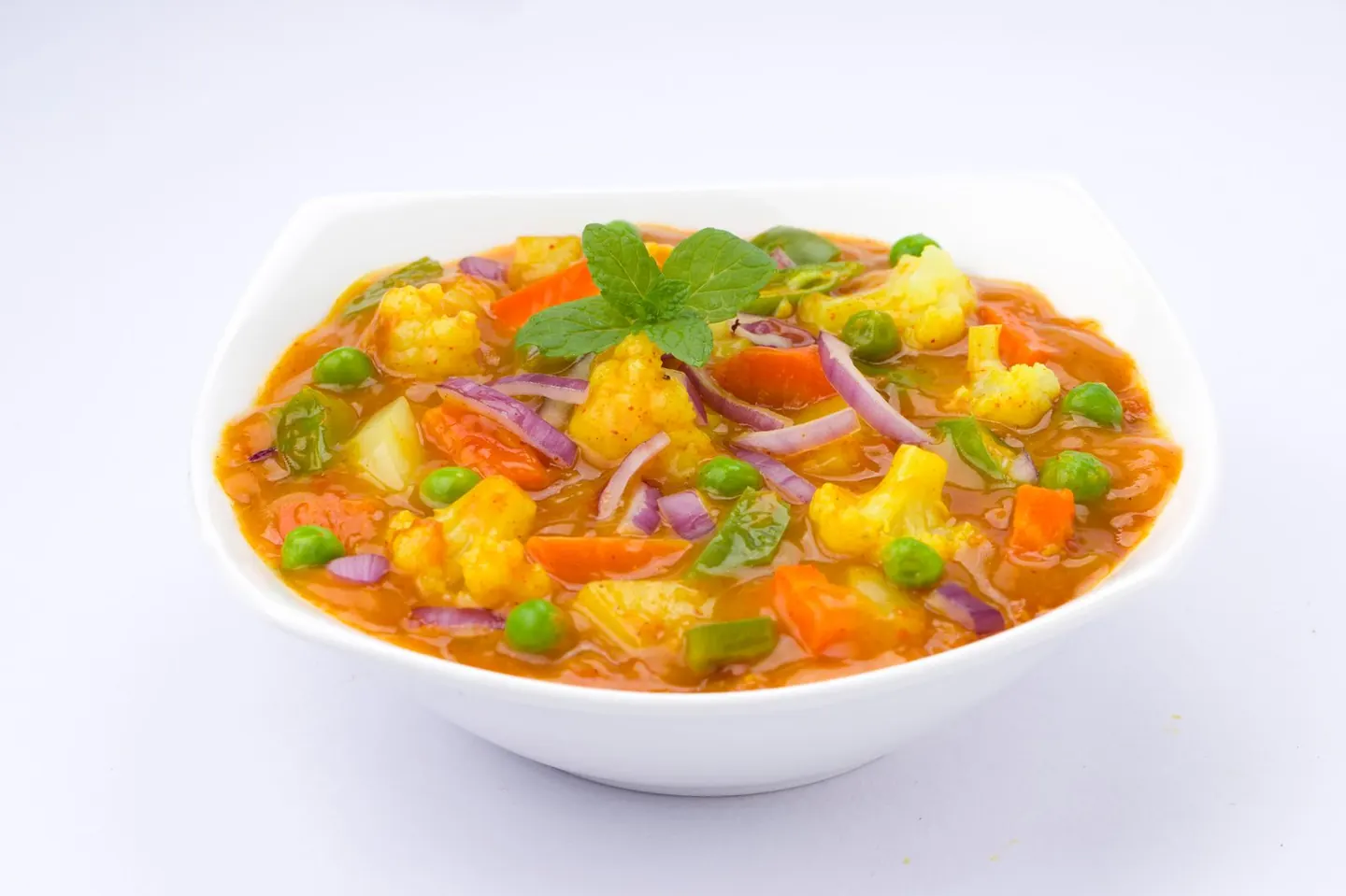
Photograph: Adobe Stock · representative of the dish
A Kerala stew is the mildest dish in the state and one of the most exacting, because there is nothing in it to hide behind: no chilli powder, no tomato, no roasted anything. Whole spices, shallots, ginger, green chilli, vegetables, coconut milk, and a discipline about heat. It is also the traditional partner to appam, and the pair of them together is the best argument in Kerala cooking for eating a fermented rice pancake at all — because the stew brings the vegetables and the fat that slow the meal down.
Before you start: Have the first milk measured out in a jug beside the hob, so that when the pan comes off the heat you are not looking for it.
Allergens: None of the major allergens.
Equipment: Heavy pan or uruli, 26 cm, with a lid. Substitute: any heavy saucepan. A thin pan runs hot spots that will boil the first milk before you notice.
| Energy | 228 kcal |
| Protein | 4.0 g |
| Fibre | 7.2 g |
| Net carbohydrate | 18.3 g |
| Total carbohydrate | 25.5 g |
| Sugars | 8.2 g |
| Fat | 15.4 g |
| Saturated fat | 13.2 g |
| Sodium | 250 mg |
From ICMR-NIN IFCT 2017 and USDA FoodData Central. Per-serving figures stay the same when you scale.
This is the most forgiving recipe in the chapter for a diaspora reader, because a stew accepts any firm vegetable: carrot, beans, peas, cauliflower, potato, courgette, sweet potato, leek. Potato is what most Kerala households actually use and it is entirely traditional in a stew even though it is a late arrival to the cuisine — swap it in for the plantain at 150 g if you like, and note that available carbohydrate barely moves. Fresh coconut milk is worth the twenty minutes here more than in almost any other dish, because the graded extractions are the technique; if you use tinned, take 100 ml undiluted for the first milk and dilute 130 ml with 220 ml water for the second. Do not use the sweetened coconut milk sold for cocktails.
Blood sugar: 18.3 g net carbohydrate for a 250 g serving, a third of it from the plantain. If you eat this with appam, count the appam as your grain and the stew as vegetables plus a little more starch, and stop at two appams rather than four. Three appams are three servings of rice, whatever the batter did overnight.
Blood pressure: 250 mg sodium, or about 190 mg with M07. A stew needs very little salt because the whole spices, ginger and chilli are carrying the flavour.
Cholesterol: 13.2 g saturated fat per serving is the highest figure in this chapter, and it is worth being straightforward about. Coconut milk is the largest saturated-fat source in Kerala home cooking, and coconut oil raises LDL cholesterol relative to seed and nut oils in pooled trials (Neelakantan et al., 2020). Two honest options: halve the first milk to 50 ml and add 50 ml of second, which takes saturated fat to about 9 g; or keep it as written and make this the coconut-milk dish of that week rather than that day. This book keeps coconut milk in the repertoire and asks you to place it deliberately.
Green plantain → 150 g potato. Entirely traditional, marginally more carbohydrate, softer.
Add 150 g cubed chicken thigh at step 3 → this is kozhi ishtu, protein rises about 8 g per serving, and it stops being a vegetable dish.
Add 120 g green peas at step 3 → a pulse on the plate, about 2 g more protein and 2 g more fibre per serving.
First coconut milk → 30 g cashews blended with 100 ml water. Saturated fat falls to about 6 g per serving, monounsaturated rises, and the dish becomes sweeter and slightly gritty. A real option for a reader watching LDL closely. (Allergen: this swap introduces tree nuts (cashew).)
As with olan, the first milk does not scale linearly: a bigger pan holds more heat, so use proportionally less and take the pan off the flame a full minute earlier.
Make to step 4 up to 1 day ahead and refrigerate; add the first milk on reheating. Fridge 2 days. Do not freeze — the emulsion breaks and the vegetables go to pieces. Reheat on the lowest flame to just steaming, never at a simmer.
Blend cold stew smooth with 150 ml of water for a vegetable soup that is better than most. Or drain the vegetables, chop them, and fold them into a thoran with 30 g of grated coconut.
Oily surface with grainy curds beneath: the first milk boiled, or the finished stew was reheated too hard. There is no repair.
Brown, not pale: the shallots or the whole spices coloured at steps 1 and 2. Still tasty, no longer a stew.
Thin and watery: too much second milk for the quantity of vegetable, or the vegetables were watery ones. Lift the vegetables out, reduce the liquid uncovered for 4–5 minutes, and return them before the first milk goes in.
Harsh and peppery: the peppercorns were crushed too fine. Bruise them, do not grind them.
Serve with
R001 Appam · R015 Matta Rice · R007 Thattu Dosa · R064 Beans Thoran
Tap a star to rate this recipe
The Kindle edition is on its way. Until it lands, the complete book — all 25 chapters and 137 recipes — is free to read here, and it stays free after.