 R089
R089Kerala Kitchen Salad
Raw vegetables the way a Kerala kitchen cuts them
Recipes › Salads, Pachadis, Chutneys, Podis and Pickles
R099
The raita family, with a Kerala tempering
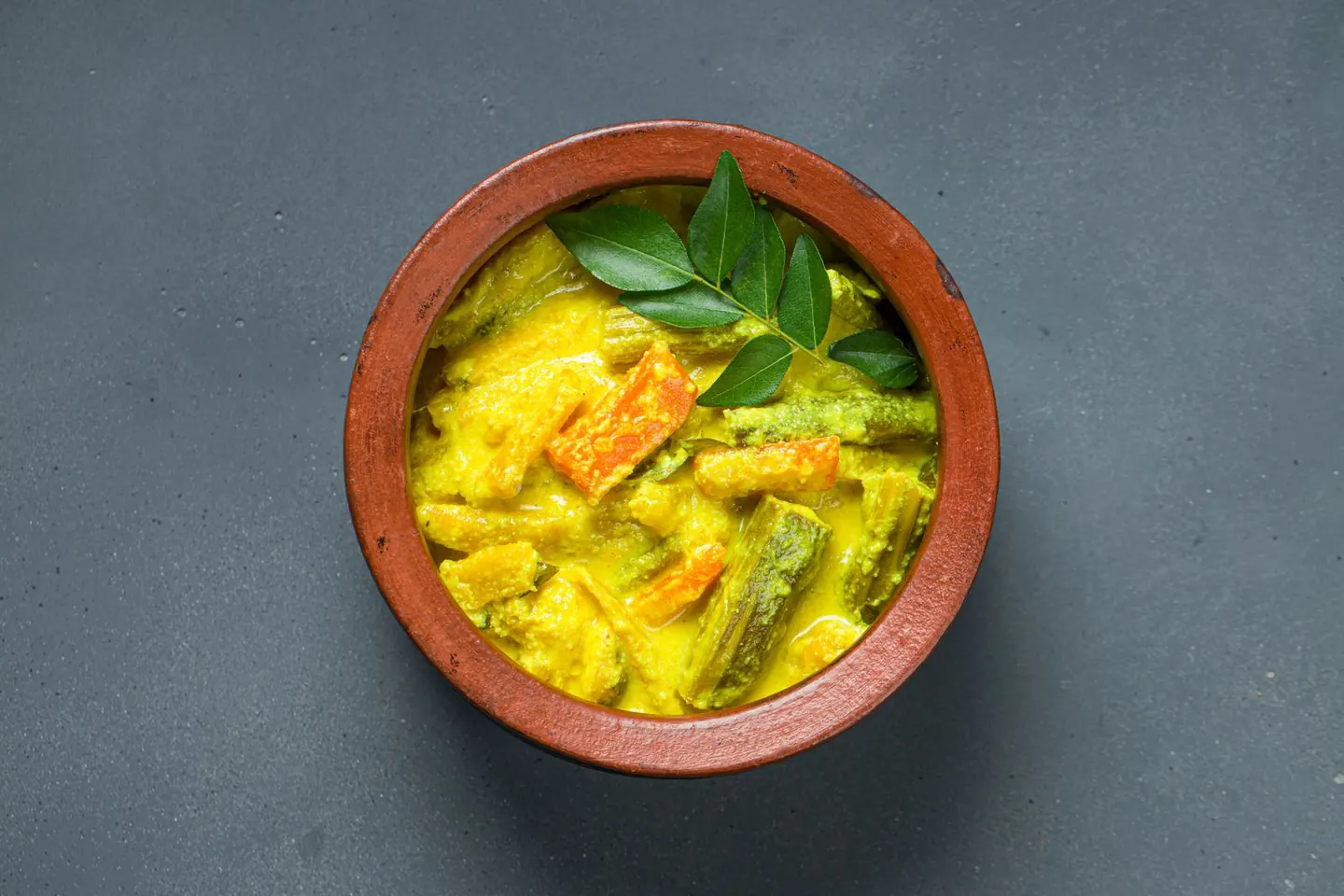
Photograph: Adobe Stock · representative of the dish
A raita is not a Kerala word, but the idea is thoroughly Kerala: the kichadi and the pachadi are the same construction, and a spiced curd side dish is how this cuisine has always finished a hot meal. This version is the one to know because it needs no cooking at all beyond a 60-second tempering, it takes ten minutes, and it turns any rice-and-curry plate into one where half the plate is vegetables. Grate the carrot coarsely; finely grated carrot goes limp in the curd within the hour.
Before you start: Whisk the curd smooth before anything else goes in. Curd folded into vegetables while still lumpy will not come smooth afterwards.
Allergens: Milk, mustard.
Equipment: Box grater; small tempering pan. Substitute: a food processor's grating disc, which is faster and gives a slightly wetter shred.
| Energy | 116 kcal |
| Protein | 3 g |
| Fibre | 3 g |
| Net carbohydrate | 10 g |
| Total carbohydrate | 13 g |
| Sugars | 8 g |
| Fat | 7 g |
| Saturated fat | 5 g |
| Sodium | 190 mg |
From ICMR-NIN IFCT 2017 and USDA FoodData Central. Per-serving figures stay the same when you scale.
Plain whole-milk yoghurt is the right substitute for Kerala curd; Greek yoghurt is strained and about half again as energy-dense, so use 200 g of it plus 100 ml of water. Where the curd available is very sour, a teaspoon of grated coconut more and a pinch less lime will balance it. Frozen grated coconut is fine.
Blood pressure: 190 mg per serving, of which about 140 mg is the curd itself at 46 mg per 100 g. Cutting the added salt out entirely takes it to about 140 mg and the lime covers the difference.
Blood sugar: 10 g of net carbohydrate for 155 g of food. Served in quantity beside a rice meal this is the volume lever and the acid lever working together.
Cholesterol: 5 g of saturated fat per serving, from whole-milk curd and coconut. Low-fat curd and half the coconut takes it to about 2.5 g and the energy to about 85 kcal, at real cost to the texture.
Grated cucumber for half the carrot → Consequence: fresher and lighter, about 15 kcal less, and it must be eaten within 30 minutes because cucumber weeps.
Low-fat curd → saturated fat 5 g down to 3 g. Consequence: thinner; add 10 g more coconut or 20 g of whisked-in roasted gram dal.
Beetroot for the carrot, grated raw → Consequence: sweeter, earthier and pink, and it stains everything it touches.
Add 40 g of cooked and cooled vanpayar or chickpeas → Consequence: the dish now carries a pulse and about 3 g more protein, and becomes a light meal rather than a side.
Salt replaced with the 70:30 potassium blend (M07) → added sodium falls from 150 mg to about 100 mg across the dish. Consequence: acceptable here, because the curd's fat and the lime's acid both mask potassium chloride's metallic edge well. Potassium-enriched salt is not for readers with chronic kidney disease, or on a RAAS inhibitor (an ACE inhibitor or an ARB) or a potassium-sparing diuretic, without a doctor's approval.
Lime and coconut do not scale linearly; add the last third of each by taste.
Grate the carrot and whisk the curd up to 1 day ahead, separately, in the fridge. Assembled, it is at its best within the hour and acceptable for fridge 1 day, after which the carrot has softened and the curd has soured. Do not freeze — curd emulsions break irreversibly.
Blend day-two raita with 150 ml of cold water into a carrot sambharam, or use it as the souring liquid in a moru curry, where the softened carrot disappears usefully into the dish.
Watery within the hour: the carrot was finely grated, or the curd was very loose. Drain and fold in 15 g of roasted gram dal.
Sour: the curd. Add 10 g more coconut and a pinch of jaggery — no more than 2 g — rather than more salt.
No aroma: the tempering was over-folded, or the curd was fridge-cold when it went in. Serve it cool, not cold.
Bitter: the mustard seed burned. It should pop and come straight off the heat.
Serve with
R018 Thalassery Biryani, Rebuilt · R017 Ghee Rice, Reworked · R042 Pepper Chicken · R015 Perfect Matta Rice · R105 Roasted Kadala Mix
Tap a star to rate this recipe
The Kindle edition is on its way. Until it lands, the complete book — all 25 chapters and 137 recipes — is free to read here, and it stays free after.