 R108
R108Karkidaka Kanji
The monsoon gruel of the Malayalam month of Karkidakam
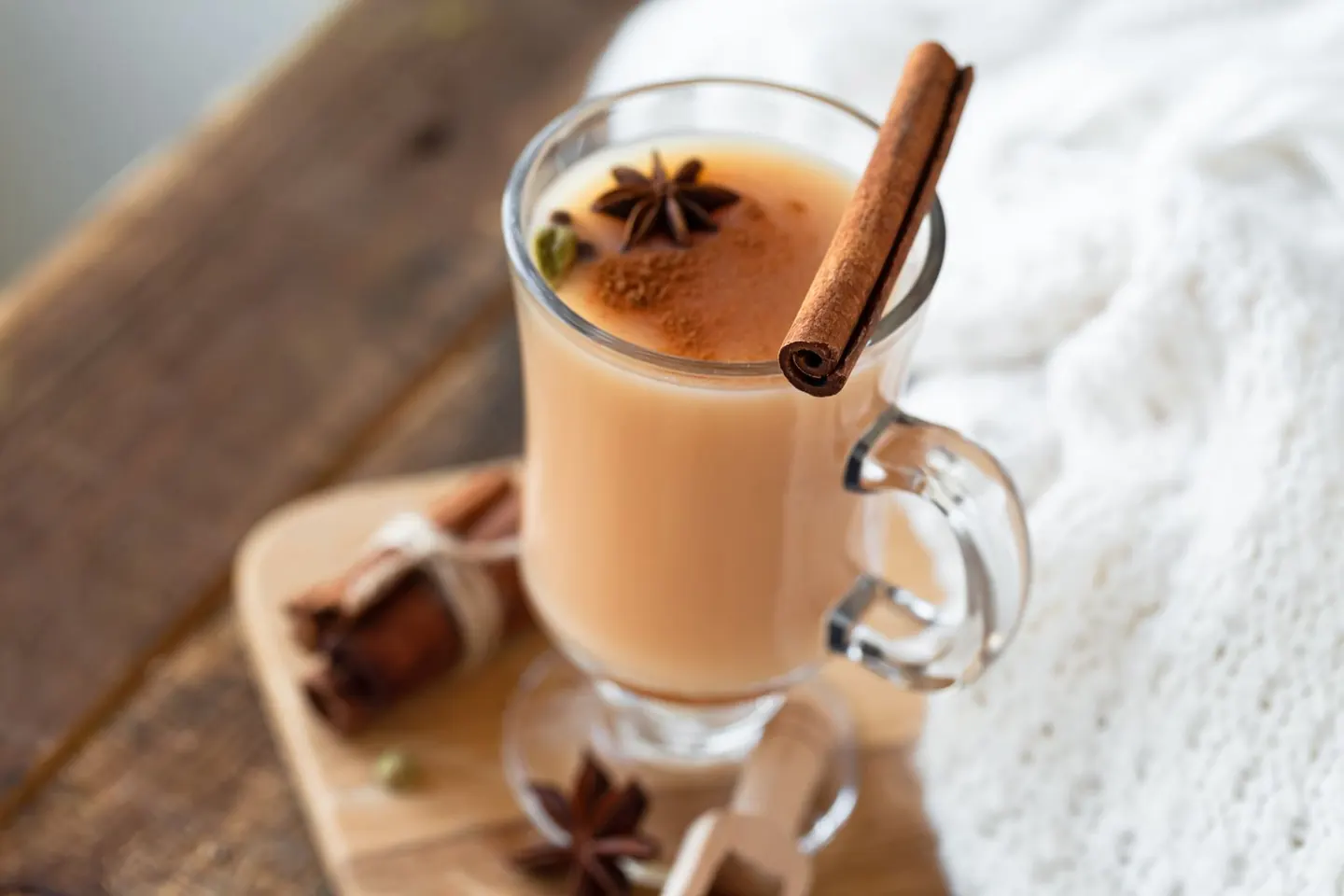
Photograph: Adobe Stock · representative of the dish
Plan ahead: plus 20–30 minutes chilling — recommended.
Every Kerala household has a jug of this in the hot months, and every household makes it slightly differently — more ginger in the north, asafoetida in Brahmin kitchens, a shred of shallot in some, curry leaf bruised rather than chopped in others. In the Ayurvedic tradition it closes a feast, and the tradition is specific that the drink is the diluted, spiced form rather than thick curd, which the system treats quite differently. It costs five minutes and no cooking. Make a litre in the morning and the afternoon looks after itself.
Before you start: Whisk the curd smooth before any water goes in. Curd loosened into water rather than water added to curd gives lumps that never fully disperse, and a lumpy sambharam looks curdled even when it is not.
Allergens: Milk. Gluten (wheat) — only if your asafoetida is compounded with wheat flour, as most brands are.
Equipment: A 1.5-litre jug and a whisk or a mathu (wooden churner). Substitute: a clean jar with a lid and 20 seconds of shaking; the texture is very slightly foamier, which is not a fault.
| Energy | 48 kcal |
| Protein | 3 g |
| Fibre | 0 g |
| Net carbohydrate | 4 g |
| Total carbohydrate | 4 g |
| Sugars | 4 g |
| Fat | 2 g |
| Saturated fat | 2 g |
| Sodium | 140 mg |
From ICMR-NIN IFCT 2017 and USDA FoodData Central. Per-serving figures stay the same when you scale.
Any plain live-culture yoghurt works — Greek-style is too thick and needs a little more water, and set Indian dahi is closest. Do not use flavoured or sweetened yoghurt. Cultured buttermilk sold in Western supermarkets is the closest ready-made equivalent and needs only the aromatics, but read the label: it carries about 148 mg sodium per 100 g before you add anything (USDA SR Legacy 170874), which is most of a glass's sodium budget already. Curry leaves freeze well in a bag and are worth buying in quantity when you find them fresh; dried curry leaves have almost no aroma and are not worth the space.
Blood sugar: four grams of carbohydrate in a glass, all of it lactose, in a matrix of protein and fat. This is the single best substitution in the book for a cold sweet drink, and it is the one to keep in the fridge door where the bottled thing used to be.
Blood pressure: 140 mg of sodium per glass against a 2,000 mg daily target. Three glasses a day is 420 mg, which is not nothing. Halve the salt and lean harder on the lime and ginger, and it drops to about 90 mg without tasting under-seasoned.
Cholesterol: made with whole-milk curd this carries about 2 g of saturated fat per glass. Low-fat curd takes that to about 0.7 g and costs you a little body.
Whole-milk curd → low-fat curd. Saturated fat drops to about 0.7 g per glass; the drink is thinner and needs slightly less water, and the ginger reads sharper without the fat to soften it.
No curry leaves → a strip of lime zest and a mint leaf. Different drink, still good; you lose the specific resinous note that makes it read as Kerala.
No fresh ginger → 1 g dry ginger powder. Flatter and slightly dusty in the mouth, and the heat arrives all at once instead of building.
Salt-restricted → leave the salt out entirely and double the lime. It tastes like a sour lassi rather than sambharam, but it is genuinely refreshing and carries under 50 mg sodium.
Fridge 24 hours — after that it sours noticeably and the ginger turns bitter. Do not freeze; the emulsion breaks and thaws grainy. Best within 4 hours of mixing, and if your kitchen is above 30°C (86°F) keep the jug in the fridge rather than on the counter.
Day-old sambharam that has gone too sour to drink is exactly what a moru curry wants. Use it in place of the buttermilk in R081 Moru Curry, or as the souring liquid in a pulissery. Sour is a feature there.
Lumpy or curdled-looking: the water went in before the curd was smooth. Pass it through a sieve and whisk again; next time, whisk the curd alone first.
Bitter after an hour: too much ginger, or the curry leaves were chopped rather than bruised, which releases more of the bitter fraction. Strain the aromatics out once the drink tastes right rather than leaving them in the jug.
Tastes flat and watery: under-seasoned rather than overdiluted, nine times out of ten. Add lime before you add more salt.
Serve with
R015 Matta Rice · R119 the sadya pickle set · after any fried fish, and at the end of a sadya where the tradition puts it · M07 the 70:30 salt
Tap a star to rate this recipe
The Kindle edition is on its way. Until it lands, the complete book — all 25 chapters and 137 recipes — is free to read here, and it stays free after.