 R016
R016The Chilled-and-Reheated Rice Method
Cooked rice, chilled overnight, reheated once
Recipes › Rice, Grains and the Grain Question in Practice
R015
Kerala's parboiled red rice, by absorption and by draining
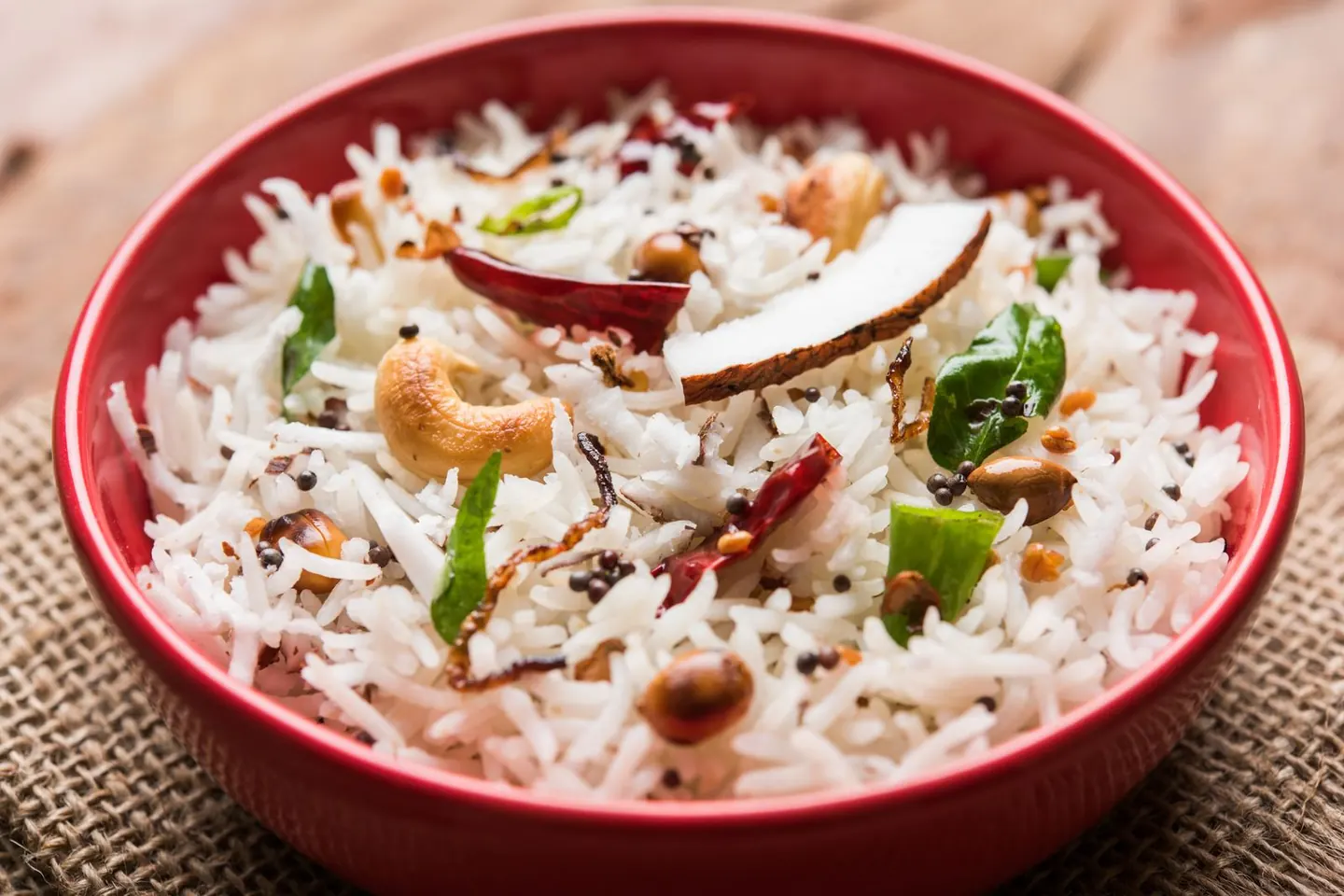
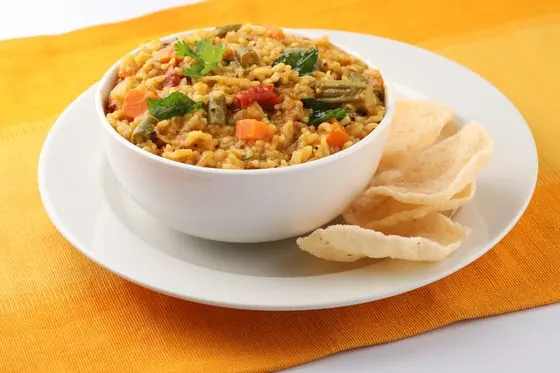
Photograph: Adobe Stock · representative of the dish
Plan ahead: plus 30 minutes soaking — recommended.
This is the foundation recipe of the book, and the one most often got wrong in diaspora kitchens, where matta arrives in a 5 kg sack and is then cooked like basmati. It is not basmati. It is a hard, parboiled, pigmented grain that wants a soak and a long simmer, and it will stay stubbornly chalky at the centre if you rush it. Cooked properly it is faintly nutty, pinkish-fawn, and firm enough to stand under a fierce fish curry without dissolving into it. Get this right and forty recipes downstream get easier.
Allergens: None of the major allergens.
Equipment: Heavy 3-litre pan with a well-fitting lid, or a 3-litre uruli. Digital scale reading to 1 g. Substitute: a pressure cooker works for the absorption method at 2 whistles, then 8 minutes on the lowest flame; you lose the ability to see the grain and gain about 12 minutes.
| Energy | 176 kcal |
| Protein | 3.9 g |
| Fibre | 1.9 g |
| Net carbohydrate | 38.6 g |
| Total carbohydrate | 40.5 g |
| Sugars | 0.1 g |
| Fat | 0.3 g |
| Saturated fat | 0.1 g |
| Sodium | 140 mg |
From ICMR-NIN IFCT 2017 and USDA FoodData Central. Per-serving figures stay the same when you scale.
Ask for rosematta, Palakkadan matta, unda matta or "Kerala red parboiled rice". In the UK and Gulf, Indian and Sri Lankan grocers stock it in 5 and 10 kg bags; in the US and Canada, South Asian shops and online sellers do. The words to look for on the sack are parboiled and unpolished or single-polished; "extra polished" and "silky" are the ones to put back. Sri Lankan rathu kekulu is a very close substitute and often easier to find. If nothing red is available, brown parboiled long-grain is the next best thing — cook it as below, expect a blander grain, and keep the portion the same.
Blood sugar: the glycaemic load of this portion is where the argument lives. At 38.6 g of net carbohydrate and the glycaemic index of 38 measured for Rose Matta in Kerala (Pavithran et al., 2020), the load is about 15; at a published Indian value of 57.6 for unpolished parboiled rice (Shobana et al., 2017), about 22. Either is a moderate meal. Double the portion and you double the number, which is the whole point of weighing it.
Blood pressure: 140 mg of sodium per portion, and you can cook it with none at all — the curry beside it carries the salt. Against a 2,000 mg daily target that leaves the day's budget essentially untouched.
Cholesterol: 0.1 g of saturated fat. Rice is not where your saturated fat comes from; the coconut milk, the ghee and the oil are.
Matta → brown parboiled long-grain. Cooks in similar time, milder and less interesting, and it will not stand up to a Kottayam fish curry the way matta does.
Matta → white raw rice (pachari). Faster and softer, and you give up the thiamine advantage and most of the glycaemic one. Keep the 50 g dry portion, which now matters more.
Absorption → pressure cooker. Same yield, no visual control, and matta overcooks in a pressure cooker within about 90 seconds of the right point.
Above 500 g the absorption ratio drops slightly because proportionally less water evaporates, which is why the 10-serving row is 2.3 rather than 2.5 parts water.
Best within an hour of cooking. Fridge 24 hours only, and get it there fast: spread it in a shallow covered container and refrigerate within 1 hour of cooking. Freeze 1 month in 130 g portions, flat in bags. Reheat once and once only, with a tablespoon of water, covered, until steaming hot right through — 2–3 minutes in a pan, 90 seconds to 2 minutes in a microwave. Never reheat the same rice twice. These are the UK Food Standards Agency's limits for cooked rice, not this book's: chill ideally within one hour, keep no more than one day, and never reheat rice more than once.
Chalky white core after 30 minutes: not enough water, or the flame was too low to hold a simmer. Add 100 ml boiling water, cover, and give it 8–10 minutes more.
Gluey, collapsed grains: overcooked by three or four minutes, or stirred during the simmer. Stirring rice releases surface starch; the absorption method wants no stirring at all.
Rice tastes flat and smells of nothing: the sack is old. Matta's oils go stale within about six months of milling; buy smaller bags more often and keep them sealed away from heat.
Serve with
R023 Kerala Khichdi principles apply to any rice meal — put a pulse on the plate. R081 Moru Curry · R084 Ulli Theeyal · R086 Rasam · M07 the 70:30 salt
Tap a star to rate this recipe
The Kindle edition is on its way. Until it lands, the complete book — all 25 chapters and 137 recipes — is free to read here, and it stays free after.